Two New York stories


One of the baffling contradictions of New York is that so much of its economy is service-based and yet service there is so desperately bad. You go to the drug store to get a candy bar and when you finish the transaction the cashier does not thank you, you thank the cashier. You thank the cashier because the cashier refrained from killing you. There will be three bodegas in a two-block stretch, which under normal circumstances would create an environment of healthy competition for customers, but the service in all of them will vary from casually listless to downright hostile.
Read more
Notes from a visit to the Metropolitan Museum of Art, NYC, part 2


The Met has a ginormous selection of Greek and Roman artifacts. What I don’t know about Greek and Roman artifacts would fill a museum, one even larger than this. But the stuff on display is intriguing so I wade in. Funeral urns, columns, lots of statues of soldiers and boys and ladies, all naked. Glass cases full of cups and bowls and signet rings and necklaces and stick-pins and cutlery and weapons and plates and all manner of stuff, going on forever. It’s a morass.
Read more
My list of over-seen masterpieces

Thanks to everyone who has answered the call of my earlier query. Many excellent ideas have been put forth and I encourage further thought on this.
Here is a list I compiled while leafing through Sister Wendy Beckett’s history of painting. It is all “usual suspects” and is intended to weed out the over-seen.


Van Gogh: Self-Portrait, Starry Night (above), Sunflowers, The Artist’s Bedroom
Botticelli’s Birth of Venus (see previous entry)

Rembrandt Self-portrait


Picasso: Guernica, Old Guitarist, Three Musicians, Les Demoiselles d’Avignon

Munch’s Scream

Dali: Persistence of Memory

Seurat’s La Grande Jatte

Head of Nefertiti

Greek discus thrower


Rodin: The Kiss, The Thinker
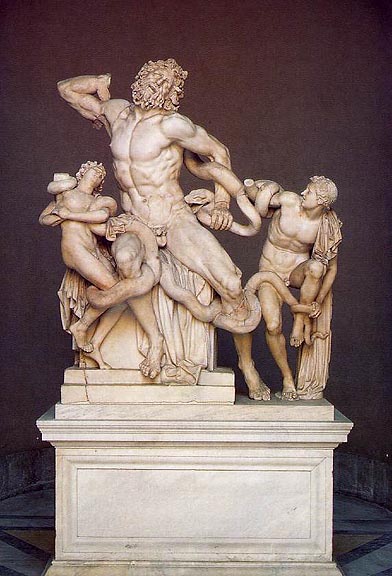
Lacoon and His Two Sons

Gutenberg Bible

First Folio

Eyck’s Arnolfini Marriage

Bosch’s Garden of Earthly Delights

Davinci’s Universal Man

Breugal’s Tower of Babel

David’s Death of Marat

Vermeer’s Girl with a Pearl Earring

Gainsborough’s The Blue Boy
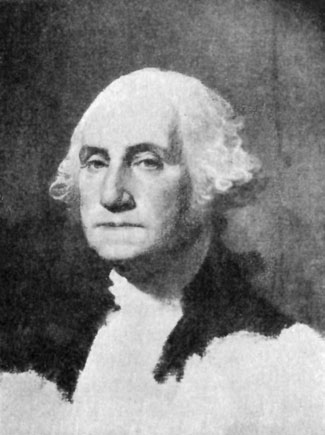
Gilbert Stuart’s Unfinished Portrait of George Washington

Ingres’s Grande Odalisque

Goya’s May 3, 1808

Gericault’s Raft of the Medusa

Whistler’s Arrangement in Black and Gray: the Artist’s Mother

Wood’s American Gothic


Manet: Le Dejeuner sur Herbe, Bar at Folies-Bergere

Monet: Waterlily Pond

Klimt: The Kiss

Brancusi: The Kiss, Bird in Flight


Rousseau’s Sleeping Gypsy

Warhol’s Gold Marylin

Mondrian’s Broadway Boogie Woogie

Matisse’s Dance

Magritte’s Apple-face guy (already taken by Thomas Crown, I’m afraid)

Giocometti’s Walking Man

Reinhardt’s Abstract Painting #5


Rauschenberg: Monogram, Canyon

Lichtenstein: Whaam!
Degas: Prima Ballerina

Renoir: Le Moulin de le Galette (God I hate Renoir)

Cezanne’s Fruit Bowl, Glass and Apples

Robert Indiana’s Love

Jasper John’s Three Flags
Then there are a handful of 20th-century guys who don’t really have one standout work (at least not in popular consciousness) but who’s stuff would be recognized as a type: Rothko, Pollock, Calder, De Kooning, and to some extent Warhol.
Query

For instance.
For a television show I’m developing, I request your favorite instantly identifiable cultural artifacts. “American Gothic,” “The Mona Lisa,” “Guernica,” “Starry Night,” that level of media saturation.
The point of this exercise is to find works of art that anyone at all would recognize and understand to be valuable cultural landmarks. I have a running list of my own but I’m curious to see what others come up with.
Oh, and one other thing: the artifact must be portable, which leaves out DaVinci’s “Last Supper,” the cathedral of Notre Dame and the ceiling of the Sistine Chapel.
Points awarded for not being blindingly obvious.
The artifacts selected will be made into maguffins in order to drive a mystery narrative.
Let me hasten to add that the artifact need not necessarily be an artwork. It could be a cultural artifact of another sort. Just as everyday Greek tableware items from ancient times are now considered precious antiquities and put on display in the Metropolitan Museum of Art (more on that later), what other museum-quality items could one present as a maguffin in a mystery narrative? Say, the Liberty Bell, or the Wright Bros airplane.
Notes from a visit to the Metropolitan Museum of Art, NYC, part 1
Greeks: excellent
Romans: excellent
Etruscans: meh
Cypriots: ugh
Persians: I don’t get it
Egyptians (pre-Rome): A plus
Egyptians (post-Rome): B minus
Rembrandt: good
Vermeer: good
Ingres: good
Goya: okay
Van Gogh: good
Gauguin: okay
Sargent: good
Degas: good
Renoir: sucks
Homer: meh
Eakins: okay
Remington: beneath contempt
Another long, awkward elevator ride


INT. ELEVATOR — NIGHT
Ingmar Bergman and Michaelangelo Antonioni ride in (what else) silence.
IB. Mm.
MA. You with the whole “is there a God” thing, me with the whole “existential angst” thing —
IB. Mm.
MA. And here we are.
IB. Here we are.
Silence.
MA. What was it finally did it to you?
IB. Mm?
MA. ‘Cos we both got up there, man, you know? 80s, 90s, I mean, that’s a load of years for a couple of guys who made such a big deal out of how miserable life is.
IB. Mm.
MA. Me? That Chuck and Larry movie. I saw that, I just said “forget it, I’ve had enough, I’m out of here.” Billy Madison was cute, but I drew the line on Sandler with The Waterboy. What about you?
IB. Me, oh, you know me. The weight of a Godless world, the the suffocating oppression of memory, the haunting terrors of family.
MA. I gotcha, sure.
IB. And Transformers.
MA. Ooh, yeah, that one hurt.
IB. I’m like, “what, I expanded the vocabulary of cinema to explore the most important, penetrating questions of the human condition so that monster robots could fight each other?” Give me a break.
MA. I totally get you.
Silence.
IB. By the way, I’ve always wanted to tell you —
MA. Yes?
IB. I hated Zabriskie Point.
MA. Oh yeah? Well I hated The Serpent’s Egg.
IB. You —
Silence.
IB. Ah, the hell with it.
Silence.
MA. Jesus, this is one long elevator ride, isn’t it?
IB. You ain’t kidding.
MA. Did you, when you got on, did you happen to notice which way it was heading?
IB. Well, I assumed —
Pause. They look at each other.
The elevator dings. The doors slide open. Bergman and Antonioni go to step out, but TOM SNYDER steps in.
TS. Hey, Ingmar Bergman! Michaelangelo Antonioni! Good to see you!
He slaps them on the back. They look distinctly uncomfortable.
TS. Boy, this death thing, this is wild, isn’t it? I tell you, I wasn’t ready for this one. Reminds me of the time I was taking a train to Bridgeport once, I was in the station, and you know how they’ve got those newsstands, right? Where they sell all the newspapers and candy and whatnot. And there’s a shoe-shine guy next to the newsstand, right? And I’ve always wondered about the shoe-shine guy. You know? Who is this guy? Is this what he wanted to do with his life? “Shoe-shine guy?” Has he reached the pinnacle of his career? “I am a shoe-shine guy?” And he’s got this hat, it’s kind of like a conductor’s cap, almost like maybe a conductor gave it to him, like you know, maybe this guy’s a little “simple,” you know, and one of the train conductors took pity on him and gave him a hat, you know, to cheer him up, make him feel like he’s part of the team. Anyway, so I’m there in the train station and this skycap goes by, huge stack of luggage on one of those rolling things, what are those things called, dollies? Not dollies, but like a dolly, with the handle, you know? And I’ve always wondered, who decides whether the cart gets a handle or not? And —
Bergman and Antonioni wither as Snyder chats on and on. Fade out.
Close Encounters pop quiz
Q: Farrah Fawcett has a cameo in Close Encounters of the Third Kind. In which scene does she appear, and where?
Movie Night With Urbaniak: Close Encounters of the Third Kind

There are movies and there are movies.
I’m a Spielberg fan. I’ve been a Spielberg fan for a long time.
How long have I been a Spielberg fan? I’ll tell you how long I’ve been a Spielberg fan, smart guy. When Duel came on the television machine in 1971 and I was ten years old, I remember I wanted to watch it because it was directed by the guy who had made a Columbo episode I really enjoyed (which IMDb tells me was broadcast a mere two weeks earlier.)
I loved Jaws, it changed my life, no doubt about it, but my confidence in Spielberg as the leading director of his generation was already well in place in my mind by the time Close Encounters opened in theaters, Christmas 1977.
I was, at that point, a 16-year-old usher who had just gotten a job working at what had once been a vaudeville house in the suburbs of Chicago. The first movie during my tenure there was Close Encounters, so I was blessed to see this movie thirty or more times in its initial run, with a crowd every night, and it never got old, never wore out its welcome, never seemed like anything less than an event. A symphony.
The truck on the lonesome highway, the police-car chase, the perfectly-observed scenes of casual suburban squalor, the attack on the country house, these are scenes I would race to the theater to watch over and over, marveling at them anew each time. I’ll tell you: I knew from the first that Close Encounters was great cinema, but somehow it’s never felt to me like Close Encounters was “show business.” I always felt, from the very beginning, and this goes for a lot of Spielberg’s movies, that I was watching something that transcended “show business,” that I was in the hands of a true believer. It hit me relatively early on that Close Encounters was a deeply religious movie, and the notion of godlike, benign extraterrestrials showing up and extending an innocent, questioning hand of greeting to our horribly wrong-headed world was one I found hugely seductive and almost unbearably moving.
God calls, and Roy Neary answers. God calls many people, but only Roy Neary has what it takes to push through all the bullshit in the world, the trappings of his stupid bullshit suburban family life, the chains of work, reputation and normality. Only Roy Neary has what it takes to answer the call, leave his life, make it through all the barriers that this awful world puts in his way (the government, who has also heard God’s call, desperately desires to exclusively control the discourse between humanity and the deity) and step up to the altar to be received into heaven. It’s a profound statement of faith, fortitude and perseverance.
I have no idea how it plays now. I’ve watched it so many times it barely feels like a narrative tome any more, it flows so naturally and so effortlessly. I can see the craft and care put into it, but I also still get utterly lost in its most powerful scenes. One day, when I show it to my children, will they see the same movie I saw at 16? Or will they look at the clunky 70s special effects, the gritty 70s-realism acting and production design, the low-key, humanistic story line and be all like “o-kay, Dad, whatever you say, is it okay if we go upstairs and watch Transformers III again?” Will they have to wait until they learn a little something about film history before they will be affected by its rhythms, its layers of references, the purity of its soul?
Anyway,
![[info]](http://stat.livejournal.com/img/userinfo.gif)
and I watched it tonight over a bottle of pretty good wine and it was a blast. The air-traffic-controller scene toward the beginning of the movie, a scene that would be cut from any other movie today, stuck out for us immediately. I’ve always loved the scene and found it terrifically exciting, especially for a scene involving none of the principle characters, no special effects, and no on-screen confrontations. It’s a scene about a bunch of professionals talking on radios and yet somehow the tension is palpable. The acting in it is not only some of the best in the movie but some of the best in Spielberg’s canon. In a lot of ways, as Urbaniak mentioned, it’s hard to imagine Spielberg today directing that scene. It’s like a scene from All the President’s Men or something, all subtlety and nuance, the performances deriving their power from what the characters are not saying, not what they are saying. And the voice work of the radio voices could not be better.
Someone, I can’t remember who, once asked, regarding the opening scene, “Why doesn’t the UFO investigation team wait for the sandstorm to end before they go out into the field?” And it’s a good example of the pure cinema of this movie. The UFO investigators go out into the Mexican desert in the middle of a sandstorm because it makes a better scene — it creates pressure and urgency. These guys aren’t just investigating UFOs, they’re investigating UFOs in the middle of a sandstorm, which means they have to shout and cough and gaze in wonderment at things that appear mysteriously out of the sandstorm.
Compare this scene with the “Mongolia” scene shot for the otherwise-useless “Special Edition” from 1980. The Mexico scene in the original is weird, mysterious and deeply unsettling, the Mongolia scene is jokey, obvious, shot and cut in a completely different style, closer to an Indiana Jones movie in tone than Close Encounters. I like the idea of the scene but, basically, I can find no shot in the “Special Edition” that improves my understanding of Close Encounters and it gave me great heart to realize that Spielberg had expunged most of it for the current edition on the racks.
Now that I am sufficiently removed from Midwestern suburban life of the 1970s, I gaze upon the production design of Close Encounters with something approaching awe. The hell with the UFOs, I want to know who was responsible for the astonishing set-dressing of Roy Neary’s house. You can tell that Roy has gotten his “one room” to decorate, it’s the one with the milk crates stacked against the wall for shelving and the hobby crap piled up everywhere. But what about the rest of the house? All the tschotchkes and bric-a-brac, the Walter Keene painting over the piano, the ceramic chicken on the “good china” shelves, who picked all that out? Ronnie? She’s 30 years old, she picked out all that crap? How did she ever have the time? The house is full of crap, the stupid prints hanging in the bedroom, the ungodly wallpaper, the Snoopy poster in the boy’s bedroom, the mismatched glassware, the milk carton on the table at dinnertime, the casual blurring of personal boundaries, everything is absolutely godawful, everything is absolutely accurate, and everything is mounted with such great love and understanding of those characters and their world, and, best of all, it’s never pointed at by Spielberg. Spielberg never holds up these suburbanites as ridiculous, he loves these people and wants to capture their world with all the detail he can muster.
True Hollywood Story: my worst pitch meeting

It is the summer of 2004. I am working with Ex-Studio-head Producer and Affable, Good-natured Assistant on a pitch for Giant Popcorn Movie. GPM is based on a hugely popular, instantly-recognizable Brand-Name Property with great, no-kidding potential for big-time synergy. It’s fun to work with XSP and AGA, who are wonderful collaborators and who understand the creative process of writers.
I’m doing a great job on the pitch for GPM. As well I should; I’ve been spending many months doing research through the B-NP’s fifty-year history and weaving all the many possible story-lines into a single coherent whole, a story I am confident will both pop in the consciousness of the mass audience and also have real meat and bones to it, a story of brotherhood and loss and redemption, of corruption in the highest of places and heroism in our darkest hour.
I get a call from XSP and AGA. A studio has called them with another project, Enormous Summer Tentpole, a title based on another hugely popular, instantly-recognizable Brand-Name Property, one with substantially more appeal than GPM. The studio wants XSP to produce it, and they want it in theaters by summer of 2006. That’s less than two years away, and the movie will be a huge production with ridiculously complicated special effects, so they need a screenplay right away. They need someone fast and reliable who works well under pressure and has a thorough understanding of the material.
So, XSP and AGA tell me, we want you to stop working on GPM for now and instead come up with a take for EST. This is a tremendous compliment, being asked to go from one big project that might get made to another big project that already has a release date. The fact that I haven’t been paid a dime for any of the work I’ve done hardly seems to matter.
So I set aside the mountain of research I’ve compiled for GPM and set about researching EST instead. Like many Summer Tentpole projects I’m offered, this is a project that seems a little bit silly on the surface, not something a serious writer who spends his free-time watching Kurosawa and Ozu should really get involved in. But this is Hollywood in 2004, they’re not making Kurosawa movies anymore, they’re making Summer Tentpoles. This is the game, the Big Game in fact, the Super Bowl of entertainment, and they’re inviting me to play. What am I going to say? “Sorry, this is a movie for teenagers — I am a Serious Artist and you would do well to look elsewhere?” To paraphrase one actor I’ve worked with, “They’re not asking you to botch surgery, they’re asking you to write a movie.”
Now, here’s the thing: as I’m doing research on EST, a weird thing happens. I get hooked. What seems like a shiny, mercantile, unserious commodity on the surface actually has, if one looks deeply enough, real roots. Strong roots. I find that, perversely, I’m enjoying working on EST substantially more than I enjoyed working on GPM. It’s got everything: humanity, wonder, action, passion, real characters, real sacrifices, and, weirdest of all for a Summer Tentpole, a quirky, powerful vision of the human condition. I cast aside my doubts about the seriousness of the project: this could be a real movie with a heart, a brain and long, powerful legs.
There are whole oceans of material available on EST and it takes me weeks to wade through it all, selecting the best characters, situations and plotlines to develop. The property lends itself to big action and superficial spectacle, so I’m trying to find the warm, human love story within that, the thing that will give the movie legspast the opening weekend. I am aiming for a widescreen, action-packed special-effects bonanza with the humanity and emotional impact of no less than Close Encounters.
XSP loves my take. AGA loves my take. And no one is taking any chances — they want this take to go forward, they want to get the studio on board, they don’t want me to have done all this work for nothing. So they bring in Junior Studio Executive and I pitch a preliminary bunch of ideas to him. JSE is wildly enthusiastic about my take and says he can’t wait to get me in a room with Senior Studio Executive, AKA the Guy Who Can Say Yes.
This is the goal for the writer looking for a gig: to get in a room with the Guy Who Can Say Yes. Up to that point, you’re just whistling dixie. Anybody can sit jawing on the phone with anybody else about this or that idea for a wonderful movie; it’s only when you get into the room with GWCSY that the talk may actually become a real job with real money and, sometimes, a real movie being made, with real actors and real sets and real special-effects, with real credits with your name actually in them, and the revenue streams that follow and, who knows, once in a blue moon, maybe, a shot at cinematic immortality.
So it’s actually pretty hard to actually get into an actual room with GWCSY. Especially with a project this big. GWCSY has all kinds of people coming at him from all different directions all day long. Of course he does — he’s GWCSY. And, as I’ve said, the primary job of GWCSY is to Say No. GWCSY has a lot of things to do, a lot of projects to shepherd along, a lot of pressures on him from his bosses, who want him to Say No more often than he’d maybe like to. GWCSY and his confederates have this big-deal production to get on screen by summer of 2006 and they don’t even have a script yet, much less a director or a cast or any way of realizing the insanely complicated special-effects that will be required to make the thing sing.
So I work and work with XSP and AGA, honing my take, trying this, trying that, extending this storyline, truncating that one, bringing in JSE to referee the proceedings. Everyone is wonderful: supportive, enthusiastic, friendly, collaborative, helpful, available. They know that I’m doing good work under ridiculous pressure and they are anxious to see me get the gig. This is a good feeling.
October 2004. I’ve been working on this pitch now for a few months and summer 2006 is way too close. I’m told that the Studio Head is only talking to “A-list” writers (which I am not) but that everyone is excited by my take and thinks I have a real shot. I work and work and have many meetings with many different producers and studio people, all of whom encourage me to “keep going.”
A phone meeting is scheduled (I live in New York and the studios, for reasons they know best, no longer fly writers like me out for pitch meetings), and then canceled at the last minute. Another is scheduled and then canceled at the last minute. I’m starting to get a bad feeling about this, but all the people I’ve been working with assure me that this is good — they want to make sure that I get in the room (figuratively speaking) with GWCSY, and this is all heading in that direction.
Finally the big meeting happens, the one meeting all this work and planning and effort have been building up to. I’m in my office in New York, the producers are in their offices in Hollywood, the studio people are in their offices on their lot. There are at least five people on the phone on five different phone lines, which means I can barely hear anyone.
The first thing that happens is JSE announces that GWCSY got “called away” at the last second and can’t be on the call, but he wants me to go ahead and do my pitch, and he’ll duly report to GWCSY. This immediately takes the wind out of my sails — if GWCSY isn’t on the call, why are we doing it? Should we even bother? What is reallygoing on? JSE assures me that everyone is very interested in hearing my take and that it is still a very real possibility that I will get this job.
Okay. I start in on my pitch. At the other end of the phone is silence. No “uh-huh”s, no “great”s, no “oh, wonderful”s, no indication that anyone at all is listening to me. Silence.
Now, I don’t know about you, but I can’t speak into phone silence. It freaks me out. I get disoriented. After a minute of speaking into dead phone silence, I start to lose track of what I’m saying, I get self-conscious, I start to babble, I begin to listen to what I’m saying instead of merely speaking.
I stop and say “You still there?” and everyone assures me they’re still there and still very interested.
I take a breath and continue. My pitch is about 25 minutes long — I’ve written out practically every scene in the movie. About five minutes into it, I hear a click. Someone, I don’t know who, has put me on hold.
I say “Hello? Are you still there? Someone just put me on hold.” Several voices, belonging to who I’m not sure, they are very far away, assure me that they are still there and listening. So I continue.
Hold music comes on. I’m apoplectic. Someone, I know not who, has definitely left the conversation and put the call on hold, unaware (I hope) that their phone automatically plays hold music when they press the “hold” button.
What am I supposed to do? JSE, the ranking official on the call, laughs and apologizes, but apparently it’s not him who has put me on hold while I’m pitching. Several beeps, clicks and noises later, the hold music stops and I continue.
A minute later, I hear someone else (maybe the same someone) set their phone down on their desk and start answering their email. I can actually hear their fingers on their keyboard and the pinging of their inbox. What I should do is say “okay, look, I may want this job, but I’m not going to pitch a take that I’ve spent months putting together to some hold music and a guy answering his email,” but that’s not going to help. I don’t know what’s going to help but I know that that’s not going to help. Or I don’t know, maybe it would help, maybe calling people on this kind of behavior would help in some way, but all I can think is about getting my hard-won pitch back on track and into the ear of JSE, who assures me he’s still there and still listening.
I limp to the end of the pitch. JSE is cordial, congratulatory and polite but brief in his comments and the call ends.
A few days later I learn from my representation that the studio had already hired another writer and was only doing my call as a “courtesy” to me, to honor the work I had done on the project. Neither XSP or AGA ever call me again, about GPM or any other project.
EST did not hit its target release date of summer 2006, but it was made and released and was a great big fat hit.
True Hollywood Story: my first pitch meeting


The year is 1992. I have a semi-hit play running Off-Broadway. A Perfectly Nice Woman who runs the New York office of a Fairly Large Movie Studio comes to see it and is impressed. She invites me up to her office to talk about any ideas for movies I might have.
(At this stage of my career [that is, 1992], the reader should know, I am of the habit of walking past subway posters, describing the action, and then adding ” — and they have to solve a murder!” “A woman goes to a laser surgery clinic, where she meets a bespectacled Mideastern doctor — and they to solve a murder!” “A woman tries a new toothpaste — and she has to solve a murder!” This joke backfired on me one day when I passed an ad for Newport cigarettes and said “A fun-loving young couple is getting married — and they have to solve a murder!” and then realized that that was actually a pretty good idea for a movie. Try it some time!)
I go to the meeting. The offices of FLMS are classy in a New York way — lively and plush, lots of edgy, post-modern art in the lobby.
We go into PNW’s office. Pitch meetings are never just the writer and the Person Who Can Say Yes. The Person Who Can Say Yes is always flanked by at least two other people, Pilot Fish really, whose job is to sit there and listen and maybe take notes and then later discuss the pitched projects with the Person Who Can Say Yes. The Person Who Can Say Yes is generally inclined to Say No, and they need, I think, those two other people to help them feel better about that.
Anyway, so PNW has two of these people flanking her. One is a Perfectly Nice Younger Woman and the other is a young man who I will call Blow-Dried Little Asshole. B-DLA looks like he’s 20 years old. His haircut looks like it cost more than my monthly rent and he carries with him an opaque, impenetrable sense of entitlement and arrogance.
I go into my pitch. The movie I’m thinking of is one I’ve written with a friend of mine, a love story set against the alternative music scene of the 1980s. I remember my pitch rule, and I say “It’s The Way We Were meets Slacker.” PNW and PNYW smile and nod, but B-DLA snorts with derision, tosses his head back and says “Slacker performed like an art film.”
I can’t tell you the impact this moment had on me. I loved Slacker, I had never seen anything like it, and, more important, I had never seen a movie that so accurately described the concerns of my peculiar generation so well. Even worse, I loved art films as a genre even more — they were the mainstay of my cinematic diet. Half the movies I saw were either at the Angelika or Film Forum. “Art Film” to me was something to aspire to, not something to spit on. Bergman and Kurosawa, Kubrick and Antonioni, Fellini and Almodovar, Jarmusch and Lynch, these guys weren’t curse-words in my household, they were models of creative behavior. Yet this B-DLA had just spit on both Slacker and Art Film in one breath. What I didn’t know was that when a writer says “Art Film” in a pitch meeting, he might as well be saying “Dog Shit.” It’s The Godfather meets Dog Shit!
So, my pitch was dead at that point but I was too green to realize it. And keep in mind, this was not a Big Time Studio, this was the “edgy” studio, the “young” studio known for taking chances and fostering daring young talent.
I still don’t know what B-DLA meant by this statement — how could you denigrate Slacker for performing like an art film? It’s got 100 characters and no plot, how should it perform? It cost $27,000, grossed $1,000,000, introduced a new term to our language, defined a generation and began the career of Richard Linklater, but apparently for B-DLA that’s not good enough, Slacker should have performed like Iron Eagle.