That’s my boy
INT. SAM’S BEDROOM — NIGHT
DAD (45) tucks SAM (6) into bed.
DAD
You know what?
SAM
What?
DAD
You and Kit are the two best children that anyone has ever had in the history of the world.
SAM (beat)
You don’t know that.
DVD note

Renaissance, last fall’s completely-unseen tour-de-force animation triumph, was released today on DVD. I don’t know how it will look on your TV set, but it blew my mind in the theater.
(Here is what I had to say about it last fall.)
(And here is the official site, where you can see some of this imagery in action.
George W. Bush: worse than a William Morris agent.

Let me be the first to say it: this man is a dangerous retard.
Many years ago, I had an agent at William Morris. He was an idiot. Literally everything he did, and everything he advised me to do, was bad for my career. Oh the stories I could tell. He botched deals, angered producers, over-sold me, under-sold me, advised me against every good lead I found, actively sabotaged my projects, and once negotiated a deal on the behalf of the producer optioning my material instead of on the behalf of his client (me). Our partnership ended when I brought his behavior to the attention of his superiors in Los Angeles.
It took me a long time to figure out just how bad at his job he was (one of his tactics was to make me feel like I was a moron and a failure, and, being new to the business I had no reason to doubt his opinion), but I finally did.
And then one day he called and said there was a lady visiting New York from Hollywood and she wanted to have a general meeting with me.
ME. A “general meeting,” what does that mean exactly?
IDIOT. She just wants to sit down and get to know you a little bit.
ME. So, should I have a pitch ready for her or anything?
IDIOT. Oh, heavens no, that would be the absolute wrong thing to do, please don’t do that.
I hung up the phone, sat down and, straight-away, wrote out pitches for five movies.
A few days later, I went to meet the lady from Hollywood at the William Morris offices. We met, shook hands and were shown into a conference room. Before she had even sat down, she said “So. Tell me an idea for a movie.” Luckily, I had listened carefully to my idiot agent’s advice and so proceeded to do the exact opposite thing, so I was prepared to pitch a whole bunch of stuff to the lady from Hollywood. That lady was Nina Jacobson, and that meeting, probably the most productive and important business meeting of my life, ended with our friendship beginning, and thenceforth to me having a real career in motion pictures.
My point is, I think we’ve reached that point with president Bush.
I think we’ve reached the point, at least two years gone now, where all we really need to do is, when we read a headline like “Bush Insists Al Qaeda in Iraq Threatens U.S.”, we can just go ahead and assume that Al Qaeda in Iraq does not threaten the US. And yet, the New York Times runs the headline they do, rather than post the more accurate “Power-drunk Man-child Babbles Incoherently Regarding Things He Knows Nothing About.” Why give the man any respect at all? Why is it that I, with no journalistic or poli-sci background whatsoever, can better see what this administration is doing than the editorial staff of the New York Times?
It’s simply exhausting, with this administration, to keep one’s level of outrage going. Watching Z the other night with
![[info]](http://stat.livejournal.com/img/userinfo.gif)
, I kept thinking — “is this what it’s going to take, are Bush and Cheney going to have to actually murder their opposition leaders anyone says “Hey, what’s the deal with that President Bush guy?” before people will starting paying attention? Will Nancy Pelosi have to be clubbed to death by thugs hired by Cheney before people will begin to sense there is something going horribly wrong in this country? Will Al Gore have to be gagged and thrown into the back of a van and whisked off into the night before anyone notices that we’re not living in a democracy any more? (Note — the folks in Z, it should be noted, get away with murdering their opposition leaders, and a lot more other people too).
Here’s some headlines from just today:
Gee, somehow, no matter what, oil prices just keep going up. Funny how that works.
You know how we said the surge was “a last chance?” Well, we had our fingers crossed. Suckers!
And, finally:
Bush’s lawyer vigorously defends Bush’s right to crush boys’ testicles if he wants to.
Now there’s a real measure of scary. Just think: Bush is willing to go on public record insisting has the right to crush boys’ testicles. Now imagine the stuff he doesn’t want us to know about.
The saddest thing about the administration, of course, is that they don’t even have a plan for what happens after they’re gone. They don’t see how, for example, when their party inevitably falls from power, all their dismantling of the constitution will still be in effect, and will inevitably be used against them by their successors. They honestly haven’t thought that far, all their energy has been toward simply accruing as much power for themselves as possible, making a ton of money and screwing everyone.
I think the sooner we start treating Bush and his administration as I treated my idiot agent, the sooner we’ll all have the best, most productive meeting of our lives.
Synopses of movies I haven’t seen yet, based solely on their posters: Stardust
click for larger view.

Somewhere in a far-away magic place, Robert DeNiro is worried. And a little sad. I don’t know what’s worrying him, but it must be something pretty bad, because he’s Robert Freaking DeNiro. What would worry Vito Corleone, Travis Bickle or Max Cady? It must be some great big monster or something.
Maybe the big monster or something is endangering the boat he’s driving — he’s worried, but his crew is struck with abject horror. I don’t think they’re horrified by the lightning storm behind them — presumably when Robert DeNiro picked a crew for his sea-going vessel, he made sure that his men wouldn’t be scared by lightning storms.
Whatever it is, if Robert DeNiro is worried and a little sad about it, I’m worried about it too and more than a little sad.
But look! Michelle Pfeiffer isn’t worried or sad at all! No, over on her side of the poster, where the light is sunnier, she’s not worried or sad one bit. Know why? She’s got a secret! And she’s not telling Robert DeNiro. It must be a pretty big secret, she’s doing the villain finger-steeple trick while she contemplates it. O delicious secret, let me make a steeple of my own fingers while I contemplate you, too!
I’m guessing Michelle Pfeiffer’s delicious secret impacts most strongly on the young couple in the middle of the blazing, misty sunset. This couple may be deeply in love, but they are headed for endsville, you can tell, because the Tall, Dark, Handsome Guy (TDHG) with the sword has just been startled by some life-threatening thing behind him (maybe the same big scary monster that worries Robert DeNiro).
But wait! Claire Danes, TDHG’s girlfriend, has a secret too! Whatever just snuck up on this young couple, TDHG just got caught unawares, but Claire Danes knew about it the whole time. In fact, I’d say that Claire Danes set up her boyfriend! She’s Mata Hari! But wait! She’s Claire Danes, she can’t be that evil. Maybe there’s merely been some kind of misunderstanding. Maybe it turns out that the Big Scary Thing isn’t big or scary after all.
What do Guy With Pipe (GWP) and Older Guy With Sword (OGWS) think about all this brouhaha?
GWP is skeptical — he’s seen it all, GWP has, maybe he’s tangled with Secretive Michelle Pfeiffer before, maybe he knows something about Possibly Duplicitous Claire Danes, but mostly GWP has kept to himself over the years, leaning back, smoking his pipe by the firelight and thinking about the wild adventures of his youth, when bulky felt hats were all the rage.
OGWS, on the other hand, isn’t ready to settle down — he’s got somebody to fight! With a sword! Is the the Big Scary Thing? I don’t know, but responsibility hangs heavy on the brow of OGWS, and confusion.
Why is he confused? Maybe because his left arm doesn’t quite match up with the sword he’s carrying. No, it looks like his left arm is about six inches higher than his sword, and furthermore, seems to be carrying some sort of ill-defined blunderbuss (which, as any gun expert will tell you, is the worst kind). So either OGWS has dislocated his left forearm, or someone else is sneaking up behind him, or else the sword is maybe acting on its own accord. Any one of these things would be enough to worry me, especially if I were not famous enough to get my name on a poster.
In summation: the men greatly outnumber the women in this faraway magic place, but that’s okay because the women have secrets.
UPDATE: It appears that Mr. Neil Gaiman has stumbled upon this post. Greetings, Mr. Gaiman and his fans! I mean no disrespect and greatly look forward to seeing your movie.
The dangers of Googling oneself
This is weird. I have no idea whose these young men are or how they found out about my monologue “Television,” and I find it bizarre that they never tried to contact me to tell me they were making a short from my material, but they do give me credit so I guess that counts for something.
For those interested in how this piece originally appeared, you can find it here (click on “9:02 ‘Todd Alcott’ by Skip Blumberg”).
I have also learned that, while I haven’t yet made it into America’s Wikipedia, I’m apparently big in France.
Harry Potter and the Bone-Head Screenwriter

About ten years ago, a courtly, genial Brit named David Heyman sent me a book, for my consideration to adapt into a feature film. I was in the middle of a bunch of other projects and was not looking for work, but Mr. Heyman was very polite and my representation assured me he was a real guy. So I said I’d take a look.
It was a paperback of a boy’s adventure novel, not yet published in the US, titled Harry Potter and the Philosopher’s Stone. I’d never heard of it or its author, and frankly, the front cover didn’t look promising. I flipped it over and started reading the back-cover blurb: “Harry Potter is entering his first year at the Hogwarts Academy of Wizardry — “
And that’s as far as I got. I rolled my eyes at the cutesy names, breathed a sigh at what felt like labored whimsy and handed the book to my wife, who is a children’s librarian and an expert in kid lit. “Could you do me a favor?” I asked. “Read this and tell me if it’s any good.”
She read it and said it wasn’t very good. She felt the plot was sluggish, the protagonist was too passive and the narrative devices were simply a cobbling-together of things that had worked better in other authors’ work. I politely declined Mr. Heyman’s offer and Harry Potter was never heard of again.
No, wait, that’s not what happened. What happened was that Harry Potter went on to become a publishing phenomenon on the scale of the Bible and I did a rewrite on Valentine.
I was not alone in my disinterest in Harry Potter; many other writers turned down Mr. Heyman, before and after me, before Steve Kloves, legend has it, found the title on a list of open projects and was intrigued. Soon after, the book exploded in a super-nova-like blast of sales and an A-list movie franchise was born.
I followed the development of the movies with interest, heard all about how the book’s author was making all kinds of outrageous demands, was stunned at the four generations of Great British Actors they got to be in the first movie, grumbled at my wife every time we drove under a billboard for one of them, but somehow never got around to seeing any of them. It wasn’t out of spite, my career just kind of seemed to always be heading somewhere else.
Anyway, now all the studios are looking desperately for the next Harry Potter and I am shown every kid-lit magic adventure with whimsical names under the sun, all of which aspire to the sales figures of Harry Potter, if not his ambitions. Which means that I get shown, frankly, a lot of shallow, irritating, poorly thought-out crap about magical kids and goofy adults with names like Flipperus Flappy and Stumblebum Stinknose and Percy Peddiwig, stuff that is trying, without trying hard enough, to copy the Potter magic. It then, naturally, falls to me to try to make it more like Harry Potter, while making it completely different from Harry Potter. So, in recent weeks it has become my duty to finally sit down and watch these movies and see what they’re all about.
Know what? They’re pretty good.
No author in history, including God, has been better served by Hollywood than JK Rowling. The production of the Harry Potter movies is probably the most lush, attentive and sympathetic in cinema history. Reviews of the new one, Order of the Phoenix, have all been like “yeah, it’s good enough I guess,” and I have to wonder what movie those people watched, because Order of the Phoenix, like the rest of the Potter movies, is exquisitely produced, cast and acted, and hugely entertaining. I suppose The Prisoner of Azkaban was scarier and snappier than the others, but it wasn’t better plotted than Chamber of Secrets, and Goblet of Fire is better plotted than Azkaban. In script terms, I would say that the Potter movies keep getting better and better, with the caveat that they are only getting better as Harry Potter movies — that is, like James Bond, Harry Potter has become his own genre, with expectations and habits all his own. The “year per movie” device is the enemy of typical cinematic narrative, which demands events follow hard upon each other. But now that that has become a formal given, it allows the Harry Potter movies to explore the life of its teen characters with a complexity and depth that I don’t think I’ve ever seen explored before, certainly not in movies aimed at children. The stories are deeper than Star Wars, scarier than Jurassic Park and more fun than Lord of the Rings, but at the same time we care about Harry and his friends because we literally see them age from movie to movie, and while I still haven’t read the novels, I’m guessing that “coming of age” is a strong theme of Rowling’s mega-narrative.
The casting — hoo boy, what casting these movies have. I expect old pros like Michael Gambon and Alan Rickman to bring depth and subtlety to characters with names like Albus Dumbledore and Severus Snape, but those kids! They’re miracles. I have the same feeling watching Daniel Radcliffe as I did watching Jody Foster as a teenager — not watching a “kid actor,” but watching a great actor, who happens to be a teenager. Radcliffe is amazing in these movies, and the great thing is that, like Foster, I’m confident that he’ll shed his Harry Potter skin the moment he needs to and not end up like, say, Danny Bonaduce. Radcliffe is not Roger Moore, he’s not Jerry Mathers, he’s a real actor and he’s going to be fine. But Rupert Grint and Emma Watson are great too, giving three-dimensional, living, breathing performances, and it’s, frankly, breathtaking to see them literally grow up in these parts. In their own way, the Harry Potter movies constitute a daring cinematic gamble, placing long, complex, subtle, grown-up narratives (far more grown-up than most “adult” narratives in the marketplace today) in front of a “children’s” audience and hanging their leads on three unknown, untested actors, who then have to sustain the quality of their work through what are traditionally the most tumultuous and torturous times of human maturation. Growing up in public, as it were.
I also understand there’s a new book out — is this true?
Movie Night With Urbaniak: Yukoku, Z
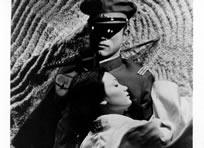

Two political thrillers of extremely different stripes this evening. The first, Yukio Mishima’s short 1966 film Yukoku and then Costa-Gavras’s 1969 political thriller Z. The two movies could not be more unalike: Yukoku is brief, stark, weird, highly stylized and almost freakishly intense, Z is naturalistic, frenetically shot and edited, alarming and intensely furious. The fact that they were made around the same time and come from polar opposites of the political spectrum make the evening that much more fun.
Yukoku is based on a short story published in the US as “Patriotism,” which is essentially a dry, clear-eyed, blow-by-blow account of an army officer committing seppuku. The movie is much more stylized, artsy even, with its abstract sets, lack of dialog and dramatic lighting. The officer comes home, greets his wife, explains the situation with her, she agrees to also kill herself, they have serious, intense, dramatically-lit sex, he gets dressed and kills himself, she goes and puts on fresh makeup, then comes back and kills herself too. A lot of Mishima’s key themes are distilled into this 25-minute movie — the changing nature of Japanese culture (which Mishima despised, being politically conservative in the extreme), the importance of dying while still beautiful, the tying together of sex and death and the compulsion to make one’s death a work of art. (Of course, most people these days watch Yukoku, if they watch it at all, because Mishima later killed himself in a manner startlingly similar to what he does in this movie.)
Mishima, surely one of the most egotistical men of his day, strangely declines to give himself a single close-up in this most personal of stories. Instead, he hides his face behind the bill of his army hat through the whole movie, giving all the close-up time to the actress playing his wife. She becomes, essentially, the protagonist of the movie — the army officer remains opaque and unknowable, while his wife (and by extension, we) are meant to fall desperately in love with his noble honor and tragic beauty. After her husband dies, the wife goes to freshen up and there is a terrific shot of her silk robe dragging through the pool of her husband’s blood on the floor. On the one hand, one says “ick,” but on the other hand, the shot drips (sorry) with symbolism and beauty, which kind of sums up my feelings about Mishima in general. On the whole, I’d rather he go on making experimental films instead of killing himself in a meaningless political gesture, but then I probably wouldn’t be sitting here thinking about him.
Z is a whole different kettle of fish.
Here in the US, we’re completely comfortable watching movies about Russia or Italy or Spain and seeing American actors speak English with cheesy accents — we don’t think a thing about it. But when watching Z, it’s disorienting for a while because it’s a movie set in Greece about Greek people but is shot, um, somewhere that’s not Greece (I think French Morocco), starring an all-French cast speaking French. On top of that, the filmmakers have made the decision to not try too hard to make their locations look authentic, which means that it feels like all you need to know is that it’s a political thriller that takes place in some sunny country. (At the time of course, the story was not only fresh but still going on, so none of this had to be explained to anyone.)
For the first half, it’s a political thriller par excellence, shot with such verisimilitude as to be startling and confusing. Nothing is explained, nothing is slowed down for the newcomers or Americans. There’s some kind of country, and it’s run by some kind of quasi-fascist regime, and an opposition leader is coming to town for a rally. We see the rally organizers trying to nail down the specifics of their upcoming event, we hear that there is a threat of assassination in the air, we see the general political unrest in the streets. We (at least we in 2007) don’t know which side anyone is on, who to root for, or even who the protagonist is. We’re just kind of plunked down in the middle of this situation and left to fend for ourselves. The shooting is all documentary style, handheld cameras and whipcrack pans, with a few artsy little flourishes, and then just when we’re getting oriented to who’s who and what’s at stake, the opposition leader gets assassinated and the movie changes gears.
53 minutes into the narrative, the protagonist shows up, the special prosecutor hired toinvestigate the assassination, and the movie becomes a detective thriller as we watch the prosecutor gather evidence, track down leads, and piece together the chain of events that led to the assassination. It’s almost unbearably thrilling, because we are in the exact same situation as the prosecutor — we just got here, we saw everything happen but we have little idea what any of it means. So as the scope of the conspiracy becomes clear and the stakes rise, our anger towards the people responsible gets greater and greater.
I first saw this movie in 1981 or so and thought “Wow, fascinating, what interesting places these horrible little tinpot dictatorships are,” and last night, of course, James and I could not help but be reminded of what our country is going through right now. We watch as government officials edit intelligence reports to fit a pre-decided outcome, twist and distort language to serve ideological ends, smear, intimidate and destroy their political opposition and finally kill anyone who disagrees with them, banning the use of language itself when it contradicts the official viewpoint, and it’s like being granted a backstage view at the White House. Halfway through the movie, I had a vision of the 28-year-old Dick Cheney watching this movie in 1969, watching how the fascists operate and whipping out a notebook, nodding along, saying “uh huh, got it, good, oh that’s a good one, yes, ah yes, indeed.”
Late in the movie the prosecutor is delivering his findings to his government superior, who grows increasingly upset as the story is accurately assembled before his eyes. The prosecutor, who has no agenda other than finding out who done it, turns up his palms, almost apologetically, and says “these are simply facts,” which is, of course, why his boss is so upset, and which is why the scene resonates with us so strongly today. We live in a country where the simple stating of facts is considered a dangerous left-wing attack on the government.
The fascists of Z despise modernism, long hair, rock music, liberalism and lack of respect for the government. One wonders whose side Mishima would have been on while watching the movie.


Girl in the Ashes part 2

FATHER.
I have returned from the fair! For my beautiful step-daughter, the most beautiful dress in the kingdom!
STEPSISTER 1.
Oh thank you Step-Father!
FATHER.
And for my other beautiful step-daughter, a string of pearls fit for Neptune’s Wife!
STEPSISTER 2.
Oh they’re lovely! Thank you!
FATHER.
And for my beautiful – Christ, what happened to you?
CINDERELLA.
Father, I –
STEPMOTHER.
The child has turned against us, husband. No doubt from prolonged grief over the death of her beloved mother.
STEPSISTER 1.
She won’t sleep in our room any more!
STEPSISTER 2.
She thinks she’s better than us!
STEPSISTER 1.
She thinks she’s a princess!
STEPSISTER 2.
She’s a sickening little twerp!
STEPSISTER 1.
She sleeps in the fireplace, Step-Father! She sleeps in the ashes!
STEPSISTER 2.
She calls herself Cinderella!
FATHER.
Dear Lord. Wife, is this true?
STEPMOTHER.
I’m afraid it is dear Husband, my daughters do not lie.
FATHER.
Well then, Cinderella, since that is now your name, here is your present: a stick. Funny, I don’t remember you being such a strange, conceited, perverse little girl before. Good thing I have other daughters now. Come embrace me, daughters!
(The STEPSISTERS embrace him.)
STEPSISTER 1.
We love you, Step-Father!
STEPSISTER 2.
Oh so very much, Step-Father!
STEPMOTHER.
Husband, you must be so thirsty after your long ride. How about a nice draft of grog for the Great Provider?
FATHER.
Well, I’m not one to turn down a nice draft of grog. Thank you Wife. To Upward Mobility!
(He drinks, chokes, dies.)
CINDERELLA.
Father! No! Father!
STEPMOTHER.
Oh dear, he’s dead. What a terrible tragedy. Daughters, don’t touch the dead body. Cinderella, see if you can’t get him in the ground before dinner. And for God’s sake, wash up before you touch our food.
(They exit. CINDERELLA takes the stick to her mother’s grave.)
CINDERELLA.
Mother, oh Mother, help me please! You’ve got to help me! I don’t think I can go on any longer! They’ve killed your husband now; I’m condemned to a life of slavery! You said you would watch over me; where are you! All I have left in this world is a STICK. If it will make you help me, I now give it to you.
(She thrusts the stick into the ground and collapses in tears. Unseen by CINDERELLA, the stick grows into a tree.)
Please, Mother, please. HELP me. HELP me. I can’t do this by myself.
(STEPMOTHER enters.)
STEPMOTHER.
Cinderella! Cinderella! Wonderful news! — Zounds, I don’t remember that tree being there before. Oh well – Wonderful news, Cinderella!
CINDERELLA.
My father isn’t dead? My mother has heard my prayers?
STEPMOTHER.
Uh…no. No, the King is giving a Grand Ball! And we are all invited!
CINDERELLA.
A, a Grand Ball? What holiday is it?
STEPMOTHER.
That’s just it, it isn’t one! I hear that the real reason for the Grand Ball is so that the Prince can choose himself a bride!
CINDERELLA.
Oh, that is wonderful news! Then we must get all dressed up, and look our best, and –
STEPMOTHER.
Yes we must, and so we’re going to need your help. After you bury your father and serve us our dinner, you must start in on making us the most beautiful dresses you can think of. And we’ll have to sell off all your father’s possessions so that we can buy some decent jewelry. That is the way to catch a man; you must look as though you don’t need the money, then he will shower you with riches. Packaging is everything. Imagine me: the mother of a princess! And once the King is out of the way, QUEEN MOTHER. ME.
CINDERELLA.
But Step-Mother, what am I going to wear?
STEPMOTHER.
Wear? When?
CINDERELLA.
To, to the Grand Ball.
STEPMOTHER.
You? Dear, you’ll have so much to do with getting your sisters ready, I doubt you’ll have the time or energy to go to any Grand Ball. Now what is that dead man still doing in the kitchen? Are you going to mourn him all day?
INTERPRETER. (to AUDIENCE)
The Grand Ball. The Grand Ball. At the Grand Ball, the Prince will choose his bride. Well, where I grew up, we didn’t have Grand Balls. We had School Dances, but the School Dance was an event for which I was singularly ill-suited. I could not dance, I would not dance, my clothes were ugly and years behind the fashions, I was funny-looking and asexual and incompetent. I was one of the army of geeks and clowns who stood at the edge of the gymnasium and sneered at the others, the Farrah-haired cheerleaders and the blow-dried jocks, who fooled themselves into thinking they were having a good time. No, these were not the Grand Ball. The Grand Ball, for me, took place in a much larger arena. The Grand Ball was the complicated superstructure of society, the innumerable transactions and negotiations with teachers and girls and parents and friends and enemies. This is the Grand Ball to which I was not invited. The World. The World was the Grand Ball to which I was not invited.
(The Day of the Grand Ball. CINDERELLA, STEPMOTHER, STEPISTERS.)
CINDERELLA.
Step-Mother, the Grand Ball is tonight. Are you all satisfied with your dresses?
STEPMOTHER.
Girls, are you satisfied with your dresses?
STEPSISTER 1.
Oh yes! Mine is more beautiful than the sun!
STEPSISTER 2.
And mine glitters and sparkles like the stars!
STEPSISTER 1.
We’re sure to catch the Prince’s eye with these outfits!
STEPSISTER 2.
Yes, it seems that, that girl over there is quite talented, for a monkey anyway.
STEPSISTER 1.
Oh you mean that girl in the ashes? Our Princess?!
(They laugh.)
STEPMOTHER.
Oh you little golliwogs, you do make me laugh! Yes, Cinderella, it appears we are satisfied.
CINDERELLA.
Then, since I’ve made the dresses, and you have your jewelry, and my chores are all done for the day, would it be all right if I went to the Grand Ball?
STEPSISTER 1.
Go to the Grand Ball? YOU?!
STEPSISTER 2.
Yeah, you’re a disgusting little mudskipper, what would you do at the Grand Ball?
STEPMOTHER.
Now girls, remember what I told you, excessive cruelty is unladylike. Cinderella, you can’t go to the Grand Ball, you’re unclean.
CINDERELLA.
Oh, I can wash up in no time!
STEPMOTHER.
But you have nothing to wear.
CINDERELLA.
Well I thought maybe I could borrow one of my step-sisters old dresses. If-if it’s all right with them.
STEPSISTER 1.
Oh sure you could – in your dreams!
STEPSISTER 2.
Cooties! Cooties! Cooties!
(They exit laughing.)
CINDERELLA.
Or I could make a dress, you know, out of leftover scraps. And things. It won’t take me long.
STEPMOTHER.
Really. Well. Yes, well I suppose, if you can get yourself cleaned up and make yourself a presentable dress, I suppose –
(She suddenly hurls a cup of linseeds into the fireplace.)
Oh drat, look what I’ve done, clumsy me, I’ve spilled a cup of tiny linseeds into the ashes. We can’t have that, can we? All right Cinderella, look: if you can pick every one of those linseeds out of the ashes in an hour, then you may go to the Grand Ball. Okay? Wonderful.
(She exits. CINDERELLA, despondent, goes to her mother’s grave.)
CINDERELLA.
Mother, where are you?! This is my only chance for happiness and I’m all alone! You’ve forsaken me! You’ve abandoned me! You’ve –
(MOTHER enters in the guise of a bird.)
BIRD.
No I haven’t, Cinderella. I’m right here in the form of this bird. I will never forsake you. I will never abandon you. Here: follow me.
(They go into the kitchen.)
Watch: I will pick up those seeds by myself in no time at all. You just watch.
(And she does. It takes no time at all.)
There: here is your cup of seed. Call your step-mother.
(BIRD flies off away from the action.)
CINDERELLA.
Step-Mother! Step-Mother!
(STEPMOTHER enters.)
STEPMOTHER.
What is it, you urchin? I haven’t got all day.
CINDERELLA.
Here are the linseeds. I picked them all up from the ashes. It didn’t take long at all.
STEPMOTHER.
Really? Let me see.
(She takes the cup.)
My God. They’re all here. How did you do this?
CINDERELLA.
Oh. Well, a little bird helped me.
STEPMOTHER.
A little bird indeed!
(She throws them into the fireplace again.)
Pick them up again!
(She throws in another cup as well.)
And pick up those as well! I’ll teach you to smart off to me! Little bird!
(STEPMOTHER exits. BIRD flies to the fireplace and picks out the seeds again while CINDERELLA bemoans her fate.)
CINDERELLA.
Oh no! Two cups! What a disaster! I could never pick up two cups! Not in a million years! Now I’ll never go to the Grand Ball! My life is ruined! Ruined! Ruined!
BIRD.
Daughter –
CINDERELLA.
Ruined!
BIRD.
Daughter –
CINDERELLA.
Ruined! What?
BIRD.
There are your seeds, back in their cups. Call your step-mother.
(BIRD flies away.)
CINDERELLA.
Step-Mother! Step-Mother!
(STEPMOTHER enters.)
STEPMOTHER.
Oh for Heaven’s sake, what is it now? I still have to put my face on, I can’t be traipsing back and forth on every whim –
(CINDERELLA holds out the cups.)
CINDERELLA.
Here they are, Step-Mother. All done. Surely now I can go to the Grand Ball.
(Pause. STEPMOTHER strikes CINDERELLA so hard that she falls to the floor. The cups of seed go flying.)
STEPMOTHER.
You stupid crustacean! This isn’t about seeds, this is about you. You will never be suitable company for me and my daughters no matter how skilled you are, no matter how fast you work, no matter how many Little Birds you have working for you! Don’t you get it? Don’t you GET it? You’re a freak, Cinderella! You’re not fit to walk the earth! You have no soul! You would be better off if you were born dead! Forget about the Grand Ball! Forget about it! YOU ARE NOT WORTHY.
(And she exits. Pause.)
BIRD.
Daughter –
CINDERELLA.
Oh my God.
BIRD.
Daughter –
CINDERELLA.
She’s – she’s –
BIRD.
Dear –
CINDERELLA.
She’s right. She’s right. How could I be so blind. She’s absolutely right. I am worthless. I am worthless. I’m a blot on the landscape. I’m a fifth wheel.
BIRD.
No, Daughter –
CINDERELLA.
I’m a slug. I’m a frog. I’m a worm.
(BIRD exits.)
I’m dirt. I’m mud. I’m slime. I’m scum.
(BIRD enters with dress and slippers.)
I don’t deserve a life What was I thinking? Did I think I was human? Did I think I was likable? Did I think I was –
BIRD.
Daughter!
(CINDERELLA looks up.)
This is your dress. You will wear this to the Grand Ball. These slippers are made of gold. No one will be able to take their eyes off you. You will be special. You will be so special. You will be the Belle of the Ball.
CINDERELLA.
Oh. Oh. Mother, it’s, it’s beautiful. It’s so beautiful.
INTERPRETER. (to AUDIENCE)
My mother tried to buy my clothes, but I had the worst taste in fashions imaginable. I had no sense of color or pattern or style. I wore stripes with spots with plaids. The clothes I liked looked horrible together. The clothes I wore made me look retarded. The only reason I never worried about it was that I assumed that no one ever looked at me. I assumed I was invisible. I assumed I went unnoticed. So no, clothing was not my ticket to the Grand Ball. Clothing was not my disguise. I could not use clothing to hide the fact that I was unworthy, that I was undeserving, that I was an interloper, that I was a party-crasher, that I did not belong at the Grand Ball. I had to use something else. But I didn’t know what.
And one night, quite late, when I was still young and my mother was not yet sick with cancer, the two of us were up late watching television together, as we did sometimes, and I got on some self-pitying kick, griping and moaning about how no one likes me, everybody hates me, think I’ll eat some worms, yada yada yada, and my mother says look at this guy. And I look at the TV, there is Sammy Davis Junior. He’s singing. In a Nehru jacket. And beads. With rings like huge blisters on his fingers. And my mother says “Look at THIS guy. He’s black, he’s Jewish, he’s short, he’s ugly, he’s got one eye. Have any of those things stopped him?” No. They had not. He was singing on our TV, if they could see me now, that old-time gang of mine.
So that is what my mother gave me instead of a glittering dress and golden slippers. She gave me show business. She loved movies, loved movie stars, loved theater, loved musicals. She showed me that show business is the natural haven for losers like me, the natural disguise for all the humpback dwarfs, the two-headed girls, the freaks, the ninnies, the feebs, the dweebs, the screwheads. Show business could be my disguise for crashing the Grand Ball.