Favorite reactions to The Dark Knight

As I was walking to my car after the movie last night (that is, 4:00am) most of the 20-something crowd (well honestly, who else is going to go see a movie at 12:45 besides 20-somethings and 40-something nightowl screenwriters? There was a combination of both sitting next to me — a 20-something nightowl screenwriter who actually brought his laptop to work on his spec script while waiting for the movie to begin) were high as kites over the Dark Knight experience. There was one unhappy young lady, however, who seemed utterly baffled by a movie that she saw as a punishing ordeal. “What was that movie even about?” she cried, “What was the point of it all?” as her friends looked at her in bafflement. “What were you expecting?” one of her friends offered. “He didn’t even rescue anyone!” wailed the young lady in reply. The inflection of her remarks indicated to me that, for this woman, the “superhero movie” genre brings with it certain expectations: larger-than-life evil villains determined to destroy the world, incorruptible strongmen who stand for truth, justice, etc, damsels in distress, and a moral stance on the side of absoluted good. And yes, The Dark Knight fails to deliver on all those expectations.
Some critics complain that the plotting is “muddled” or “scattershot” or “herky-jerky.” I disagree. It is certainly complex, with many different plot strands to sort through, but I never found it anything less than absorbing and fleet. (I’m seeing it again tonight, and report more.)
Other critics (sometimes the same as above) and even some fans found the action sequences baffling and incoherent. Again, they are certainly complex, but I had no trouble following the action. Sometimes I thought it could have slowed down a little bit to savor this or that detail, but I wasn’t the guy making the movie.
David Denby, in the New Yorker, laments that “Warner Bros. has continued to drain the poetry, fantasy, and comedy out of Tim Burton’s original conception for Batman“, a criticism that makes me laugh out loud and, quite obviously, misses the point of the whole movie. As though Tim Burton’s “original conception”, with its Prince songs and very bad special effects, was somehow “the genuine article,” a primal document, as though the fifty years of comics that had preceded Tim Burton’s “original conception” don’t count, as though the predecessors that Burton drew on (Frank Miller, Fritz Lang, Ridley Scott for starters) never existed. And don’t get me wrong, Tim Burton’s Batman blew my mind — in 1989.
Every now and then I see someone comparing to The Godfather Part II, which, as I said yesterday, is silly. Comparing it to Heat, however, is perfectly appropriate, except that The Dark Knight covers a lot more ground at a much faster tempo. I also find it to be the less operatic of the two, in spite of having its protagonists be a guy in clown makeup, a guy in a bat suit, and a guy with half a face. The other movie it reminds me of is City Hall, which, frankly, could have used a psychopath in clown makeup and a guy in a bat suit but had to make do with Al Pacino and John Cusack.
Everyone is talking about Heath Ledger’s performance, and I say “good job!” But since few are mentioning Gary Oldman, let me do so here: I think Jim Gordon is one of Gary Oldman’s greatest creations. It’s true that Heath Ledger vanishes into his role, but he’s got the makeup to help him with that — Gary Oldman vanishes into Jim Gordon with nothing but a pair of glasses and a moustache. He was more visible in Dracula, f’r Chrissakes. Oldman has always been a wonderful technician and has often specialized in The Bold Choice (cf Leon, Hannibal,The Fifth Element) but here I don’t see an “actor” anywhere in evidence, just a hard-working, middle-class Gotham City public servant, a man who loves his city and hates the things he has to do to make his family safe.
(Come to think of it, there is a scene that shows Jim Gordon’s daughter. But she looks rather too young, like, 5, to be a credible Batgirl.)
The Dark Knight

Saw this at a midnight show at my favorite Westside multiplex, the Century City AMC. Serious analysis will have to wait for another day, but here are some thoughts.
I keep thinking about The Godfather. When The Godfather was released in 1972, the gangster movie had been, from the ’20s, a pulp genre, not taken seriously by intelligent filmgoers. (I remember when The Godfather Part II was in theaters in 1974. I was too young to see it, but I had an art teacher who I respected and admired, and he said that he was not planning on seeing it because it was “a gangster movie — worse, a sequel to a gangster movie.” He said the words “gangster movie” the way I might say the words “child molester.”) By finding some universal truths in the genre and applying some compelling, elegant plotting, The Godfather took the gangster movie into the realm of high art, and for my money it and The Godfather Part II are still the two greatest movies ever made.
(The Silence of the Lambs also comes to mind as a pulp genre narrative elevated to high art — and there are many points of comparison between it and The Dark Knight, but I don’t want to spoil it for you.)
The Tim Burton Batman movies, no question, blew my mind. They are grand and operatic and weird and dark and very, very cool. The Schumacher Batman movies — well, let’s just set those aside for the purposes of this discussion. Batman Begins was a whole different ball game, a comic-book movie with a complex plot and a dark, gritty vision. But there was still a little too much of something in there — it was still a little too operatic, occasionally even a little silly. It wanted to take itself very seriously but it was still hampered by what was “expected” of a comic-book movie — grand characters with evil schemes, ludicrous action sequences and over-the-top plot points (Batman calling the bats of Gotham City to his aid comes to mind).
The Dark Knight is a whole giant step beyond. It’s a serious crime drama that happens to feature well-known comic-book characters, in the same way Casino Royale is a sophisticated espionage thriller about a complex figure whose name happens to be James Bond. It’s not Batman Begins Again or Batman: Bigger, Faster, Louder. It doesn’t even feel like a sequel. It’s a crime narrative unto itself, one that draws on the Batman ethos for its pop-culture resonance but exists solely on its own terms.
The Batman comics have, occasionally, achieved the seriousness and complexity of plot that The Dark Knight has, and the best of the stories have also succeeded in being wicked cool, but The Dark Knight takes Batman into a whole new realm of thoughtful consideration. It doesn’t merely work as “a comic-book adaptation,” it works as a movie. A knowledge of the Batman world might help someone navigate the hugely complex narrative that unfolds in The Dark Knight, but is unnecessary to enjoy it as a movie. I’ve read Batman comics and thrilled to the notion of Gotham City as a grand, dark imagining, but the Gotham City of The Dark Knight feels like a real, recognizable place, not a symbol but an actual city, a place worth thinking about and saving. Frank Miller may have made Batman “adult,” but The Dark Knight makes Batman actually grow up.
(I see that certain people, regardless of what this movie is, are still marketing it to kids, with happy-meal toys featuring the Joker with his scarred, hideous face. I wish they wouldn’t do that. I have nothing against movie-based toys, my house is littered with them, but The Dark Knight is not a movie for children in any regard and should not be marketed as such.)
My Iron Man


After working on Astroboy and Wonder Woman, for many years I was “on the list” of writers consulted for every comic-book movie that came down the pike.
When the Iron Man people asked me for a take on their then-aborning project, I took a jaunt to my local comic-book store to look for source material. This was quite a few years ago now, and, as hard as it is to believe, there was almost no Iron Man material in the stores. The only readily-available collection was The Power of Iron Man, an important, ground-breaking story arc that dealt mainly with Tony Stark’s alcoholism.
So I said “All right, whatever you say. Alcoholic superhero. Let’s go.” This is the pitch I came up with:
Tony Stark is an arms manufacturer. He’s a heel and a creep, but somewhere deep inside he’s still human. He brings death and destruction to the world, and it’s beginning to corrode his soul. He turns to alcohol to dull the pain. Caught in the jaws of the capitalist beast, he can only press forward and continue producing death. He has responsibilities to his corporation to keep moving forward, but he’s cracking under the strain and alcohol, he thinks, will hold him together.
His alcoholism progresses to the point where he starts having blackouts. What he doesn’t know is that, when he is blacked out, he becomes Iron Man. Iron Man is, essentially, Tony Stark’s conscience, fighting against the very machine that Tony operates in his non-blacked-out hours. Iron Man works as hard to dismantle Tony’s company as Tony does pressing its agenda. Tony even gets the idea to create War Machine, a “waking Tony” creation designed to fight Iron Man, never realizing that he is, himself, in fact, Iron Man.
So I thought “Well, an alcoholic superhero, I don’t think we can sell that to an audience, but a superhero who is his own supervillain, we haven’t seen that yet.” And I pitched my take to the producer who had sent me The Power of Iron Man and his instant reaction was “Are you crazy? We can’t make a movie about an alcoholic superhero!” And that was the end of that.
(The idea of an alcoholic superhero, of course, didn’t seem so outrageous to the producers of Hancock.)
So they went and made an Iron Man movie without me, and it turned out very well. Tony drinks a lot in the movie, but they never point to it as a “problem,” which I think is the correct approach. The plot coincides with my pitch insofar as it hinges on Tony’s growing realization that he is not making the world a better place by manufacturing ever-more sophisticated weaponry. He doesn’t become schizophrenic, rather, he fights Obidiah Stane, his corporate officer and gets bounced out of his own company. It’s a lot of the same ideas, but more elegantly and organically presented. As far as superhero movies go, it’s pretty sophisticated stuff and a cracking good time. It is both a geek-fest and a good “entry point” movie: it’s filled with Marvel in-jokes but also manages to stake out its own identity. This is all very hard for a hugely-expensive movie to do, which makes Iron Man all the more impressive.
The crowd for the screening I attended was more pumped for this movie than I’ve heard a crowd be pumped for a movie in a long time. They hooted and hollered, shouted and sang as the lights went down. The only thing that got them more excited than Iron Man was the trailer for The Dark Knight which received cheers and a round of applause. Iron Man completely delivered to this crowd, a movie about a gearhead, made by gearheads, for an audience of gearheads. I mean that as a compliment.
I would say to be sure to stay until after the ending credits, but if you’re the sort of Marvel Geek who is rushing out to see the movie today you probably already know that.
Sam, cartoonist


Sam (6) came home from school the other day with a number of pages of made-up superheroes. This group of six I found especially intriguing and sat down to ask him about them. He told me about them (he was making them up as he went along) and I asked if I could draw my own versions of them. He gave me the okay, so I now present them to you: the superheroes of tomorrow. None of them have names yet, hence the rather generic descriptors they currently possess.

Fire guy — not to be confused with the Human Torch, this is a person made entirely out of fire. I’m not sure if this has ever been done before — usually a fire guy is a person who can become fiery but is not actually made of fire himself. Where Fire Guy came from is another story.

This guy seems like the leader to me, a kind of mad-genius Inventor Guy. I’d like to think that he’s a Reed Richards-level intellect that was horribly disfigured in a terrible accident but then learned to build himself a new body. As you can see, his torso is a metal cylinder and his “arms” are bolts of electro-magnetic power that enable him to reach out and pick up large metal objects. I asked Sam if the big square things at the ends of his legs were his feet or something he was stepping on, and Sam said “no, those are his feet,” and if I’m not mistaken this is the first superhero with gigantic blocks for feet. I’m not sure how it would benefit a superhero to have enormous blocks for feet, but who am I to argue with the choices made by a genius inventor? The ever-writhing cables circling his torso, I’d like to think, are held there by electromagnetism and can also lash out to grab things or hit bad guys.

I’m calling this guy Armless Guy for now. I asked Sam what all the different little appliances were coming out of his body and he was clear on some of them and not clear on others (imagine! a cartoonist who thinks more about how something looks than whether or not it makes any sense!). A couple of things were clear: he carries an axe and a circular saw and a drill — he’s kind of like the Swiss Army Knife of superheroes. I asked him what the top-left appliance was and he said “Oh, you know, an extra eye,” which led me to consider that Armless Guy might also be technically blind. Lacking a clear idea on his two other limbs, I gave him a launchable rocket and some kind of energy-burst weapon. When my wife saw this drawing she said “Why is he smiling?” and I said “Well, he doesn’t have any arms, I wanted him to at least be cheerful about it.” And now that I’m looking at him, it wouldn’t surprise me if he wasn’t actually some kind of cyborg.

Plant Guy is my favorite so far (Sam has many more spreads like this). At first I thought a Plant Guy would be boring to look at, but this guy took me by surprise. Although I can’t for the life of me figure out what his super-powers are, the idea of a super-hero with flowers growing out of his ears and forehead seems like a winner to me.

This is Electricity Guy, or Lightning Guy. Electricity Guy is closely related to Fire Guy, insofar as he is an entity made entirely of electricity, unlike the Superman villain Live Wire, who is a human being who can become electricity under certain circumstances. Where did he come from? What’s his story? I want to know.

And finally, Cable Guy, a disembodied head connected to a large cable, with various electronic components sprouting from his head and limbs. When I first saw Sam’s drawing, I asked if Cable Guy’s left hand was an electrical plug. He said “Well, it’s supposed to be a video camera or something, but sure, it could be a plug.” Then I asked him what his other hand was, and he said “Well, I think that’s a different kind of video camera, but really it could be anything.” Then I “got” the character — he’s like a sentient surge-protector and you could, conceivably, attach any number of electronic devices to his cables. The satellite dish sprouting from his forehead seemed obvious enough, but I made the wrong guess about his other device, saying that it was a flat-screen monitor. Sam informed me that I was incorrect, and when I asked him what it was then he merely offered “Well, you know, extra face.” So there it is — Cable Guy’s extra face.
Spider-Man 3

I get that some alien goo from outer space, apropos of nothing, lands mere feet away from the protagonist. I get it.
I get that an escaped convict, the man who killed the protagonist’s uncle, stumbles into an open-air particle-accelerator thing, and that he thus gets the ability to commune with and manipulate sand. I totally buy it. I get that a bump on the head is guaranteed to give another antagonist amnesia just when the protagonist most needs it to happen. I get that in a city of eight million people, the protagonist and another antagonist just happen to be in the same church bell-tower at the same time, so that alien goo can drip from one to the other. I get all that.
What I don’t get is the career of Mary Jane Watson.


The Spider-Man sketch
Spider-Man by Sam, age 3. This was his first-ever representational drawing.
In honor of ![[info]](http://stat.livejournal.com/img/userinfo.gif) urbaniak‘s appearance today at the NYCC (with jacksonpublick , Doc Hammer and my good friend Mr. Steven Rattazzi) I here present the famous “Spider-Man” sketch, which James and I performed a couple of years ago at a similar event at MoCCA.
urbaniak‘s appearance today at the NYCC (with jacksonpublick , Doc Hammer and my good friend Mr. Steven Rattazzi) I here present the famous “Spider-Man” sketch, which James and I performed a couple of years ago at a similar event at MoCCA.

UPDATE: as one can see, I have finally figured out the “cut” function. Thank you ghostgecko.
The Spider-Man Sketch
DC vs DCU
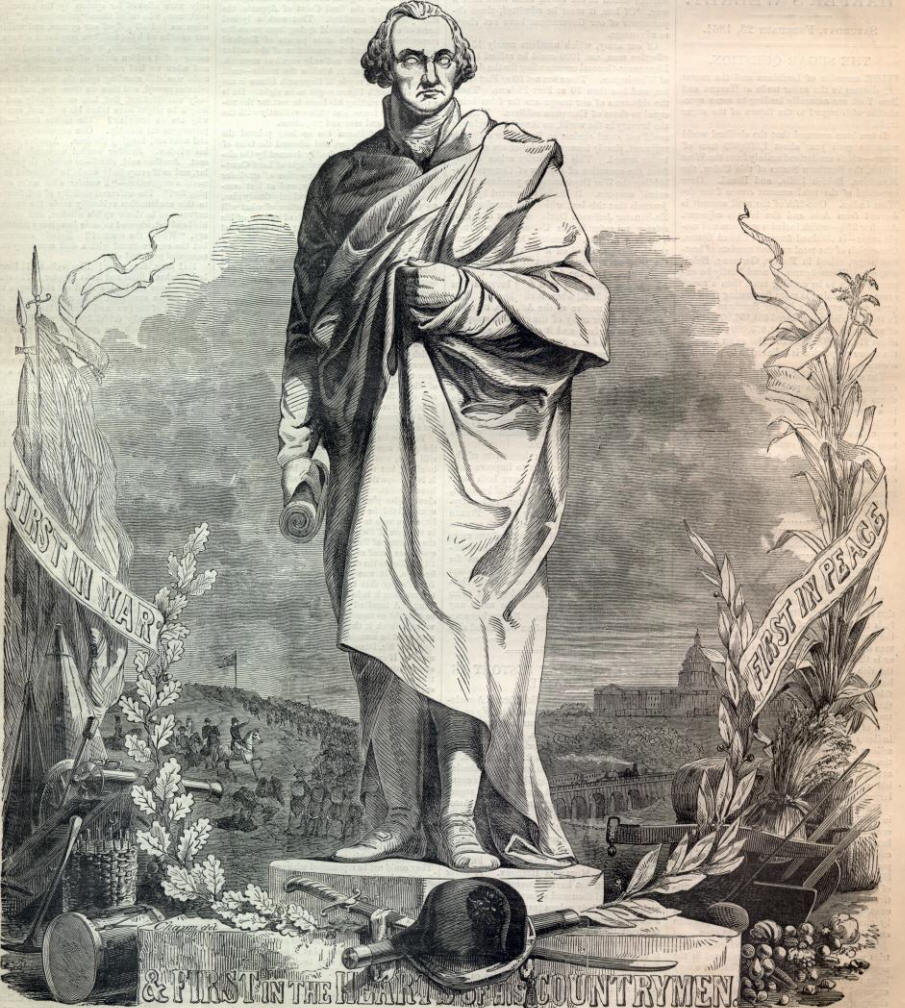

Tonight’s bedtime conversation with Sam (5).
SAM. Is tomorrow a school day?
DAD. No. It’s Presidents’ Day. Do you know who the Presidents are?
SAM. Yes.
DAD. Yeah? Can you name one? Who was a President?
SAM. (patiently, as though to a dull toddler) George Washington.
DAD. Do you know what the President does?
This Sam is less clear on. Which is just as well at this embarrassing point in our nation’s history.
I start to say that if the United States is the DC Universe, you could look at George Washington as Superman, but then I realize that if I say that, the next question will be “Then who is Batman?” and I don’t have a clear answer for that.
Clearly, George Washington is Superman. He was the first, arguably the most important, debatably the best, and most importantly the “original.” But then, indeed, who is Batman? Is it Adams, contemporary of Washington and close second in defining the young nation’s ethos? Or is it, say, Lincoln, the most beloved of the presidents, the tall, dark, brooding loner president, the tortured insomniac, haunted by the deaths of his loved ones, the one who broke the rules for the sake of the greater good?
Does that make Wonder Woman Thomas Jefferson, the warrior for peace, architect of our most precious freedoms? Or is she more like Franklin Roosevelt in that regard, giving our enemies a bitter fight while generously giving our poorest and weakest a fighting chance of their own? That would make Truman Green Lantern, saving the world with his magical do-anything world-saving device.
And who would be an analog for colorless chair-warmers like Millard Fillmore and Chester Arthur? Are these men Booster Gold and Blue Beetle? Clearly Rorshach is Richard Nixon, Alan Moore practically begs us to see the parallels, but what of Kennedy, Nixon’s shining twin? Is that Ozymandius, or is he a simpler man, a purer spirit, someone like Captain Marvel? Or is he Superboy and his “best and brightest” cabinet the Legion of Superheroes in the 31st century?
And how to categorize corrupt, incompetent disasters like Grant, Harding, Hoover and Bush II? Is Reagan Plastic Man, effortlessly escaping ceaseless attack with a smile and a quip? And what about Johnson, weak on foreign policy but a genius in the domestic realm, who is that? Or William Henry Harrison, who caught pneumonia during his inaugural parade and died a month later? Or Grover Cleveland, who served, left office, then came back and served again?
Or perhaps the metaphor is imprecise, perhaps the US presidency is unlike the DCU after all — perhaps it’s more like the X-Men, where weak individuals are granted extraordinary powers and yet are still hampered by their combative attitudes toward each other and their under-developed social skills. In the X-Men you have heroes who might not turn out to be heroes after all. And vice versa.
Or maybe we’re looking in the wrong direction, perhaps the US presidents aren’t the “good guys” at all. While Bush II has so far shunned the metal mask and hooded cloak of Dr. Doom, he has certainly succeeded in turning the US into his own private Latveria. And any given Republican of the 20th century can lay claim to being the Lex Luthor of the bunch, brimming with brilliant, short-sighted schemes to make himself rich while destroying other people’s lives and property.
And, if they were given the choice, is there any serious doubt as to whether Americans would elect a comic-book character over a living, breathing human being?

My Supergirl

As a comics fan and the father of a young Supergirl-loving daughter, I have been following the recent controversy surrounding the recent appearance of Supergirl.
Recently, a meme has sprung up in response, wherein various artists have contributed their concepts toward a new vision of Kara, the last cousin of Krypton. Above is my effort.
I do not claim supremacy in the sequential arts.
You may click to see it larger.
UPDATE: Unable to leave poor enough alone, I have fiddled with the shading to make her a tad more realistically lit.

Happy Almost Valentine’s Day
For your romantic inspiration, some tender moments from Justice League.


This is, of course, the real reason why I watch the shows of the DC Animated Universe — it’s all the hot, hot man/woman, woman/alien, man/mythological figure, man/scientific experiment, man/winged alien, woman/alien, psychopath/psychopath, woman/scientific experiment, alien/robot, martian/martian, man/psychopath, mythological figure/martian, alien/winged alien, woman/mythological figure love going on.
As my son Sam (5) exclaimed after one episode of Justice League: “Everybody on this show is in love! I thought this show was supposed to be serious!”