Put on a happy face, again
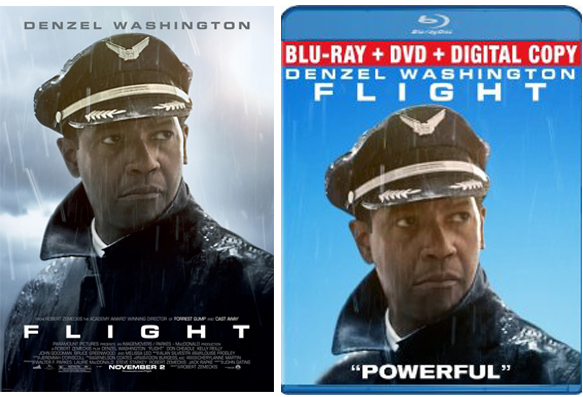
I’ve written in the past about the phenomenon of studios cheering up the posters for movies when they’re released on DVD. (Here and here.)
A few weeks ago I saw an electronic billboard here in LA for Flight, Bob Zemeckis’s tense drama about alcoholism, but the original poster image had been altered. Star Denzel Washington was no longer standing in the rain on a stormy day, he was now standing in much less rain in front of a blinding blue sky and the quote “FLIGHT SOARS!” blared over his head. I thought, well, for the sake of the quote they want to make the movie look like an inspirational drama, which it is, in a way, so I guess that’s okay.
Now I see that that billboard image was merely a dry run for the DVD cover, and that Flight, the studio had decided, needed some cheering up for the home video market. Pilot Denzel is no longer facing his demons in a storm, now he’s peeking at God as the rain comes to a stop. I’m sure this image is a mock-up, but I like how someone has placed the quote “POWERFUL,” without attribution, below Denzel’s face. I’m sure if Denzel wins the Oscar his expression will be changed to “beaming triumph” and the font will be changed to Trajan.
X-Men: First Class part 4
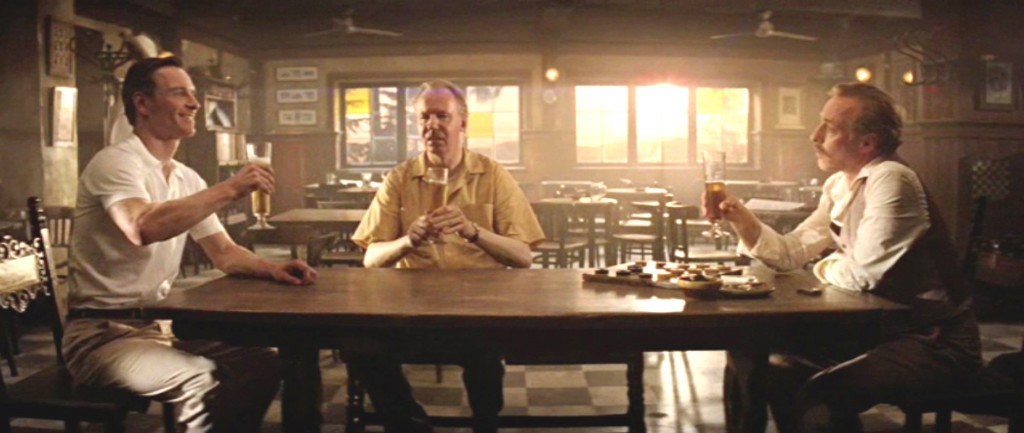
Moira MacTaggert, temporarily a protagonist and looking for an expert on mutants, travels to Oxford to find Xavier, who has just received his degree. Meanwhile, Erik travels to Argentina to Find Dr. Schmidt, who he doesn’t yet know is really Sebastian Shaw. He comes to a bar that serves German beer and finds a couple of regular patrons who, as luck would have it, are pictured in a photograph up on the wall, with Schmidt, on a boat (a boat with anachronistic Trajan font on its stern). The tables have turned, Nazis are the Other now and these two pals of Schmidt are hiding in South America. Erik reveals himself and kills the two men and the German bartender. One of the men tries to defend himself with a Nazi knife (“Blood and Honor” it says on its blade) while the bartender approaches with a Luger, the Nazi pistol of choice. Even though Erik went in to get information about Schmidt, he got none from the men himself — he learned everything he needs to know from the boat photo with the anachronistic font. He kills two of the men in self-defense and one out of vengeance. Or, since he has control over all the metal objects in the room, he kills them all out of vengeance. The one with the knife gives the old Nazi excuse of “We were only following orders,” an expression that was hugely popular among escaped Nazis at the time: Adolf Eichmann had just been captured in Argentina and was tried in Jerusalem in the spring of 1962 and used the “only following orders” defense as his excuse. Eichmann had just been executed at the time this scene takes place, the knife-wielder’s use of the quote could not have been more germane, or more ill-timed to garner sympathy from Erik.
X-Men: First Class part 3
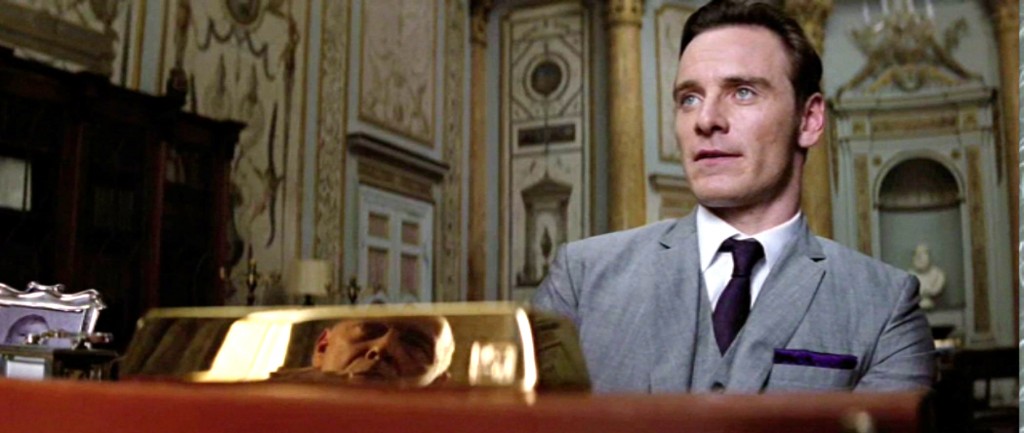
The grown-up Erik Lehnsherr has traveled to Switzerland, like Jason Bourne, to find something. Bourne was looking for himself, but Erik is looking for Dr. Schmidt, the Nazi doctor who wasn’t really a Nazi doctor, who mentored him and developed his metal-manipulation powers during WWII.
Erik has gotten into the bank by pretending to be a client with a bar of Nazi gold. The screenplay doesn’t indicate where he got this bar of gold, but he does mention that “it’s all that’s left of my people.” Did Erik, under orders from Schmidt, extract this gold from the teeth of Jews in Schmidt’s prison camp, remove jewelry hidden on their persons? He doesn’t say, but we shortly see him do both those things to the Swiss banker who resists giving up Schmidt’s current location. Erik says he’d like to kill the banker, since the banker apparently has plenty of ex-Nazi clients, but he stops at merely removing one of his fillings. We will see later that Erik has no trouble killing Nazis, why does he demur at the opportunity to kill the banker? Perhaps he’s worried the murder of a banker would draw undue attention to him. In any case, the banker gives Erik Schmidt’s current location (Argentina, the ex-Nazi’s favorite hiding place).
“Urbaniak’s Last Cast”

The actor James Urbaniak, who readers of this blog will know as the voice of Dr. Venture, or as the polygraph guy on Homeland, has been one of my closest friends since I met him on this very date (well, yesterday on this very date) in 1989 at a shoebox theater in lower Manhattan during a blizzard. True story.
Lately, he’s been doing these podcasts, Getting On with James Urbaniak. He emailed me and asked me to contribute a piece, and of course I was happy to do so, and you can hear it here. It turned out pretty awesome.
The assignment was very specific: not a monologue or a rant or a routine, but a monodrama: that is, a drama, with a plot, and conflict, and events occurring, premise, development, crisis, denouement, all that, starring one actor, James, playing a character named “James Urbaniak.” I’m a huge Samuel Beckett fan from way back, and the only thing that popped into my head as a suitable monodrama was an adaptation of Beckett’s Krapp’s Last Tape, where an elderly man, a failed writer, reviews tapes he made of himself when he was younger and wonders about what happened to himself.
So that’s what I did, except I made the elderly writer James. His performance is more than I could have hoped for.
All the events James talks about in the podcast are true stories. James really did audition for the part of Chigurh in No Country for Old Men, he really did do a hit show off-Broadway where he really was too busy to meet Paul Newman, he really did walk the red carpet at Cannes, he really so forth. The only one of the stories that isn’t true at all is the first one, where he auditions for the part of Eugene in The Miracle Worker in high school but loses the part to the school quarterback. That didn’t happen to him, that happened to me, exactly as set down.
He didn’t really do an impression of Mackensie Crook at his audition for the role of Dwight Schrute. Rainn Wilson, to my knowledge, does not have a three-story mansion in Santa Barbara, and James does not live in a crappy bungalow in Eagle Rock.
The cassette recorder referred to in the text was one my family owned in the late 1960s, one very much like these:


Finally, a “frustum” is a truncated pyramid.
X-Men: First Class part 2
We’ve met our rich-boy, poor-boy leads, and our story will turn out to be a romance between them. Because X-Men: First Class is a love story, it is allowed two protagonists. Generally speaking, a love story is weighted in the favor of one participant or the other, but First Class‘s seems genuinely evenly-balanced. So, if we have our two protagonists, the question immediately rises: what do the protagonists want? Erik’s desire is clear, and stems from privation: he wants his mother back. Xavier’s desire, on the other hand, stems from comfort and plenty: he wants all those who are unusual to feel safe and welcome. (It’s an interesting question how safe Xavier feels in his estate, if his mother is cold and distant.)
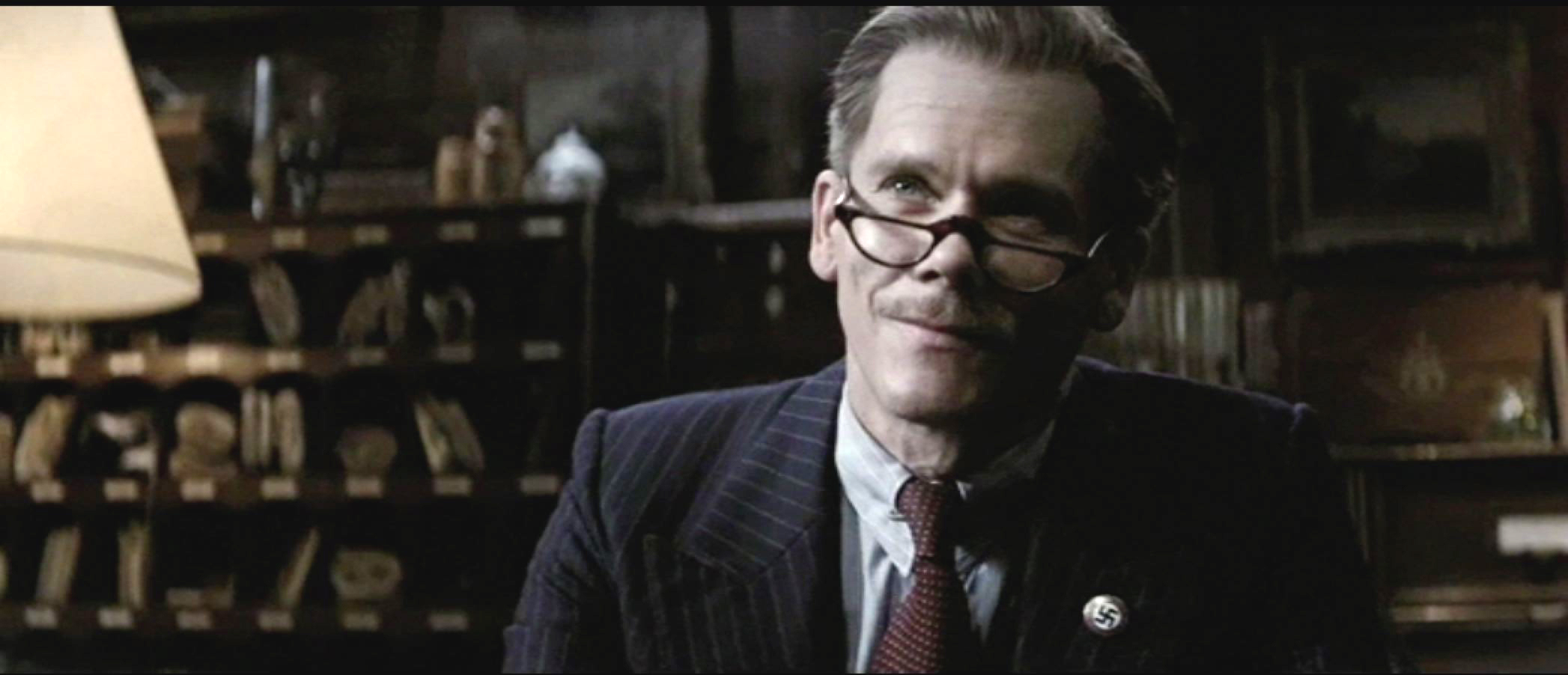
But before we get to the love story we need to meet our primary antagonist, Dr. Klaus Schmidt. Dr. Schmidt, before he even sits down to speak to Erik, tells us that he is “not a Nazi.” He listens to Edith Piaf, pooh-poohs the Nazi goals of blond hair and blue eyes and offers Erik chocolate. He’s playing “good cop,” and in fact is positioning himself as Erik’s new father in this wartime drama. It takes a special kind of man to pretend to be a Nazi to the extent Schmidt does, and we will learn more about that later.
X-Men: First Class part 1
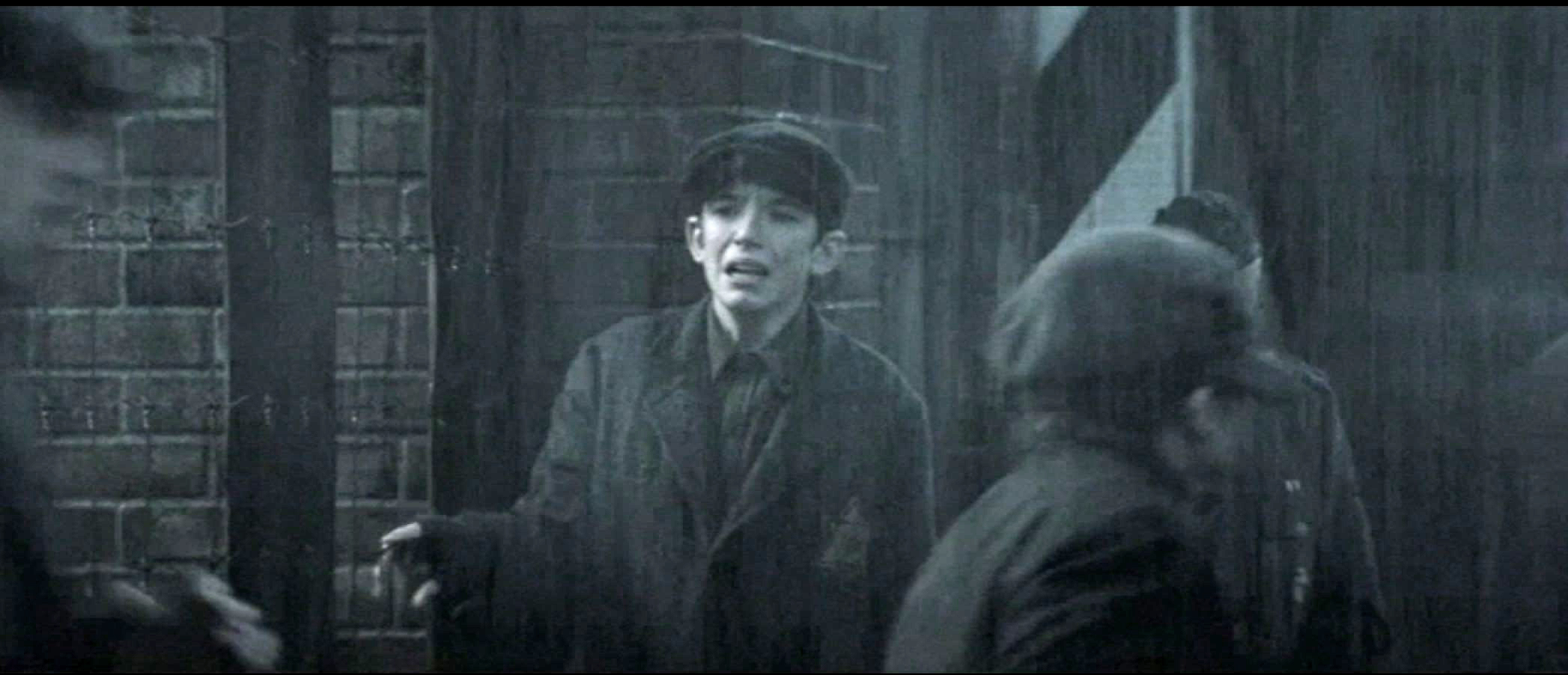
X-Men: First Class does something I haven’t seen a superhero movie do before. It’s not just a period piece, that’s unusual enough, but it also places its fantastic characters, Gump-like, in the middle of historical fact. Captain America: The First Avenger, released concurrently, went back in time to place its difficult-to-like protagonist in his proper context, but then wove a fantastical story around him involving ancient Norse artifacts and a guy with no face. First Class not only places its characters in history, it puts them at the center of the darkest, most traumatic events of their time.
That kind of treatment skirts the boundaries of taste, turning, for instance, the Holocaust into comic-book fodder: First Class almost runs into Inglourious Basterds in its treatment of history. No one goes to the movies for a history lesson, but movies have always taught us, from their inception, through their dream-logic, who we are as a people and as a culture. It’s not the job of cinema to tell us how things are but how things feel. You can say that First Class tastelessly warps WWII, but Triumph of the Will did that before anyone even knew what WWII was. The Bryan Singer X-Men movies cloaked their tales of discrimination in colorful metaphor, but First Class demands to be considered “important,” and, to an astonishing degree, it succeeds.
“She Loves You” — a closer look
And now, your humble analyst turns his attention to the darker corners of one of The Beatles’ most popular songs. Warning: MINDS WILL BE BLOWN.
The Avengers part 17

The battle sequence that concludes The Avengers is broken into three acts. The first act, roughly, unleashes the horde of Chitauri on Manhattan. The second act simultaneously ups the stakes and lets the Avengers find their footing to fight them. At the end of the second act, Loki, our primary antagonist, has monologued one too many times and has been subsequently smashed by the Hulk. No fancy hologram-Lokis this time, pure, literal brute force is enough to put Loki away for good. “Puny god,” snarls the Hulk, reminding us, with good humor, that the US is, theoretically anyway, a democracy, not a theocracy. But there are still bigger, albeit less resonant, fish to fry.
The Avengers part 16
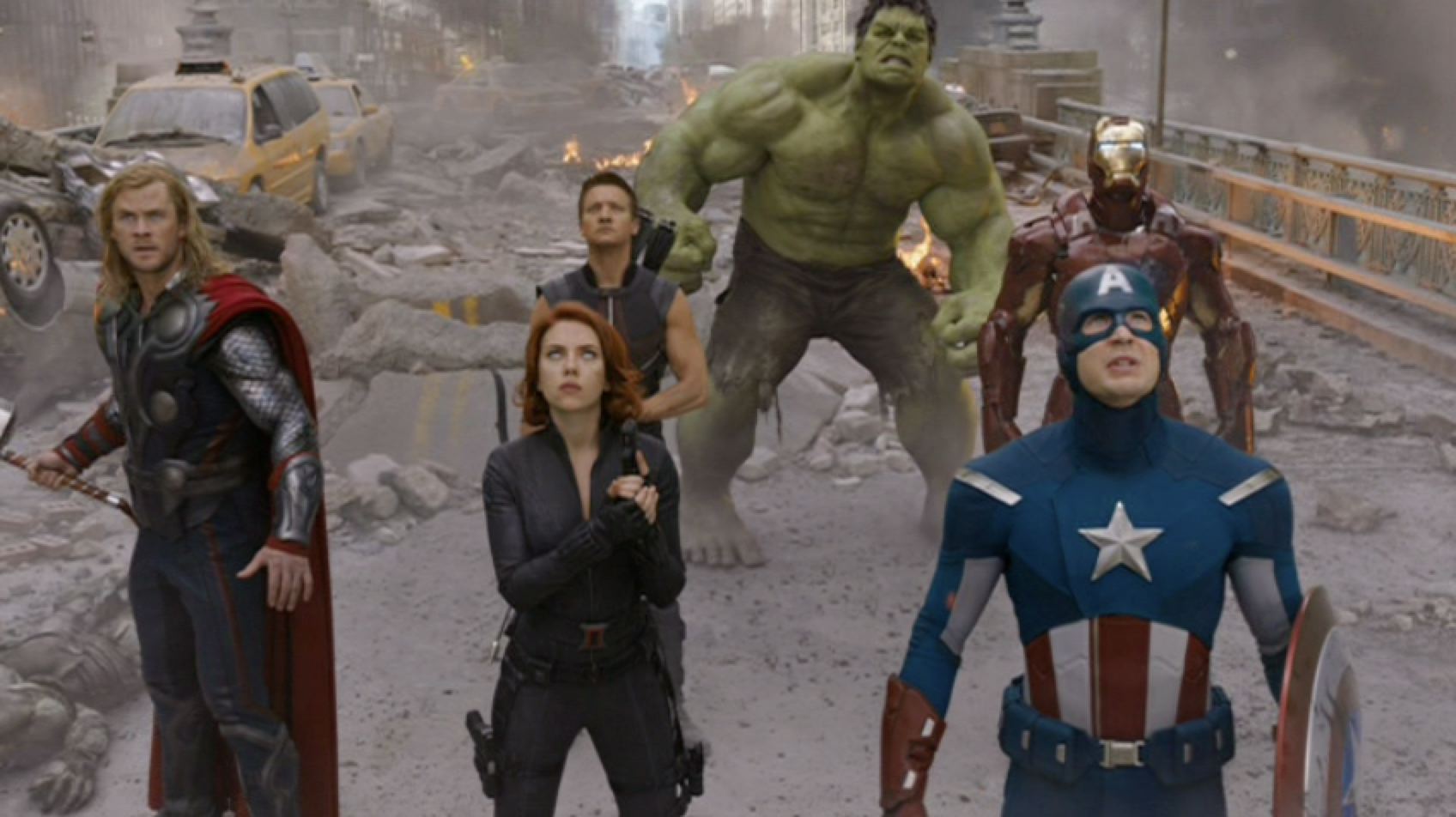
Now that the Avengers have “cleared the red from their ledgers,” the real battle for New York, and the world, begins. Capt America, the living anachronism, is suddenly made commander. Why is unclear: he’s shown no flair for either strategy or tactics up to this point, and he’s eternally baffled by technology. He is, however, the group’s resident idealist, and Coulson’s favorite, which gives him the moral edge. Nick Fury, it’s worth mentioning, is absent from the battle. He is, I hesitate to say, the “real power” at this point, governmental power the way we mortals understand it: sneaky, underhanded and secretive, no matter how high his ideals.
The Avengers part 15

The battle sequence that caps The Avengers is ferociously complicated and it bears study for its ability to balance plot, theme, character and story.
It begins with Tony Stark confronting Loki as a mirror. If all the Avengers want to “wipe the red from their ledger,” Tony’s red is his ego. He succeeds in his first blow, insofar as he strikes it for Agent Coulson instead of for himself (although he stops short of destroying his own penthouse apartment for the sake of toppling the Tesseract’s portal-generator).