The Avengers part 14
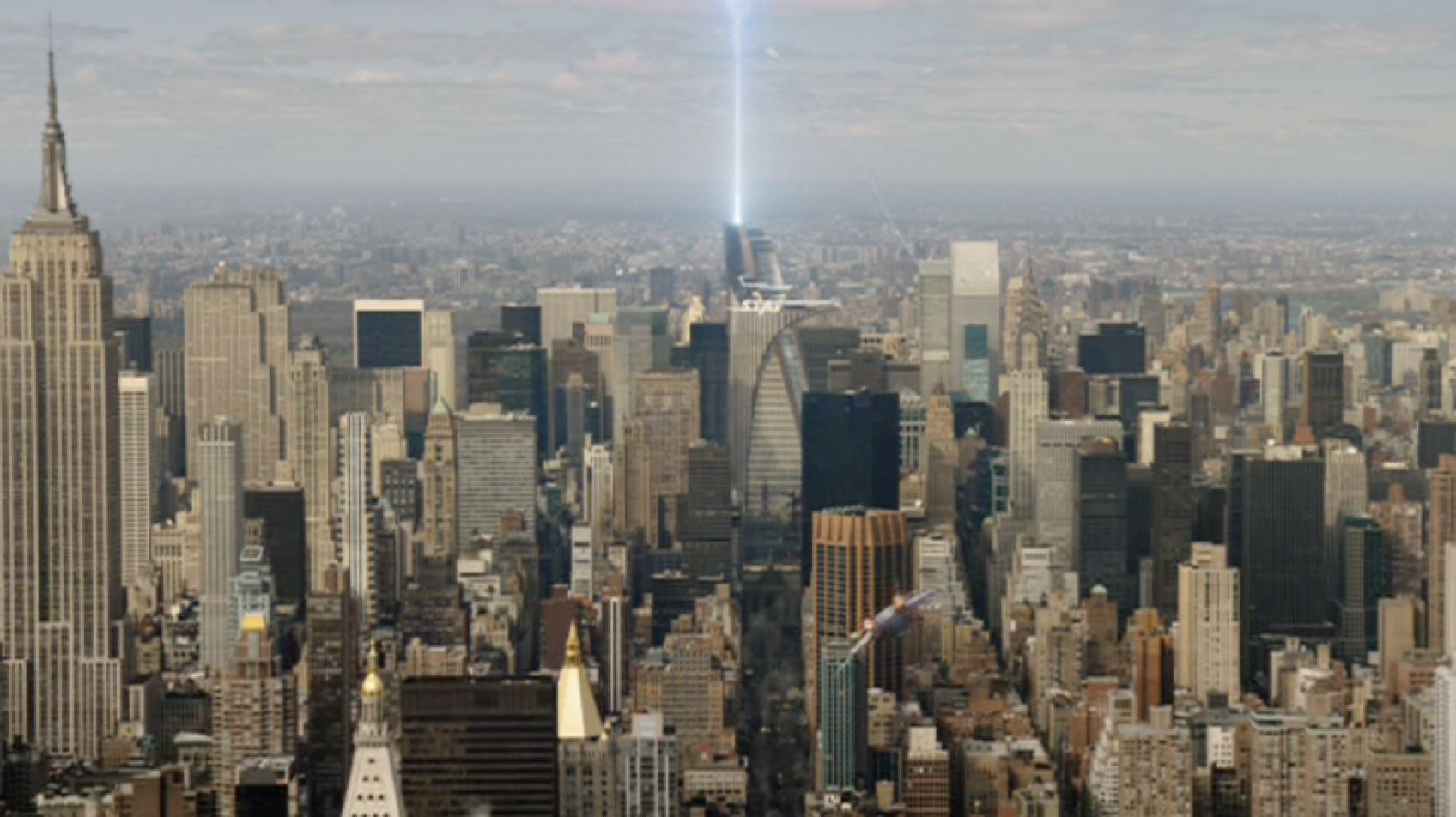
The gloves are off, the war is on. Stark Tower is ground zero. For the first time in The Avengers’s narrative, there are civilians involved. Civilians had to pay attention in Stuttgart, but now they are collateral damage.
Why New York, again? Hasn’t New York suffered enough cinematic attacks since 9/11? From the Green Goblin’s assault on the Roosevelt Island tram to Cloverfield‘s giant angry whatsit, to Bane’s perversion of the Occupy movement, why must New York keep suffering? Part of the answer, of course, is that New York must suffer fantastic re-creations of 9/11 in order for us to understand and heal from that event as a culture. Another part of the answer is that New York is simply Marvel’s home and always has been — there are fewer cinematic real-estate shifts more jarring than the one that removed The Punisher from the gritty streets of New York and moved him to — what the ever-loving fuck — Tampa? But finally, the answer to the question “Why New York?” is that it is America’s City, the melting pot, the place where America, like it or not, was born, and is continually born, the place where all the world comes to be American. Millions of people, all from somewhere else, all living atop one another, all clashing against each other, all chasing the dream, all hating one another, all knowing that that very clashing makes the city stronger. Just like, you know, not to put too fine a point on it, The Avengers.
The Avengers part 13
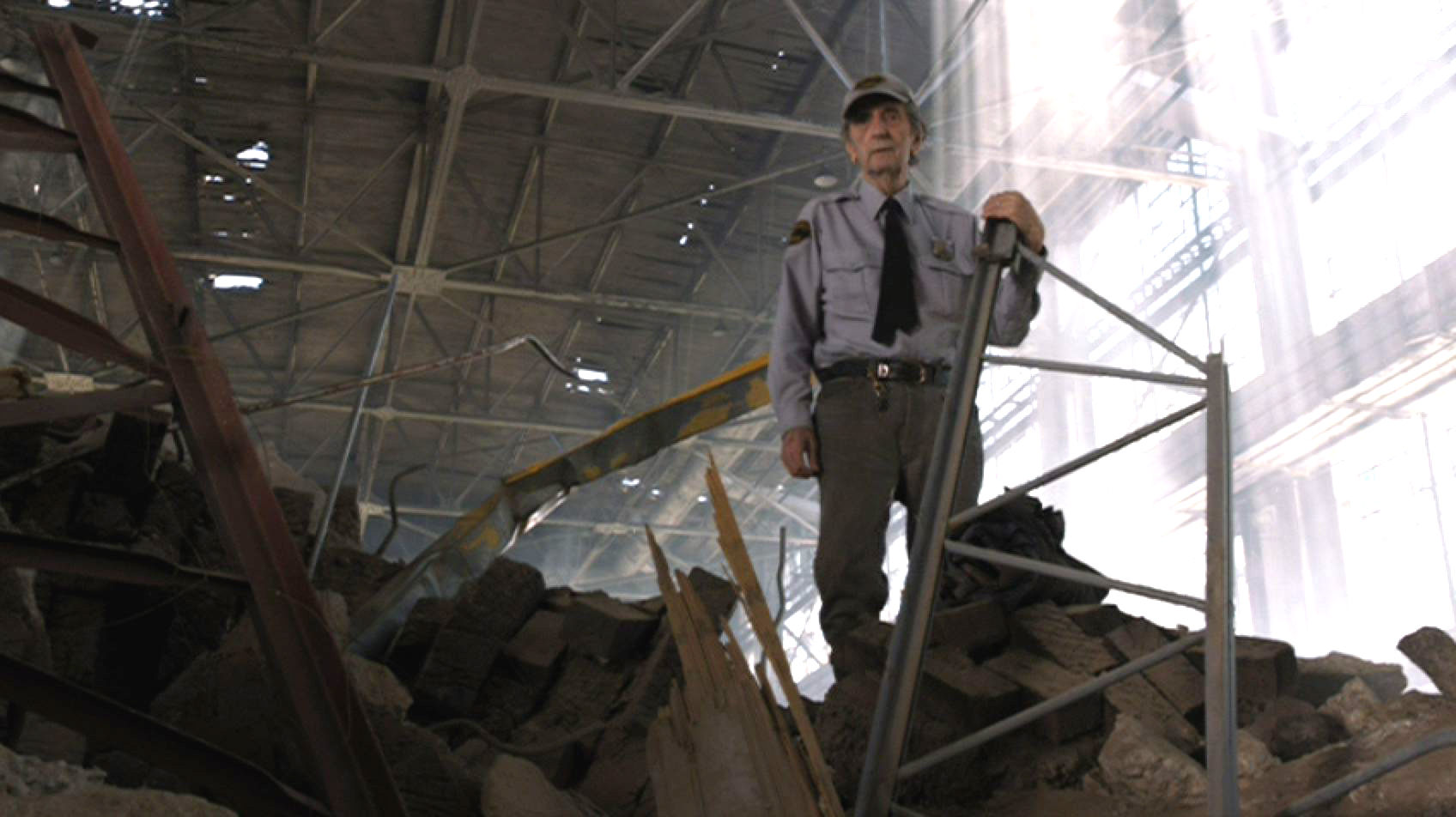
Toward the beginning of Act III of The Avengers, a security guy gives clothes to Bruce Banner, who has crashed through the roof of a factory or warehouse or something. The security guy is played by Harry Dean Stanton, who, the veteran viewer knows, has seen some weird shit in his day. He asks Bruce if he’s an alien, specifically referencing Alien, where Stanton got his head gored by the eponymous xenomorph.
The Avengers part 12
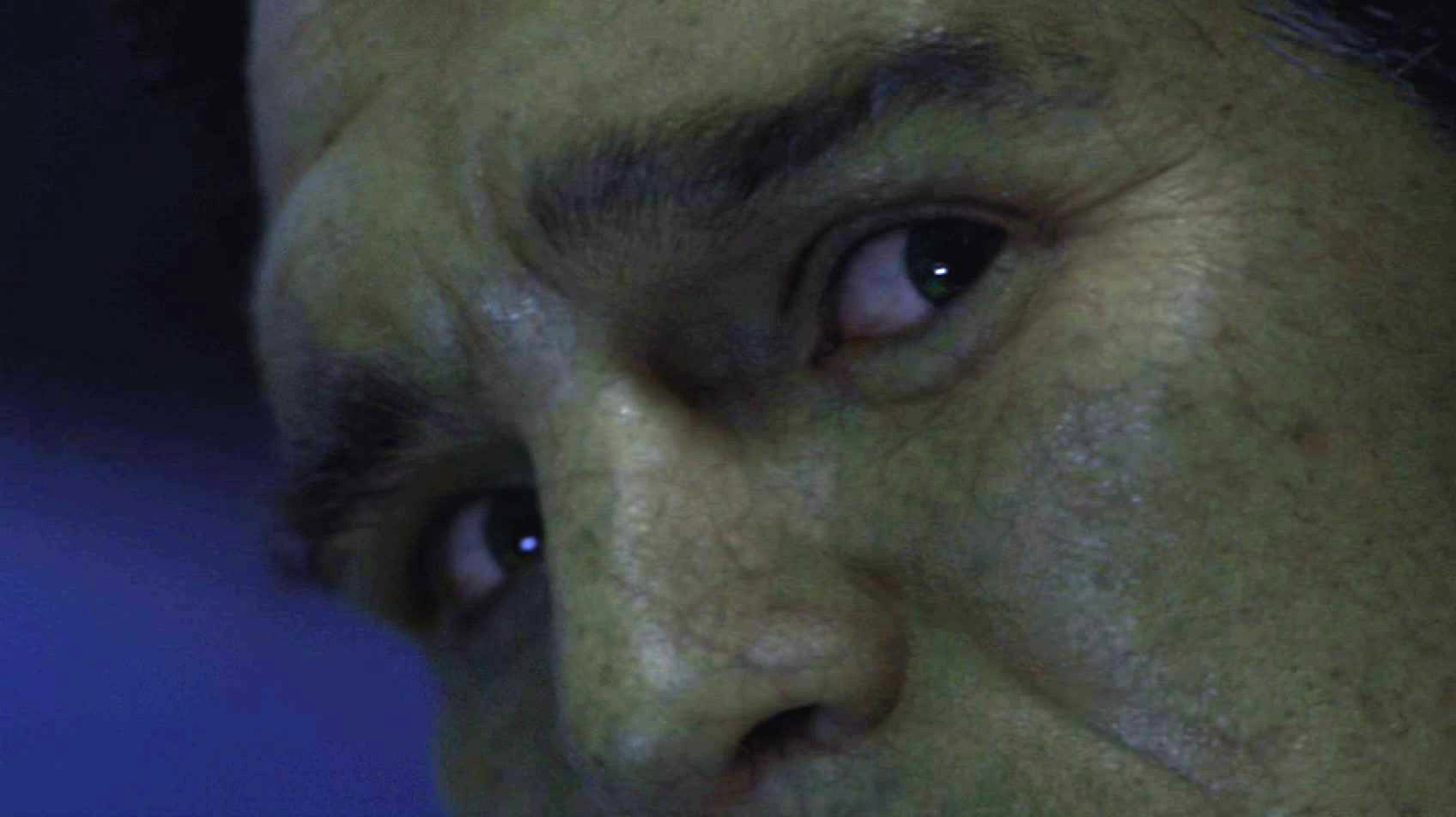
Let’s talk for a moment about how The Avengers balances its “superhero” moments.
The Avengers part 11
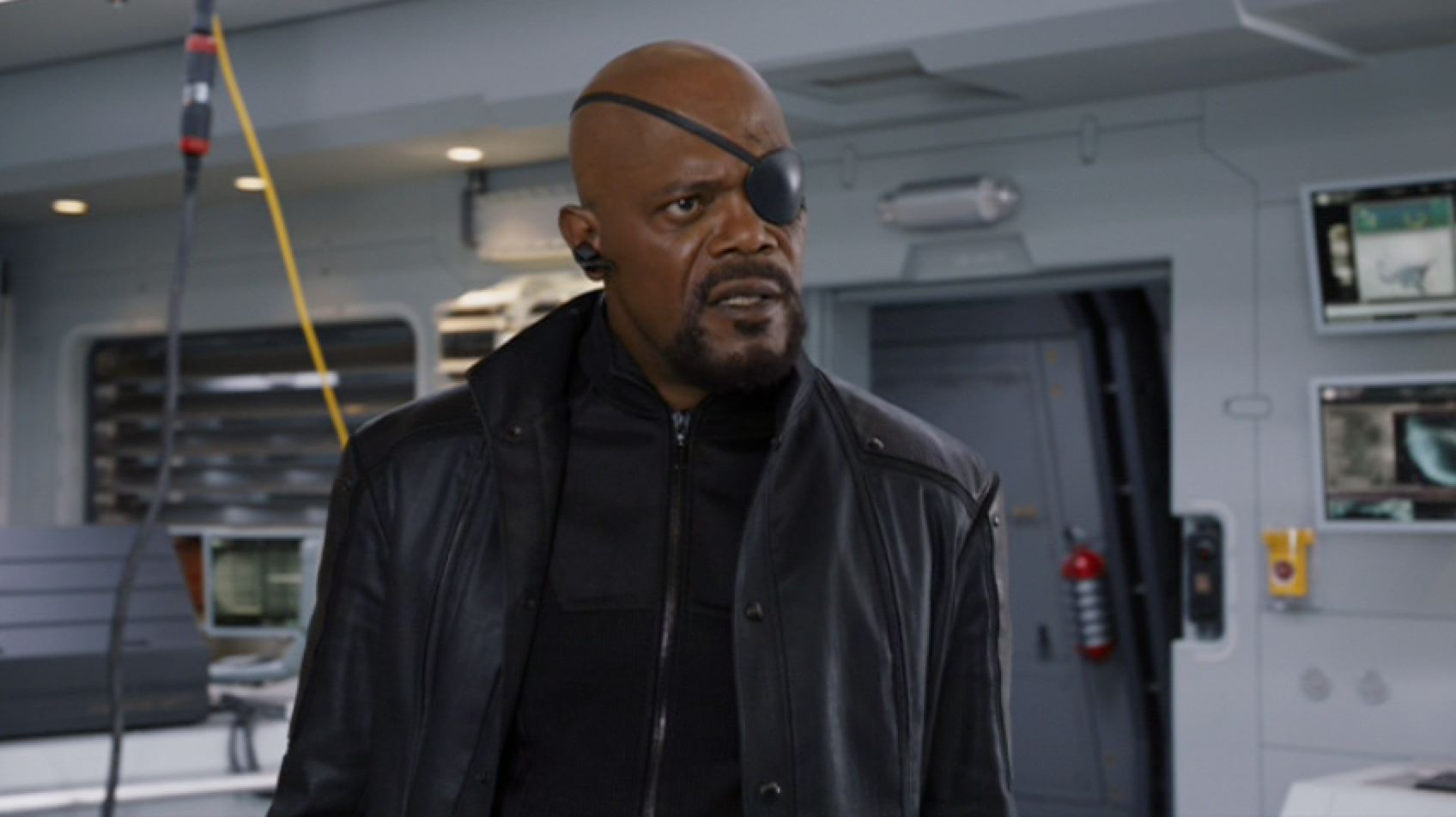
At The Avengers‘s midpoint, it suddenly becomes Watchmen. That is, it becomes a superhero narrative about the nature of a superhero narrative. It’s been many things up to this point, but now it folds in on itself and comments on itself. Suddenly, Tony Stark, Bruce Banner and Steve Rogers all discover that Nick Fury wants the Tesseract not to light the world but to build weapons of mass destruction. Fury, in his defense, says that, until Thor came along, SHIELD didn’t need weapons powered by the Tesseract. His argument is that we need super-weapons to fight against superpowers. Does this eliminate metaphor from The Avengers‘s screenplay? That is, can a screenplay about superheroes keep going if one draws attention to the fact that the superheroes are, in fact, superheroes?
The Avengers part 10
We briefly check in with Dr. Selvig, who is in a mobile laboratory, adding his stolen irridium to the Tesseract for whatever purpose. “Checking in with the Tesseract” generally signals an act break in The Avengers, so let’s see where we are now.
The Avengers part 9
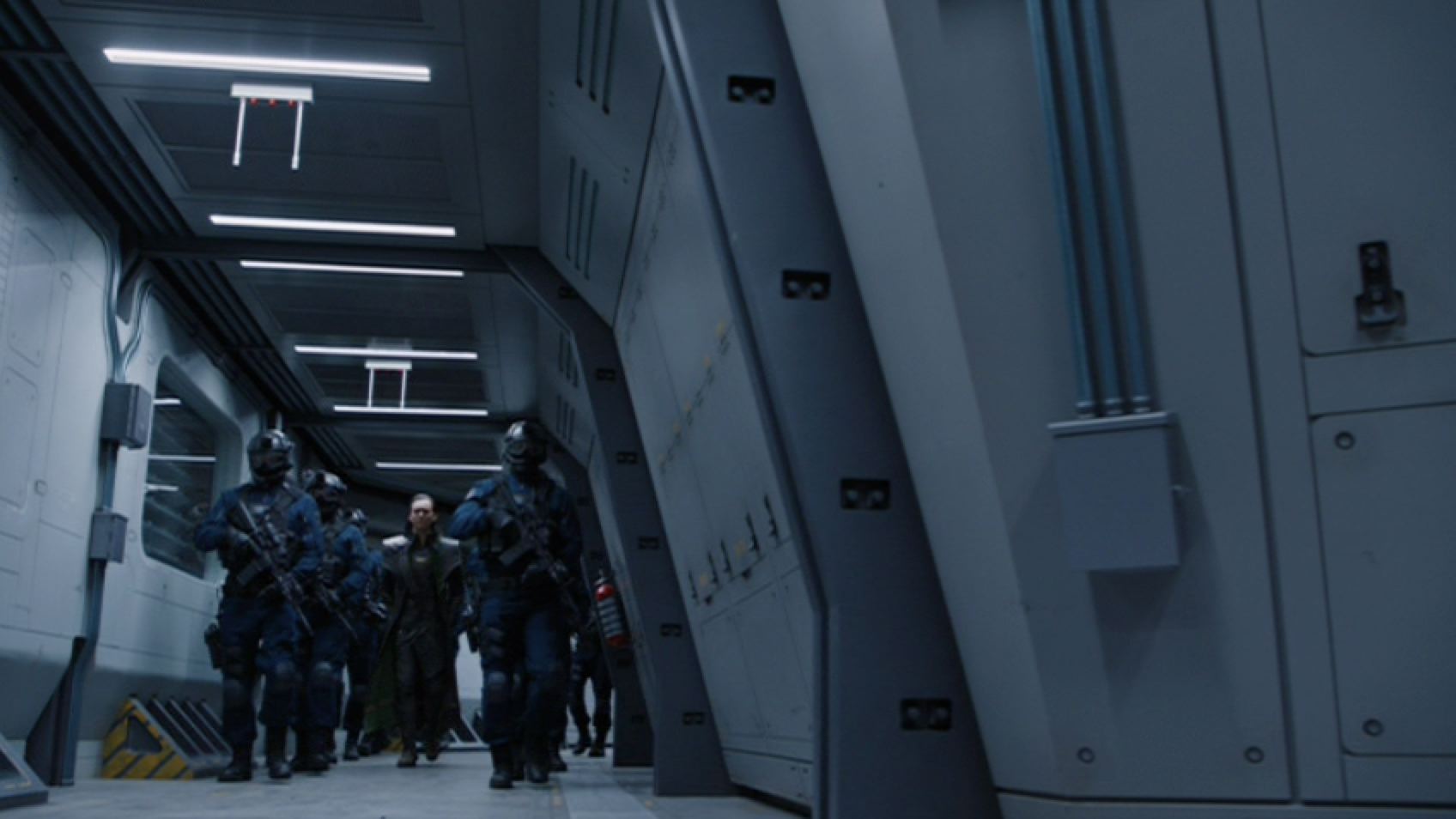
Loki, our chief antagonist so far, is aboard SHIELD’s helicarrier. The viewer is a little confused: one street fight in Stuttgart, and the bad guy is captured? Loki’s introductory shot, so reminiscent of Hannibal Lecter in Silence of the Lambs, was not a coincidence. Loki will go on to make the Lecter comparison concrete. Not only will he play the Lecter suit of corrupting minds from his cell, he is, like Lecter in Silence, not the real anatgonist, only the most charismatic one, the one most fun to watch.
The Avengers part 8
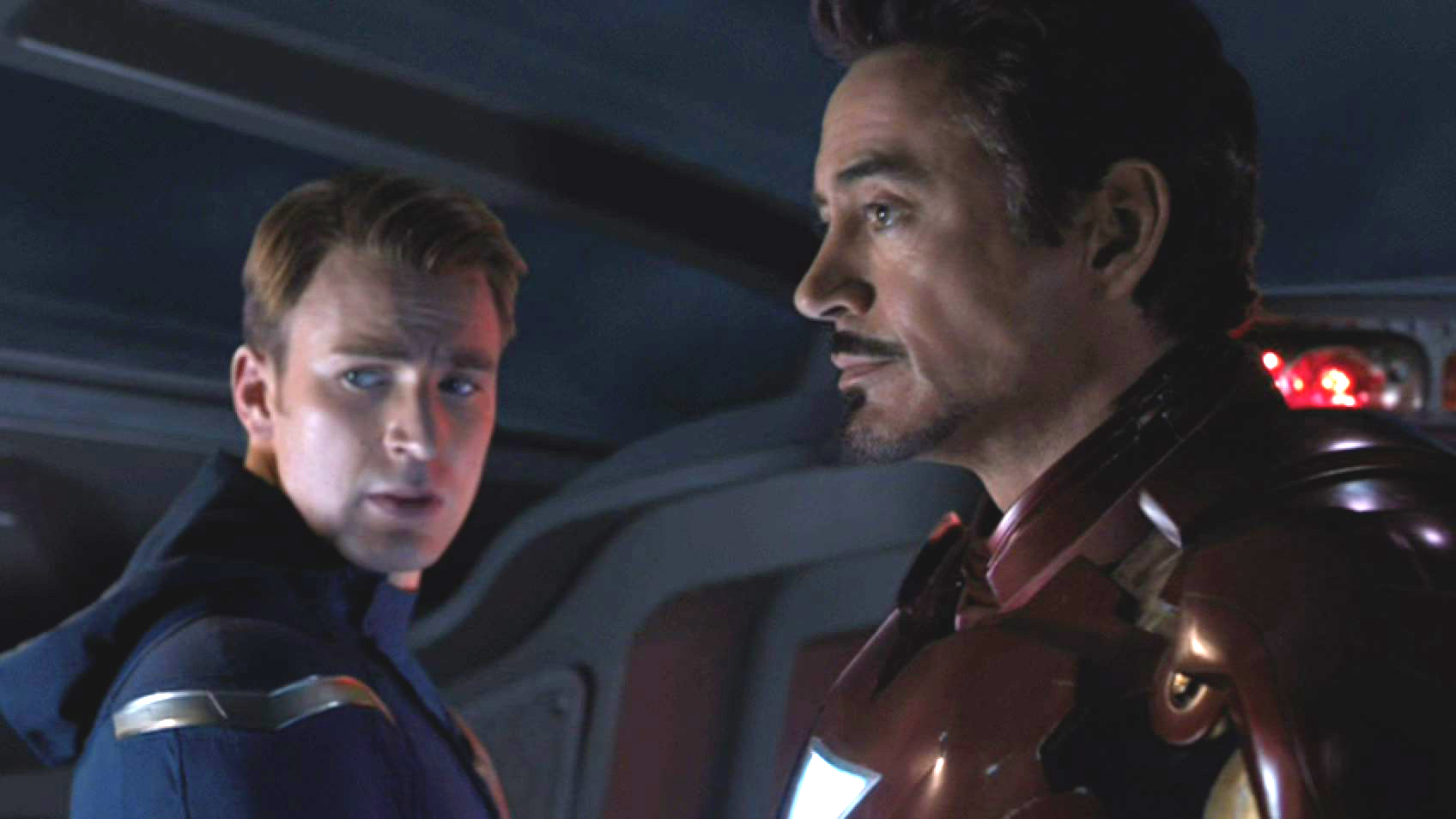
Steve Rogers and Tony Stark have teamed up to capture Loki in Stuttgart, and now share a moment on the transport back to the helicarrier. The scene highlights the difference between Steve and Tony — Steve, still an idealist, suspects something is wrong but can’t imagine that the something wrong could be on his end, while Tony, cynical billionaire, questions everything, every angle, including Nick Fury’s, especially Nick Fury’s.
Enter Thor, who nabs Loki and absconds with him. “Now there’s that guy,” sighs Tony: not even a Norse god, well, a second Norse god, can faze him.
The Avengers part 7
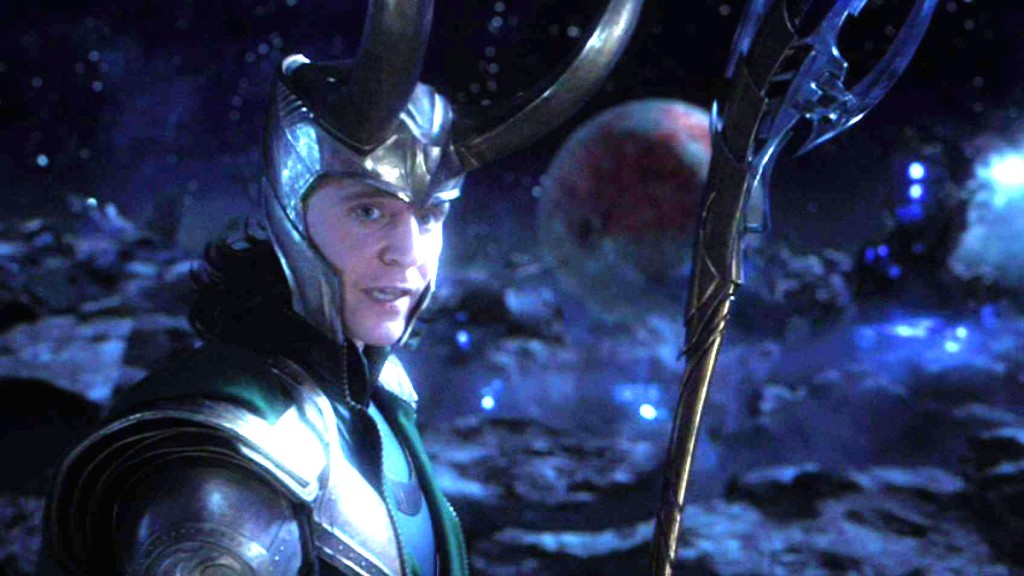
At the top of Act II of The Avengers we begin where we began Act I, in space, with The Other and Loki, checking in. They talk about The Chitauri, to remind us that that’s a thing, they talk about the mysterious boss at the other end of the jukebox, and remind us that the boss wants The Tesseract, Or Else. We also learn that Loki was once “the rightful king of Asgard,” which gives him the horse in this race. Loki may not be the Ultimate Boss of The Avengers, but he has a much more compelling motivation: revenge against his brother Thor, who exiled him. This narrative stroke, to make two characters from Thor the hinge of the screenplay, is masterful: the traditional studio approach would be to take the wild cards of the franchise (Norse gods!) and ignore them compleely, or give them only token attention. But to put Loki and Thor at the middle of this gigantic tentpole money-making machine provides a useful bridge between the mundane (Hawkeye), the fantastic-but-still-believable (Iron Man), the straight-out fantastic (Capt America, Hulk), and the gonzo sci-fi alien spectacle of The Chitauri. The mere fact that one movie embraces all these characters is daring enough, but the screenplay for The Avengers distrubutes its narratve effects so judiciously and balances its characters so well that a common, non-comics-reading audient sees a Norse god taking orders from an alien in a robe and thinks “Okay, sure, I get it.” The fact that Loki’s motivation is both human and not centered on “conquering the universe” but one-upping his good-looking brother gives the narrative an appreciable scale and, thus, creates audience involvement in something patently absurd.
The Avengers part 6
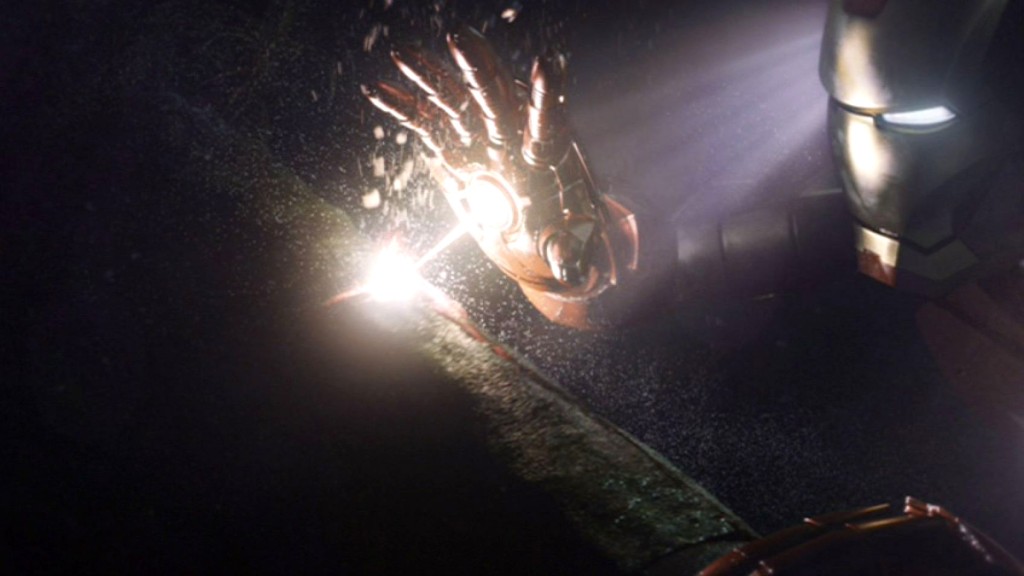
Perhaps the most impressive feature of The Avengers is the way it balances the separate stories of its wildly disparate leads, so that we never, ever feel like “Oh, another Thor scene, ho hum, I guess it will end soon.” The screenplay keeps so many balls in the air that everything feels lively and inventive and fun, even when the plot isn’t being forwarded, or especially when the plot isn’t being forwarded. The balance of the superheroes is so strong, here it is, twenty-three minutes into the movie and we are suddenly thinking “Oh yeah, Iron Man is in this movie too, I totally forgot.”
What does Tony Stark want? Tony Stark wants to show the world that the machine that powers his heart, and his suit — his life, really — the Arc Reactor, is also a viable energy source. “Energy,” in this instance, is just another word for “power,” and power is what superhero narratives are all about — who has it, who does not, who wants it and what they will do to get it. In the case of Iron Man, “power” defines the two sides of Tony’s life — he is both a weapons merchant, a power broker of the purest kind, and a power provider, with his Arc Reactor. He bets both sides of the coin, even if he stops selling weapons, he is still a weapon himself, a walking, thinking weapon.
Of defense, of course, which is always the problem of a superhero narrative — if the protagonist has more power than those around him, he must, must use that power in defense of those people. The trick is how to make that character interesting, to not make him a Boy Scout. Batman makes its protagonist obsessive and brooding, Hulk makes its protagonist an agonist who doesn’t want to use his powers at all, and Superman — well, that’s part of the reason why Superman is so hard to do in a cinematic narrative, he’s both a boy scout and resolutely unbeatable. Iron Man, on the other hand, makes its protagonist kind of a jerk — flawed, vain, conceited.
Who has power in The Avengers isn’t as interesting as who wants it, and who loves it. Thanos, apparently, has all the power in the universe, except for that one thing. The Other, it would seem, has as much power as any being could hope for — he towers over Loki, a freaking god already, and has armies at his disposal, but is a mere lackey in the presence of Thanos, and a bootlicker at that. Contrast him with Nick Fury, who also must report to a mysterious disembodied power, his committee, but who holds them at arm’s length, with distrust, and wants primarily to create a family. Then contrast Fury with Coulson, who is polite and diffident with Fury but holds a stunning amount of his own power, then contrast Coulson with Tony Stark, who treats Coulson like a teaching assistant he has to be nice to.
“La Swing Bossiste”
I’d like to interrupt my analysis of The Avengers to draw your attention to a video by a friend of mine, Reuben Saunders, who has created a 1920s Jazz version of “The Humpty Dance.” The results speak for themselves.