Further thoughts on The Dark Knight

Well, as good as it is, it’s better on a second viewing. I went on a double-date with a screenwriter pal and our wives. Screenwriter joked, “I liked the first three movies, but the last two I thought were a little too much.” By which he meant, there is enough plot in The Dark Knight to fuel five summer blockbusters. No one could possibly walk out of this movie and complain they hadn’t gotten their money’s worth. It seems like every fifteen minutes or so there is one blockbuster sequence or other that would have been the climax to any other movie, but The Dark Knight just keeps going and going and going, more surprises up its sleeve, more betrayals and double-crosses, more reveals and reversals. It makes The Departed look somnolent, it makes Heat look like a comic book and it makes Tim Burton’s Batman look like Leslie Martinson’s Batman.
My wife is something of a plot-nazi. Often, we go see some well-turned-out spectacle or other and I sit through the whole thing with a big goofy grin on my face, wondering at all the color and texture, and afterward I’ll turn to my wife and say “Well, what did you think?” and regardless of whatever pleasures the movie has to offer, she’ll zero in on one fault in the plot that ruins the entire narrative and the movie’s pleasures will immediately evaporate. For The Dark Knight, she had exactly one question on the way back to the parking garage. That question answered (it regarded how the Joker was financing his operation), she declared that the plot was air-tight. So you can take that as a strong recommendation: Todd Alcott’s wife finds the plot of The Dark Knight air-tight.
Heath Ledger’s performance on a first viewing I foolishly just kind of accepted as a given, but on a second viewing I’m fully confident that this is a bad-guy performance to stand alongside Anthony Hopkins in Silence of the Lambs, Anthony Perkins in Psycho, Javier Bardem in No Country, and Robert DeNiro (or Mitchum) in Cape Fear. Ledger’s Joker is grand and simple, bigger-than-life and frighteningly real, full of bold choices and yet detailed and human. I think it’s safe to say that it’ll be hard to watch Caeser Romero in the part for a while. Ledger’s Joker is both so mesmerizing that you can’t look away, and yet so horrifying that you feel you have to, for fear of catching his eye. Whatever is wrong with him, you know you don’t want to catch it.
A full analysis will have to wait for the DVD release probably, but one of the things that struck me on a second viewing was the sheer number of echoes, parallels and mirror-scenes, one character doing something that is then answered or repeated by another character in a different context. For instance, I was admiring the way Bruce Wayne was able to dismantle a shotgun while not looking at it, and then remembered that Harvey Dent does the same thing with a handgun earlier on. There are dozens of little moments like this but I prefer to keep this spoiler-free for now.
Some have responded to the complexity of The Dark Knight‘s plot by saying it is an ensemble drama. I myself felt pretty strongly that it had three protagonists. On a second viewing, let me just say: make no mistake, The Dark Knight has one protagonist and it is Bruce Wayne. Bruce Wayne, through his decision to end crime in Gotham City, creates a situation where, as Alfred puts it, the worried gangsters of Gotham turn to a man they don’t fully understand. That is, if Bruce Wayne did not create the Joker, hecreated the situation where the Joker could flourish. He set the plot of The Dark Knight in motion. His actions inspired the Joker to his mayhem, and inspired Harvey Dent to be Super DA, to be the man who would do, legally, what Batman can only do illegally. Everything that happens in the movie leads back to Bruce Wayne’s actions, his attempts to make Gotham City a better place to live. The Joker is his chief antagonist and Harvey Dent is his friend, the man who symbolizes the Gotham he wants the city to be — everything the Joker wants to happen to Gotham, happens to Harvey.
A note on Harvey: Two-Face is my favorite Batman villain, and without giving anything away, let me just say that the treatment of his character in The Dark Knight is the most full-bodied, complex, sympathetic, heartbreaking and horrifying we are likely to see in a generation. My only real sadness about The Dark Knight is that I would like to see a whole movie just about Harvey Dent. My wife, who is familiar with Two-Face through Tommy Lee Jones’s screaming, cackling camp-fest in Batman Forever and Bruce Timm’s thoroughly horrifying interpretation on the Batman Animated show, had forgotten that Harvey Dent is Two-Face, and, during The Dark Knight found herself thinking “I like this Harvey Dent character, he’s interesting and new, I wonder where this is going.” And then, upon realizing who he was, and what modern movie-making technology is capable of, spent a good portion of the movie in a state of sickened dread.
Favorite reactions to The Dark Knight

As I was walking to my car after the movie last night (that is, 4:00am) most of the 20-something crowd (well honestly, who else is going to go see a movie at 12:45 besides 20-somethings and 40-something nightowl screenwriters? There was a combination of both sitting next to me — a 20-something nightowl screenwriter who actually brought his laptop to work on his spec script while waiting for the movie to begin) were high as kites over the Dark Knight experience. There was one unhappy young lady, however, who seemed utterly baffled by a movie that she saw as a punishing ordeal. “What was that movie even about?” she cried, “What was the point of it all?” as her friends looked at her in bafflement. “What were you expecting?” one of her friends offered. “He didn’t even rescue anyone!” wailed the young lady in reply. The inflection of her remarks indicated to me that, for this woman, the “superhero movie” genre brings with it certain expectations: larger-than-life evil villains determined to destroy the world, incorruptible strongmen who stand for truth, justice, etc, damsels in distress, and a moral stance on the side of absoluted good. And yes, The Dark Knight fails to deliver on all those expectations.
Some critics complain that the plotting is “muddled” or “scattershot” or “herky-jerky.” I disagree. It is certainly complex, with many different plot strands to sort through, but I never found it anything less than absorbing and fleet. (I’m seeing it again tonight, and report more.)
Other critics (sometimes the same as above) and even some fans found the action sequences baffling and incoherent. Again, they are certainly complex, but I had no trouble following the action. Sometimes I thought it could have slowed down a little bit to savor this or that detail, but I wasn’t the guy making the movie.
David Denby, in the New Yorker, laments that “Warner Bros. has continued to drain the poetry, fantasy, and comedy out of Tim Burton’s original conception for Batman“, a criticism that makes me laugh out loud and, quite obviously, misses the point of the whole movie. As though Tim Burton’s “original conception”, with its Prince songs and very bad special effects, was somehow “the genuine article,” a primal document, as though the fifty years of comics that had preceded Tim Burton’s “original conception” don’t count, as though the predecessors that Burton drew on (Frank Miller, Fritz Lang, Ridley Scott for starters) never existed. And don’t get me wrong, Tim Burton’s Batman blew my mind — in 1989.
Every now and then I see someone comparing to The Godfather Part II, which, as I said yesterday, is silly. Comparing it to Heat, however, is perfectly appropriate, except that The Dark Knight covers a lot more ground at a much faster tempo. I also find it to be the less operatic of the two, in spite of having its protagonists be a guy in clown makeup, a guy in a bat suit, and a guy with half a face. The other movie it reminds me of is City Hall, which, frankly, could have used a psychopath in clown makeup and a guy in a bat suit but had to make do with Al Pacino and John Cusack.
Everyone is talking about Heath Ledger’s performance, and I say “good job!” But since few are mentioning Gary Oldman, let me do so here: I think Jim Gordon is one of Gary Oldman’s greatest creations. It’s true that Heath Ledger vanishes into his role, but he’s got the makeup to help him with that — Gary Oldman vanishes into Jim Gordon with nothing but a pair of glasses and a moustache. He was more visible in Dracula, f’r Chrissakes. Oldman has always been a wonderful technician and has often specialized in The Bold Choice (cf Leon, Hannibal,The Fifth Element) but here I don’t see an “actor” anywhere in evidence, just a hard-working, middle-class Gotham City public servant, a man who loves his city and hates the things he has to do to make his family safe.
(Come to think of it, there is a scene that shows Jim Gordon’s daughter. But she looks rather too young, like, 5, to be a credible Batgirl.)
The Dark Knight

Saw this at a midnight show at my favorite Westside multiplex, the Century City AMC. Serious analysis will have to wait for another day, but here are some thoughts.
I keep thinking about The Godfather. When The Godfather was released in 1972, the gangster movie had been, from the ’20s, a pulp genre, not taken seriously by intelligent filmgoers. (I remember when The Godfather Part II was in theaters in 1974. I was too young to see it, but I had an art teacher who I respected and admired, and he said that he was not planning on seeing it because it was “a gangster movie — worse, a sequel to a gangster movie.” He said the words “gangster movie” the way I might say the words “child molester.”) By finding some universal truths in the genre and applying some compelling, elegant plotting, The Godfather took the gangster movie into the realm of high art, and for my money it and The Godfather Part II are still the two greatest movies ever made.
(The Silence of the Lambs also comes to mind as a pulp genre narrative elevated to high art — and there are many points of comparison between it and The Dark Knight, but I don’t want to spoil it for you.)
The Tim Burton Batman movies, no question, blew my mind. They are grand and operatic and weird and dark and very, very cool. The Schumacher Batman movies — well, let’s just set those aside for the purposes of this discussion. Batman Begins was a whole different ball game, a comic-book movie with a complex plot and a dark, gritty vision. But there was still a little too much of something in there — it was still a little too operatic, occasionally even a little silly. It wanted to take itself very seriously but it was still hampered by what was “expected” of a comic-book movie — grand characters with evil schemes, ludicrous action sequences and over-the-top plot points (Batman calling the bats of Gotham City to his aid comes to mind).
The Dark Knight is a whole giant step beyond. It’s a serious crime drama that happens to feature well-known comic-book characters, in the same way Casino Royale is a sophisticated espionage thriller about a complex figure whose name happens to be James Bond. It’s not Batman Begins Again or Batman: Bigger, Faster, Louder. It doesn’t even feel like a sequel. It’s a crime narrative unto itself, one that draws on the Batman ethos for its pop-culture resonance but exists solely on its own terms.
The Batman comics have, occasionally, achieved the seriousness and complexity of plot that The Dark Knight has, and the best of the stories have also succeeded in being wicked cool, but The Dark Knight takes Batman into a whole new realm of thoughtful consideration. It doesn’t merely work as “a comic-book adaptation,” it works as a movie. A knowledge of the Batman world might help someone navigate the hugely complex narrative that unfolds in The Dark Knight, but is unnecessary to enjoy it as a movie. I’ve read Batman comics and thrilled to the notion of Gotham City as a grand, dark imagining, but the Gotham City of The Dark Knight feels like a real, recognizable place, not a symbol but an actual city, a place worth thinking about and saving. Frank Miller may have made Batman “adult,” but The Dark Knight makes Batman actually grow up.
(I see that certain people, regardless of what this movie is, are still marketing it to kids, with happy-meal toys featuring the Joker with his scarred, hideous face. I wish they wouldn’t do that. I have nothing against movie-based toys, my house is littered with them, but The Dark Knight is not a movie for children in any regard and should not be marketed as such.)
Feeder Birds in NYC


I will be in NYC, presenting a new chapter of my never-to-be-completed graphic novel Feeder Birds at R. Sikoryak’s Carousel. Wednesday, May 21, 8pm, at the world-famous Dixon Place, 258 Bowery. Only the terminally unhip will pass this up.
This chapter features all your favorite Feeder Birds touchstones:

INTRIGUE!

And, of course, plenty of bird-on-bird VIOLENCE!


A splendid time is guaranteed for all.
My Iron Man


After working on Astroboy and Wonder Woman, for many years I was “on the list” of writers consulted for every comic-book movie that came down the pike.
When the Iron Man people asked me for a take on their then-aborning project, I took a jaunt to my local comic-book store to look for source material. This was quite a few years ago now, and, as hard as it is to believe, there was almost no Iron Man material in the stores. The only readily-available collection was The Power of Iron Man, an important, ground-breaking story arc that dealt mainly with Tony Stark’s alcoholism.
So I said “All right, whatever you say. Alcoholic superhero. Let’s go.” This is the pitch I came up with:
Tony Stark is an arms manufacturer. He’s a heel and a creep, but somewhere deep inside he’s still human. He brings death and destruction to the world, and it’s beginning to corrode his soul. He turns to alcohol to dull the pain. Caught in the jaws of the capitalist beast, he can only press forward and continue producing death. He has responsibilities to his corporation to keep moving forward, but he’s cracking under the strain and alcohol, he thinks, will hold him together.
His alcoholism progresses to the point where he starts having blackouts. What he doesn’t know is that, when he is blacked out, he becomes Iron Man. Iron Man is, essentially, Tony Stark’s conscience, fighting against the very machine that Tony operates in his non-blacked-out hours. Iron Man works as hard to dismantle Tony’s company as Tony does pressing its agenda. Tony even gets the idea to create War Machine, a “waking Tony” creation designed to fight Iron Man, never realizing that he is, himself, in fact, Iron Man.
So I thought “Well, an alcoholic superhero, I don’t think we can sell that to an audience, but a superhero who is his own supervillain, we haven’t seen that yet.” And I pitched my take to the producer who had sent me The Power of Iron Man and his instant reaction was “Are you crazy? We can’t make a movie about an alcoholic superhero!” And that was the end of that.
(The idea of an alcoholic superhero, of course, didn’t seem so outrageous to the producers of Hancock.)
So they went and made an Iron Man movie without me, and it turned out very well. Tony drinks a lot in the movie, but they never point to it as a “problem,” which I think is the correct approach. The plot coincides with my pitch insofar as it hinges on Tony’s growing realization that he is not making the world a better place by manufacturing ever-more sophisticated weaponry. He doesn’t become schizophrenic, rather, he fights Obidiah Stane, his corporate officer and gets bounced out of his own company. It’s a lot of the same ideas, but more elegantly and organically presented. As far as superhero movies go, it’s pretty sophisticated stuff and a cracking good time. It is both a geek-fest and a good “entry point” movie: it’s filled with Marvel in-jokes but also manages to stake out its own identity. This is all very hard for a hugely-expensive movie to do, which makes Iron Man all the more impressive.
The crowd for the screening I attended was more pumped for this movie than I’ve heard a crowd be pumped for a movie in a long time. They hooted and hollered, shouted and sang as the lights went down. The only thing that got them more excited than Iron Man was the trailer for The Dark Knight which received cheers and a round of applause. Iron Man completely delivered to this crowd, a movie about a gearhead, made by gearheads, for an audience of gearheads. I mean that as a compliment.
I would say to be sure to stay until after the ending credits, but if you’re the sort of Marvel Geek who is rushing out to see the movie today you probably already know that.
Garfield update

First there was Garfield with Garfield silent. And I saw that it was good.
Then there was Garfield without Garfield. And I saw that it was also good.
Next I suppose it will be Garfield without anybody, just a low horizontal line, and it will be better than ever. Then it will simply be three blank rectangles, and then it will finally be gone.
Via the newly-engaged Heidi at The Beat (congratulations Heidi!) and LJ-er Matthew High (of whose marital status I am ignorant).
Coen Bros: The Man Who Wasn’t There


UPDATE: You know, I almost forgot — The Man Who Wasn’t There was shot on color stock which was then desaturated to achieve some of the most lustrous black-and-white photography in cinema history. However, because of the demands of the marketplace, in some markets the movie was released in color. For those who wonder what The Man Who Wasn’t There looks like in color, the answer can be found here.
_____
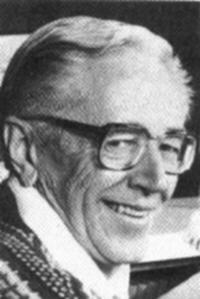
So I’m reading the new biography of Charles Schulz. Schulz, like Bob Dylan and the Coen Bros, was from Minnesota. Like Dylan and the Coen Bros, Schulz consistently, throughout his life, downplayed the cultural significance of his work. Bob Dylan says “I’m just a song and dance man,” the Coens say “O Brother is a simple hick comedy,” and Charles Schulz, to the end of his days, rued the smallness of his ambition, bemoaning the fact that he spent fifty years doing nothing more than drawing a simple comic strip.
Just as Dylan and the Coens have, occasionally, seen fit to acknowledge that yeah, they’re pretty proud of some of their work, Schulz, when pressed, would reveal that he thought of himself as a serious artist doing better work than any of his contemporaries in his field (which, in fact, he was).
Dylan, it is well known, is obsessed with identity and masks, and the Coens have proven to be impenetrable in their interviews. Schulz, as well, said that he wore his unassuming looks as a kind of mask — he always knew he was better than anyone around him, but craved invisibility, anonymity, lest anyone take too much notice of him.
(And then there’s Prince, another Minnesota oddball, who seems to not have gotten the memo about Minnesotans being reserved and self-effacing.)
Schulz’s father, and Charlie Brown’s, as every schoolchild knows, was a barber.
Schulz haunts The Man Who Wasn’t There. The movie is set in Santa Rosa, CA, where Schulz eventually made his permanent home, and set in the late 1940s, when Schulz was developing his comic strip, and was made in 2000, right after Schulz’s death. It takes place in a context of postwar anomie and uncertainty, a mine-ridden landscape of paranoia, depression and sublimated, frustrated desire, just as Peanuts does. Schulz, like Ed Crane (the movie’s protagonist), harbors a bleak, pessimistic grudge against the bulk of humanity, one he keeps well hidden. Like Peanuts, the movie occasionally bursts the bounds of its form and becomes weird, philosophical and unapologetically poetic. It also features, of all things, a young pianist who plays Beethoven. Maybe this is all coincidence, maybe not, maybe it’s, as I say, something in the water of Minnesota, but if there were a character in The Man Who Wasn’t There who owns a beagle I would probably jump out of my skin.
If Ed Crane, “the barber,” is Charles Schulz’s father, that would make his wife’s unborn child Schulz himself, a child never given a chance to live in a world too filled with sadness to give him love. Thing is, Schulz would probably recognize that judgment as a sober assessment of his life.
(It might also make the unborn child “the man who wasn’t there,” since he was not allowed to live.)
In any case, enough of that.
THE LITTLE MAN: In this, the least-ironic of all Coen movies (until recently, that is), Ed Crane is a barber who wants to become a dry cleaner. He’s not a three-time loser after a bag of money, or a brilliant young man with a vision, or a desperate man one step ahead of the law. He’s an ordinary man with a perfectly drab ambition. Yet even this tiny little hope for a better life ends up destroying his world, ruining the lives of everyone he knows.
Why does Ed Crane want to become a dry cleaner? As in most Coen movies, it is shown that the ordinary working man is little more than a sheep whose life is spent being prepared for slaughter by the greater forces of capital. “I’m the barber,” says Ed, in a tone of voice that implies that “the barber” is synonymous with “nobody” (Freddie Riedenschneider echoes this sentiment at another point in the movie).
In the Coen world, there simply is no such thing as an honest living. Anyone with money is a fraud, a criminal or insane. Big Dave Brewster seems to be rich, but he’s not, he’s living on his wife’s money. Freddie Riedenschneider has money, but he’s a lawyer, and a fraud on top of it. And they all bow down the The Bank, the institution that patiently stands by, a pillar of the community, waiting for misfortune to strike its citizens so it can accept the assets handed over to it in times of crisis.
So Ed wants to become a dry cleaner because, in his mind, it’s a way to get his head above the rat race. The man he’s investing with, Creighton Tolliver, even assures him that he won’t have to do any work to make money off the business — the perfect American dream, having just enough capital to start a business that someone else will run, while you sit idly by, collecting money from the suckers. He wants to get his head up above the rat race, but, as we see, those who stick their heads up, the tallest poppies, get their heads blown off. That’s how harsh the worldview of The Man Who Wasn’t There is: even a barber who wishes only to become a dry-cleaner is guilty of hubris, and must be destroyed by the powers-that-be.
Where is there hope in The Man Who Wasn’t There? Ed seeks value in Art, the intangible something that seems to suggest that beauty and balance and the sublime are possible — and he is told, forcefully, to seek value elsewhere. Walter Abundas, Ed’s lawyer friend, seeks solace in the study of genealogy — he finds comfort in roots, in people long dead. And that’s about all Man offers in terms of hope. Big Dave eats and smokes and brags and embezzles, Doris drinks and smokes and reads magazines, her brother Frank doesn’t seem to have brain in his head, Freddie Riedenschneider lies and eats, and Creighton Tolliver wants only to start a business. (It turns out, against all odds, that Tolliver is not a fraud — he’s just one more guy who stuck his head up and got it shot off.)
(It’s also worth noting that classical music, which symbolizes “Art” for this movie, is also used as a force of crass capitalism, as Freddie Riedenschneider is seen preparing for his court appearance in the “Turandot Suite” of his hotel and stuffing his face at a restaurant called Da Vinci’s — so much for art supplying life with beauty and meaning.)
There is also a tender, convincing love story at the center of The Man Who Wasn’t There. Ed is married to Doris, although he can’t really think of a good reason why, and decides to exploit his marriage for capital gain. The results of his attempt are disastrous, but as the movie goes on, we see Ed, in his own quiet way, finally fall in love with his wife. There is no love scene more sweet and honestly felt in the Coen cannon than the one where Ed confesses the murder of Big Dave to Freddie Riedenschneider and the two of them trade sad, loving glances across the table, as though Doris is finally seeing Ed for the first time and liking what she sees. If Doris could speak in that scene, I think she would say something like “Ed, I never knew — if you had told me you were capable of blackmail and murder, I think I could have loved you.”
Because the one thing that Ed and Doris share is their contempt for humanity. Doris is capable of expressing hers, Ed is not. Doris can get drunk and curse out her family, or tell a pesky salesman to fuck off, or laugh in the face of a murder accusation. Ed is capable of little besides a tiny nod of his head, but his dread and hatred of people is palpable.
CRIME AND PUNISHMENT: The police in The Man Who Wasn’t There are interesting. They are not thugs, brutes or clowns, as they are in other Coen movies. What they are are, to a man, self-loathing. They gripe about pulling shit detail, they get depressed about having to break bad news, they mope and drink and sigh and curse.
If the noirs of Chandler and Cain took place against the backdrop of World War II, with the detectives representing stand-ins for American soldiers, the noir of Man has a specifically postwar bent, with those same soldiers feeling guilty and ashamed of the actions they were required to take against the enemy. The Japanese theater of the war is explicitly invoked several times in Man, as well as Nagasaki. To a large extent, the euphoria of America’s victory in WWII gave way quickly to a sense of guilt and dishonor, since we knew that, on some level, we had cheated to win and, in the process, had ushered into the world a horror a thousand times worse than a sneak attack on a military base in Hawaii.
(Strangely, Barton Fink takes place at the time of Pearl Harbor, in Los Angeles no less, but alludes only to the Germans and Italians — conversely, Man talks only about the war against Japan and does not mention Germany or Italy at all [unless you count the Italians Doris is related to].)
(And, for the record, Charles Schulz fought in WWII, but in Europe, not the Pacific.)
The anxiety the US felt about the atom age became expressed in tales of UFO sightings, a fact Man expresses with great comic skill and no small amount of poetry. In a way, you could say that Man is about 1949 — it’s almost as though the Coens decided on a date, then looked at an almanac of “things prevalent in 1949,” then wrote a plot based on that list. Postwar anxiety — check, dry-cleaning — check, UFO fever — check, the rise of men’s magazines — check, the postwar boom in classical music — check.
HAIR: Ed worries a lot about hair. What is it, where does it come from, why does it grow, how does it relate to the possibility of a soul? In a brilliant move of philosophical jiu-jitsu, Ed reasons that, if hair keeps growing after the body dies, “the soul” is the thing that keeps it growing, and when the soul dies, then the hair stops. Otherwise, why would it keep growing? Of course, he answers his own question, in another scene, while thinking about dry-cleaning: “chemicals,” he intones, and the single word wraps up the totality of mid-20th-century discomfort — where are we going, what have we done, what does anything mean any more?
(As a side note, let me mention that Ed shaves Doris’s leg as he plans the scheme that will end in her death — likewise, his leg is shaved by a prison employee as he goes to the electric chair.)
THE MELTING POT: Race is always important in a Coen movie, yet in Man the issue becomes cloudy. Ed seems pretty WASPy, that seems clear enough, but he’s married to Doris, who is played by Frances McDormand, who is not Italian, yet she is the sister of Frank, who is played by Michael Badalucco, who very much is Italian, and Doris even goes out of her way to insult her family as “wops.” Is she supposed to be Italian, or adopted, or what? Likewise, Big Dave is played by the manifestly Italian James Gandofini, yet his name is Dave Brewster, which indicates that perhaps he has changed it, as many Italians did in the US, the better to improve their circumstances, to get their heads out of the rat race. In contrast, “Guzzi,” the long-dead originator of the barber shop where Ed and Frank work, is an example of the Italian immigrant who didn’t change his name, and thus was “the barber,” relegated to a lifetime of anonymous irrelevance. Likewise, Creighton Tolliver is played by the unabashedly Italian Jon Polito, another example of an immigrant seeking a higher station in life through a change of names. Likewise, the “Frenchman” who teaches piano in San Francisco is played by Adam Alexi-Malle, who is Spanish, Italian and Sienese — but not French. Freddie Riedenschneider, for his part, is a typical Coenesque Jew, and is played by Lebanese actor (and fellow Midwesterner) Tony Shaloub.
FAVORITE MOMENT: Freddie Riedenschneider cannot be sure of the name of the man who devised the Uncertainty Principle. He also totally misrepresents it — which is fine, since his interpretation matches most laypersons understanding of the concept.
_____
The Man Who Wasn’t There is one of the Coens’ most straightforward, honest and heartfelt movies — no wonder it bombed. They stuck their heads up and got them blown off.
What they’ve done, in a way, is expose the subtext of noir — if noir was about wartime stress and postwar anxiety dressed up in the language of lies and betrayals, then Man states those themes explicitly. Freddie Riedenschneider points to Ed and calls him “Modern Man,” and I honestly think the Coens, with that speech, indulge in a rare moment of hand-tipping. I think they really mean for Ed to be a symbol of Modern Man, and they are very serious about his quiet search for beauty and meaning in a hollow world of talkers.


Waiting for Godot, the Classic Comic edition
click for readable view.


I have no idea who created this. I found it here, with no explanation.
I post this primarily for the edification of
![[info]](http://stat.livejournal.com/img/userinfo.gif)
, who studies comic adaptations of classics (and who’s probably already seen it). The weird thing is, based on the Classics Illustrated comics R has shown me, this doesn’t even seem like too far a stretch, more like a loving tribute.
What I did on my summer vacation
click on images for larger view.


The first three pages of my long-in-development graphic novel are done, and the reviews are ecstatic!
“Those look — pretty good — ” — Robbie Busch
“They do look good, and I can definitely tell what’s going on.” — R. Sikoryak
“Great work! I don’t know how you learned to draw so quickly.” — Tony Millionaire
“Those pages look great. Good on you!” — Jackson Publick
“I mean, I don’t know anything about comics, but they look great to me.” — James Urbaniak
With ringing endorsements like this, I am hugely encouraged to continue. Messers Busch and Millionaire both detect a Kirby influence in the “big hand,” which is weird because I’ve never particularly looked at Kirby, and Mr. Busch, in a moment of extreme generosity, compared these pages to the work of Jim Sterenko. I said that these pages look like Sterenko — if Sterenko drew with a meat cleaver instead of a pen.
For the non-comics creators in my readership, please keep in mind that there will eventually be speech balloons taking up all the blank space you see here and sound effects added to make it all more dramatic.
I post these partly to promote my work and partly to comfort Senator Larry Craig, to remind him that a bathroom encounter with a strange man could end a whole lot worse.