Wildlife imitates art


In chapter one of Feeder Birds, squirrels invade the feeder. Cardinal dismisses them as “rats with fuzzy tails.” Later, he drowns one and the other birds attack it and pluck out its eyes.
Imagine my surprise when I looked out my window the other day to find this:


The feeder drawn in the panels above has moved three thousand miles, only to be invaded by actual rats. And while Cardinal is not here to sort them out, the House Finches who frequent the feeder certainly had a thing or two to say about them.

Bucky: 2007-2007
Bucky as a hatchling (top left).

The young Bucky.
The mature Bucky, clowning for the camera.


Bucky, who dedicated his entire life to teaching a California family about the life-cycle and eating habits of praying mantises, is dead.
His lifeless body was found in his Critter-Keeper early Saturday morning. Cause of death is unknown, although, as he was over four months old, foul play is not suspected.
“He” (his true sex was unknown) lived a full, healthy, insectoid life. He was purchased as one of hundreds of mantis hatchlings contained in his egg sac, which came in a net bag. Most of his hundreds of brothers and sisters were released into the wilds of Santa Monica’s Douglas Park, but Bucky seemed to understand from the beginning that he was destined for greater things.
He was known for his inquisitive nature, his upbeat, sparkling personality, his love of children and sunshine, and his voracious appetite. He enjoyed a good joke and cherished the hours he spent hanging upside-down. He would drop whatever he was doing in order to crawl on a hand and maintained a presence on the internet through a “blog” run by one of his owners. He was known as the cockiest, most adventurous and most handsome of mantises. Sadly, he never actually had the opportunity to mate with one of his kind and produce young.
His job title was instructor, but Bucky was a mantis who could not be constrained by labels. In his pursuit of larger truth he became an idea and an ideal, a bringer of joy to the handful of people who were blessed to encounter him.
He is survived by his brothers Gimpy, Brownie and Hoppy. In accordance with mantis tradition, his remains were devoured by crickets.
Gaily I lived as ease and nature taught,
And spent my little life without a thought,
And am amazed that Death, that tyrant grim,
Should think of me, who never thought of him.
~René Francois Regnier
McCartney: one more thing

Dear Mr. McCartney:
Please stop posing like this.
You are a genius. You are a respected, best-selling, paradigm-shifting, history-making, innovative, wildly creative, enormously talented 65-year-old genius, and a knight.
What you are not is cute.
Please stop trying to “sell” yourself. If people don’t know who you are, posing like this isn’t going to tell them. If they do know who you are, posing like this willmake them deeply uncomfortable. There’s nothing less becoming than an elderly man, a freakin’ eminence gris already, acting all frisky and puppy-doggish. It is, frankly, repellent.
You have a new record to promote, and I understand that. I’m not the one who put a chair on the cover, you did that. Your last record had dignified, evocative packaging, why spoil things with this kind of picture?
This is not new. You’ve succumbed to this sort of thing for 35 years now. You posed with a finger up your nose in the gatefold of McCartney, you posed in silly glasses in the gatefold of McCartney II, you seem to be willing to arch your famous eyebrows for anyone who asks. It was unattractive when you were 30, but now it’s just grotesque.
Speaking of which, what the hell is this? I’m glad that you’ve jumped into the 21st century feet-first and I’m glad you’re not sitting around wondering what the hell happened to all the record buyers, it reminds me that you’re a canny and sophisticated businessman, but is this the best you could do? Singing your new song in a bathroom and then begging Amazon customers to buy your new album? Why not put on a blue vest and welcome customers at Wal-Mart?
I can see that you managed to maintain your dignity at Amoeba the other night, good for you! Keep it up! This is more like it should go. I wish I had been there.
Oh, and one more thing:
I hate your paintings. They suck. When I found out you were painting these jejune, insipid canvases on an easel that once belonged to Matisse, because you could, I wanted to punch you in your face.
Love,
Todd
McCartney part 8: the insecure, paranoid loser


I can’t find the reference for this, it’s in one of these books I have but I can’t find it, so maybe I have the details wrong, but this is one of the things that drives me completely crazy about McCartney and, after everything else is sorted out, my feelings about his music, the shape of his career, his professionalism, his lack of inspiration, etc, after all that is sorted out, this is the thing that still gets to me.
The story, as I remember it, is that McCartney is in a hotel lounge, and the pianist is playing standards. The pianist takes a break and McCartney goes over to look at the guy’s piano. The pianist has been playing from a standard “fake book,” (maybe this one), and McCartney, amused, flips it open to see what songs are in it. When he comes to “Yesterday,” he is chagrined to find it credited solely to John Lennon.
This ruins his day.
He calls up the publisher of the fake book and learns that, due to space restrictions, they only credit the first songwriter listed on any given song. It’s nothing personal, they do it I guess with Lieber and Stoller, Gershwin and Gershwin, Holland, Dozier and Holland too.
This throws McCartney into a terror. Not being listed as the co-composer of “Yesterday” in this hotel-pianist’s fake book shakes McCartney to his core. It doesn’t matter to him that he’s listed as the co-composer of “Yesterday” every time it appears on a Beatles or McCartney record, or in any of the other of hundreds of incidents when someone has published a recording of it, it doesn’t matter that anyone with a passing interest in popular music knows that “Yesterday” is McCartney’s song, that the Beatles didn’t even play on it, it doesn’t matter that no song could be more obviously a McCartney song than “Yesterday,” it doesn’t matter that McCartney’s gigantic royalties don’t observe what is printed in a hotel-lounge-pianist’s fake book — this thing lists it as a Lennon song and that freaks the ever-loving shit out of McCartney.
Feeling the harsh wind of posterity breathing down his neck, McCartney launches a massive offense to claim his share of the Beatles story. Lennon’s murder in 1980, he feels, has given Lennon an unfair advantage in the “genius” sweepstakes — people, McCartney feels, are under the impression that the Beatles were “John Lennon’s band” and that Paul was somehow just puttering around in the background, playing bass or something. Maybe he feels that people equate him with John Paul Jones or John Entwhistle or — gasp — Bill Wyman.
(There are some legitimate causes for this paranoia — in McCartney’s mind, anyway. John Lennon was inducted into the Rock n Roll Hall of Fame many years before McCartney and McCartney, I’m told, was appalled when Andrew Lloyd Webber got a knighthood before he did.)
How serious is this problem? Here’s how serious. McCartney enlists the help of pal-from-the-old-days Barry Miles to write Many Years From Now, which goes through the Beatles’ career, incident by incident, album by album, song by song, line by line, for 720 pages. If this was a passing problem, I would guess that McCartney might devote an afternoon or two to making some inquiries and then rest assured that his place in music history was secure. But to go on for 720 pages about who thought up the haircuts and who thought up the collarless suits and who’s idea it was to grow mustaches and who thought of putting the orchestral climax into “A Day in the Life” and who came up with the melody for “In My Life” and who introduced who to Yoko Ono and who was out doing research while someone else was lying around his suburban mansion getting high, my God. Don’t get me wrong, I love hearing these stories and what’s more, I trust McCartney’s memory — I think he’s telling the truth. What’s more, I think the book serves a valuable purpose, delineating how these cornerstones of popular culture were designed and built. But when page 1 has McCartney saying “I loved John, I would never try to take anything away from his reputation,” and the ensuing 719 pages proceed to do just that, it gets a little creepy.
(I sense that McCartney is telling the truth about these things not necessarily because he says so, but because the things he says fit with the evidence — Sgt Pepper has the structural underpinnings of many subsequent McCartney albums, “In My Life” sounds like a McCartney melody, not a Lennon melody, so forth. Someday, I’ll do a post on the Shakespeare Authorship question.)
His campaign doesn’t stop there. He calls his new album Flaming Pie, the title of which refers to a John Lennon quote regarding the origin of the name “Beatles” — “I had a vision that a man came unto us on a flaming pie, and he said, ‘You are Beatles with an A.’ And so we were” — except Paul here claims that he, in fact, is the “man on the flaming pie.” Nice.
He releases Paul is Live, a concert recording from one of his 90s tours. The cover of the CD is a (extremely poorly) Photoshopped version of the Abbey Road cover — with all the other Beatles removed and replaced by a sheepdog. Not only is this bad, bad album cover art (oh God, like Abbey Road hasn’t been parodied enough times), it negates the other individuals who worked on Abbey Road (oh, remember that album Abbey Road? Yeah, that was mine, did you know that?) and it also, for those in the know, reminds everyone that the Martha of “Martha My Dear” was McCartney’s sheepdog. Because maybe there are people out there who think that Martha was Lennon’s sheepdog, I guess.
This is all irritating enough (and there is more where this came from), but then it gets ugly. McCartney, I’m told, can’t get past this incident in the hotel lounge. It eats away at him, he can’t stand it. Why, if this goes unchecked, hotel-lounge pianists the world over might introduce “Yesterday” as a John Lennon song until the end of time. He knows it’s a little late to call do-over on a decision he made with his friend forty years ago to make the credits read “Lennon/McCartney,” but the “Yesterday” thing just bugs the shit out of him, so he calls up Yoko Ono and asks, politely, if it would be okay with her if the credit were reversed for just this one song. John didn’t help him with any of the words, nor with any of the melody, and all this is well-documented, and it is Paul alone on the recording, and everyone knows that, and he’s not asking to have John’s name taken off the song, Yoko wouldn’t be losing a penny of royalties, Paul wants only to have the credit reversed, so that, in the future, no inebriated hotel-bar patron might mistakenly hear that “Yesterday” was written by John Lennon.
Yoko politely declines Paul’s request.
Now it’s war — it’s the battle of the cold-blooded, iron-willed bastards. Paul may be a brilliant, canny businessman and an absolute tyrant in the studio or boardroom, but he’s up against Yoko Ono, who never liked him and who is no slouch in the boardroom herself (for all her starry-eyed, peace-n-love posturing). And besides, she holds all the cards. It seems like such a small thing, but when Yoko has the opportunity to irritate Paul, there is apparently no such thing as a slight too small (let’s not forget, the rumor is that it was Yoko that tipped the Japanese police to McCartney carrying pot into Japan in 1980 — on top of everything, she’s a narc!).
McCartney puts out another crappy record and goes on another tour. The next live album, Back in the US (Paul seemingly giving up on selling himself as a solo artist any more, now he’s just “ex-Beatle Paul”) has a number of Beatles songs on it, and McCartney pointedly lists himself first as the composer of every one of them. Just to irritate Yoko, to goad her into trying to sue him or something. In his mind, there will be a public outcry from Yoko and that will push the issue into the public realm and then McCartney can act all innocent and everyone will say how McCartney has been cheated out of his rightful credit on all these wonderful songs that he wrote and John Lennon really didn’t, you know. I’m not making this up, he actually talks about this in the media, that this was his plan. It’s all so petty and bizarre and paranoid that it makes me recoil in disgust.
I know that Paul McCartney is a pillar of 20th-century culture. I know he was a large part of why the Beatles were so great, especially in the latter, greater half of their trajectory. Everyone knows that. My wife knows that, my children know that. Anyone with the ability to both read and listen to music knows that. I think everyone in the world knows it except Paul McCartney.
Anyway, he seems to be better now. I don’t know if it was the knighthood or the second marriage or the death of George Harrison or the billion dollars or so that he has to comfort him, but somewhere in there he gave up his pursuit of Beatle-history-dominance, decided that maybe being Paul McCartney was a good enough gig after all. Personally, I think he’s taking it easy to reduce his stress; he’s bound and determined to outlive Ringo — and then there will be no one to question him.
Happy Independence Day!
It is on this day that we celebrate the liberty of Scooter Libby.
Keith Olbermann states my feelings. Only I was here about five years ago. Still, it was nice to read.
The Empire Strikes Back, and I have a question
I wish I could quit you, Lord Vader.

So, Darth Vader is looking for Luke Skywalker. He doesn’t have a chance of finding him (in spite of being able to sense his presence a galaxy away when the plot demands it), but he can, theoretically, find Luke’s friends Han and Leia (and Chewbacca, of course). Han, Leia, Chewbacca (and C-3PO, you know, the robot that Darth Vader built when he was 9 years old) are in Han’s ship the Millenium Falcon. The Millenium Falcon is a fast ship with many tricks up its proverbial sleeves, so it’s very difficult to catch. To catch the Millenium Falcon, Darth Vader can’t rely on his ill-informed, bumbling Imperial forces — he must turn to bounty hunters. "We don’t need that scum," mutters Imperial Guy under his breath when he sees the dregs of the universe cluttering up his Star Destroyer.
So, the official Imperial stance on bounty hunters is: we don’t like you. So it seems that Vader has taken it upon himself to hire the bounty hunters himself, in spite of his officers’ disapproval. Who knows, maybe the bounty he’s offering is out of his own pocket. Point is, Vader has a much different opinion of bounty hunters than the Empire does.
Many bounty hunters apply for the job; only one can catch the wily Han Solo and friends. Scaly reptile in yellow flight-suit Bossk can’t hack it, half-droid-half-insect 4-LOM is a failure, stubby whatsit Zuckuss hasn’t a clue, renegade assassin droid IG-88 couldn’t find his ass with both hands, a map and a flashlight. Only master bounty hunter Boba Fett has what it takes to track down and capture Han Solo in his super-wily Millenium Falcon.
Here’s my question — what’s up with Darth Vader and Boba Fett?
He’s all yours — bounty hunter.
McCartney part 7: John v Paul


The competition between John and Paul is the engine that drove the Beatles to ever-higher feats of compositional glory. It could even be argued that, from Sgt Pepper onward, the Beatles became Paul’s group, that if it were up to the others there wouldn’t have been any more Beatles albums at all after Revolver. And yet they continued to put out masterpieces on a schedule of months (their record company was very unhappy with them for waiting a punishing 18 months between the albums Sgt Pepper and The White Album, with only Magical Mystery Tour, “All You Need Is Love,” “Lady Madonna,” “Hey Jude” and “Revolution” to sell in between — sweet hopping Jesus, what a schedule). The fact that most bands these days can’t be bothered to put out mediocre product on a schedule of decades says a lot for McCartney’s professionalism and ability to inspire.
The competition between Lennon and McCartney’s continued after the Beatles breakup, but took on a much uglier, detrimental turn. It would be nice if these two songwriting titans could bring themselves to compete with the other acts of the day, but the fact was that there were few others who could match their talents. Who is Lennon going to compete with, Bernie Taupin? Is McCartney going to worry about Steve Miller breathing down his neck?
So while it is unhelpful to compare apples and oranges (you know, why didn’t McCartney start an Orange label for his records? That would be just like him), a Beatle fan in the 70s could not help but compare the products of their heroes, and Lennon and McCartney knew it. For the purposes of this piece, I’m going to begin the competition in 1970, even though Lennon started putting out albums before that; the competition ends in 1980 for obvious reasons.
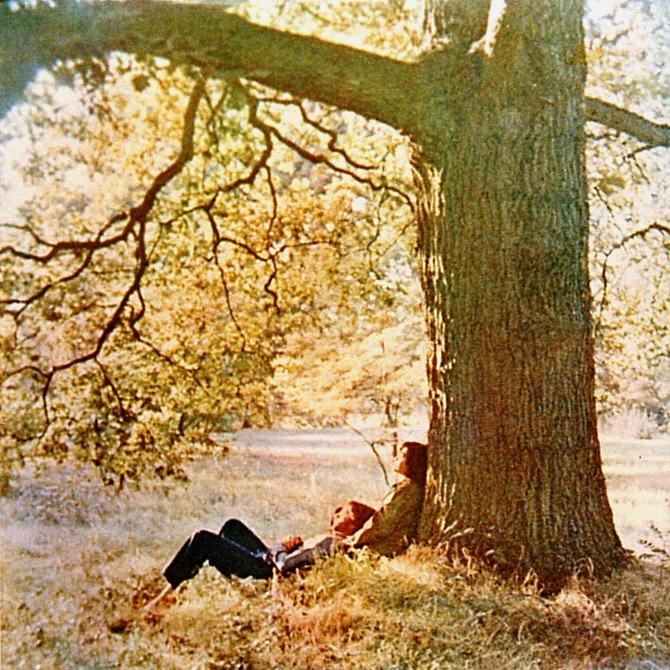

1970: Plastic Ono Band v. McCartney
Directly after the Beatles breakup, both John and Paul decided to remove themselves from the everything-but-the-kitchen-sink, Technicolor polish of the late Beatles style, opting instead for stripped-down, raw, home-made sounds. John recorded Plastic Ono Band, a devastating blast of pain and personal anguish. This was not good-time music, it was punishing, harsh and uncompromising. McCartney, on the other hand, didn’t sound uncompromising, it sounded unfinished, like a collection of demos and out-takes, spare, slender and unassuming. Fans might not have bought Plastic Ono Band, but they could at least respect it for what it was. But they hated McCartney, found it disappointing and limp, a poor offering from the man who engineered Abbey Road. No wonder that neither album was hit, but George’s bloated, over-produced All Things Must Pass was — it sounded like genuine Beatle product.
Plastic Ono Band was a huge influence on me; I’d never heard anything like it before (in 1977, when I bought it). It was more punk than punk and more raw than an open wound. McCartney, on the other hand, seemed irrelevant at best, lazy and unfocused. Nowadays however, I never listen to Plastic Ono Band and McCartney is a consistent delight on my iPod. When I do hear songs from Plastic Ono Band, I keep thinking “Okay, John, okay, I get it,” while the slight, unfinished-sounding songs of McCartney continue to beguile and intrigue.
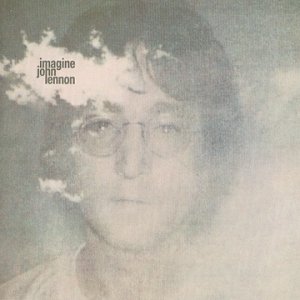

1971: Imagine v. Ram
In “How Do You Sleep?” Lennon snarls “The only thing you done was ‘Yesterday,’ and since you’re gone your just ‘Another Day.'” These days all I can think of that is “Well, ‘Another Day’ is a fine Paul 1 song, and ‘How Do You Sleep’ is a vicious, unfair slab of character assassination.” Imagine was Lennon coming to his commercial senses, a much friendlier, more polished piece of Beatle product than the “I dare you to like me” Plastic Ono Band, while Ram seemed to be even more irrelevant than McCartney. The anger of Plastic Ono Band was directed outward instead of inward and tempered with a more radio-savvy approach to production. I loved both of these records when I heard them (again, at least six years after they came out), but these days I tire of Lennon’s sloganeering easily and Ram seems better and better as the days go by.
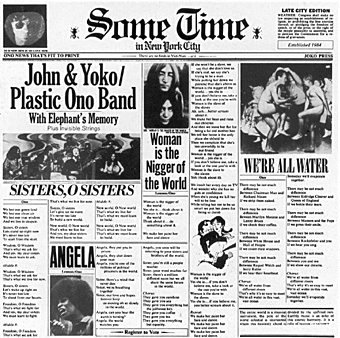
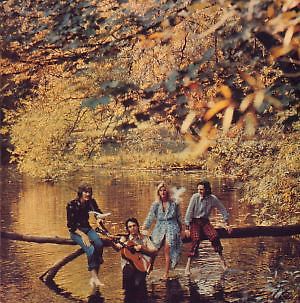
1972: Some Time in New York City v. Wild Life
In 1977 I was obsessed with John Lennon and defended Some Time in New York City to anyone who would listen. Not that there were many 16-year-olds in my acquaintance who had any awareness of Some Time in New York City — I had to special-order it from my local record store, who had never heard of it but professed to liking the packaging when I came to pick up my copy (that same store, which also sold greeting cards, had a policy of ordering two of anything that was special-ordered, reasoning that if one person is interested, another might be, and I took it as a point of pride that I could walk into that store for years afterward and see their second copy of Some Time in New York City still sitting in their bin). Lennon was a hero to me, a man who was using his fame for purposes of good, making daring musical choices standing as a man of the people, defender of justice and champion of peace. Some Time in New York City, of course, then as now, is a terrible, terrible album, an aural nightmare of blare and cacophony, accent on phony, ugly and shrill, hectoring, bombastic, dishonest and nauseating.
It wouldn’t be hard to top Some Time, McCartney could have put out nothing but silence (which is really the only appropriate response) and still come out ahead. Wild Life, however, presents an even more extreme case of redemption. It was an outright commercial disaster when it came out; I put off listening to it for years and hated it when I finally did. I bought it only when I was able to find a copy for less than three dollars, just to complete my collection, and only listened to it once, slack-jawed in horror at its laziness, fuzziness and lack of direction. Then, just the other day I put it on again and couldn’t get over how good it sounded. All those old adjectives still applied, but now they seemed like positive attributes. Wild Life is lazy, fuzzy and lacking in direction, but compared to what became the typical McCartney product of polish, sheen and calculation it positively glistens with life and tunefulness. “Bip Bop,” a song I used to cite as the nadir of McCartney’s composing career, is now charming and delightful, “Dear Friend” is poignant, honest and revealing, and “Tomorrow” is one of his overlooked gems on a level with “Every Night” and “That Would Be Something.”


1973: Mind Games v. Red Rose Speedway
It’s hard to imagine, now, two giant superstars putting out competing albums every year. These days they could not possibly be expected to keep up the pace and not have the material suffer. And while Mind Games is a marked improvement over Some Time in New York City (recordings of weasels being tossed into a wood-chipper would be a marked improvement over Some Time in New York City), Mind Games strikes me as weak and perfunctory. Back in the day I could work up some enthusiasm for it, but even then it seemed like a pale imitation of Imagine. There isn’t anything on it as impressive as “Gimme Some Truth” or “I Don’t Wanna Be a Soldier” or “How Do You Sleep?” and Lennon’s save-the-world-ism even back then sounded naive, silly and ineffective.
On the other hand, back then I found Red Rose Speedway to be a baffling dead-end of misfires and time-wasters. Time, and lowering of expectations, has leavened my opinion of it, but it still strikes me as underwhelming and unfocused (and now I find out that it was supposed to be a double album! sheeesh!). I’m giving Mind Games the edge here.


1974: Walls and Bridges v. Band on the Run
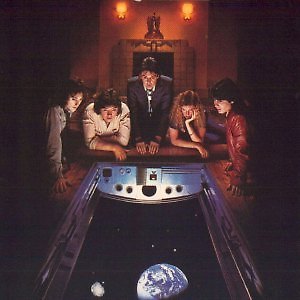
Okay, Band on the Run came out in 1973. Sue me. (Jesus, McCartney put out two albums in 1973, and “Live and Let Die” — what the fuck is wrong with U2, R.E.M., Bruce Springsteen? Who are these poseurs?)
Back in the day, I counted Walls and Bridges “Plastic Ono Band in color,” Lennon’s masterful summation of all his obsessions, produced with care and skill, full of wit and imagination. I still like it okay, but time has not been kind to it. It now feels padded, self-conscious and, again, dishonest. I regularly skip over “Whatever Gets You Thru the Night” and have little patience for “Bless You,” “Scared,” “Old Dirt Road” and “Beef Jerky.” The big production number, “Nobody Loves You When You’re Down and Out,” strikes me as uncomfortably self-pitying and morose, everything Plastic Ono Band was not.
Beatle fans reveled in Band on the Run at the time; Paul’s career suddenly snapped into focus — it seemed like this was finally his Plastic Ono Band. I talked myself into liking Band on the Run at the time; it certainly provided more Beatlesque polish and entertainment value than anything else McCartney had put out up to that point, but it now strikes me as overhyped, overproduced and even ponderous in places. I love the title tune, “Jet,” and “Helen Wheels,” but otherwise the album seems cold, impersonal and hollow, listenable as it is.


1975: Rock n Roll v. Venus and Mars
I loved Rock n Roll back in the day, I found it bracing, fun, invigorating and vital. Venus and Mars I found cutesy, vague, self-important and annoying. What’s changed since then is I’ve heard the originals that Lennon was singing on Rock n Roll and find his production choices to be dreadfully, tragically wrong-headed. I bought the remastered CD when it came out a few years ago and couldn’t finish listening to it — it was loud, sluggish, hugely over-produced and leaden, everything the original versions of those songs were not. Ironically, or perhaps not, McCartney went on to record superior versions of many of the songs from Rock n Roll — whether this is mere coincidence or yet another backhanded attempt on McCartney’s part to degrade Lennon’s reputation is unknown to me.
My opinion of Venus and Mars remains unchanged.
1975-1979: Lennon abstains
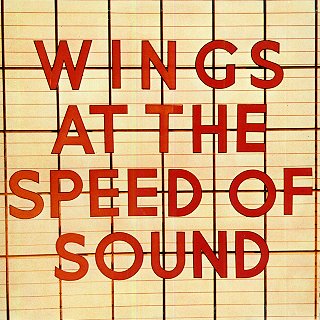
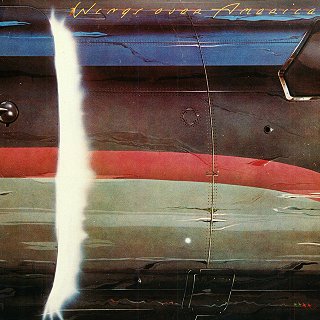


Lennon, as is well known, declined to record for the next five years. That would seem like a natural state of being for an artist of Lennon’s stature today, but back then it was an eternity. McCartney ran the field free of competition for those five years, releasing At the Speed of Sound, Wings Over America, London Town and Back to the Egg, all of which were more-or-less commercial smashes, in some cases mysteriously. At the Speed of Sound is godawful — whatever possessed McCartney to actually share album space with the other members of Wings? What the hell was he thinking? Did he really think this band could compete with the Beatles? How is that possible? Or did he just not have enough songs to fill an album and had to get something into the stores to promote on a world tour? In any case, this is the one Wings album I have yet to be able to listen to all the way through. Wings Over America, on the other hand, presents a compelling case for Wings as a musical statement separate from, if not quite equal to, the Beatles. London Town, an album I virulently despised when it came out, has aged surprisingly well — whenever a McCartney tune comes up on iTunes and I think “hey, this isn’t bad, what’s this?” it invariably comes from London Town. Which is not to say that London Town doesn’t contain its share of filler and dreck — “Girlfriend” leaps immediately to mind, as well as non-songs like “Cuff Link.” Back to the Egg, on the other hand, I loved immediately and is still my favorite Wings album by far. It was reviled and unpopular when it came out, which never made sense to me. I loved the weird avant-gardisms, I thought “Getting Closer” and “Spin it On” crushed, and found all the little linked songs spooky and intriguing. My opinion hasn’t changed — every time a Back to the Egg song pops up on iTunes I still feel a charge.
1980: Double Fantasy v. McCartney II

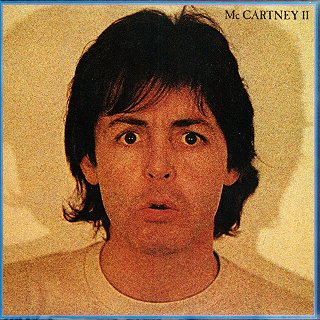
It is, of course, difficult to separate Double Fantasy from the context it appeared in — coming out days before Lennon’s murder, it took on tragic dimensions of shattered dreams and starcrossed love. I, for one, was greatly looking forward to hearing it and bought it on its release date — and was distinctly let down. Lennon’s songs felt weak, thin and slight, and Yoko’s, well, I’m going to go out on a limb here and say that, in my opinion, Yoko’s songwriting talent is not the equal of John’s. There, I said it. I could kind of work up some enthusiasm for the goofy charm of something like “I’m Your Angel” but otherwise itwas an uphill climb. Of course his murder changed all of that.
Time has not been kind to Double Fantasy. Lennon’s songs stand up well for the most part, but no agency on Earth can compel me to listen to any more Yoko Ono. And this coming from someone who enjoys “Cambridge 1969” from Life With the Lions and side 2 of Live Peace in Toronto. Still, seven decent songs on a record is still pretty good, even if some are too sappy and others are too skinny, and I would have very much enjoyed to see where Lennon was going to go from there.
McCartney II has all the sketchiness and home-made-iness of McCartney and absolutely none of its charm or delight. It is a tinny, clangorous horror, even if TLC swiped the opening lines of “Waterfalls.” “Secret Friend” goes on for a stultifying 10 and a half minutes!
Both were big hits.
McCartney part 6: know your Pauls

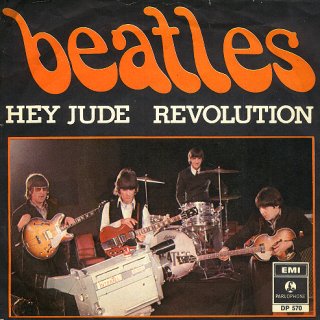
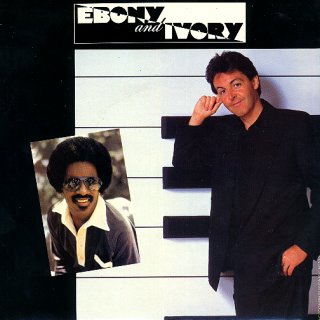
Paul 2, Pop surrealist: this Paul was the natural development of Paul 1. Having risen to the top level of his profession, able to have a hit without even trying, this Paul began turning song forms on their heads and stretching the limits of popular songwriting. Forms are splintered, juxtaposed, overlaid and examined. Less attention is paid to universality and more is paid to creative development. Personal statements occasionally emerge but never dominate. Words are chosen for the way they scan instead of what they might actually mean. When this strategy works, the results are magical and captivating. “Hey Jude” is probably the epitome of this Paul. “Penny Lane,” “Lady Madonna,” “Rocky Raccoon,” “Ob-La-Di, Ob-La-Da” are all sterling, indelible works of Paul 2. “Big Barn Bed,” “Let Me Roll It,” “Spin it On” are lesser but still worthy versions of this Paul — Paul 2 on autopilot. The key to this Paul is his ability to create songs that sound like they’re about something but which defy easy categorization. This Paul has the unmatchable skills of Paul 1, but is employing them to more personal ends.
A subset of Paul 2 is Paul 2A, the pop collagist, composer of “Uncle Albert/Admiral Halsey,” “Band on the Run,” “Live and LetDie.” This Paul takes the lyrical strategies of Paul 2 and applies them musically as well, taking small ideas and making them appear to be bigger through dramatic juxtaposition. This is one of the most distinct Pauls, a Paul not easily imitated, although John did an excellent job of it with “Happiness is a Warm Gun.”
Paul 3, peddler of Twee British Nonsense. A kind of WS Gilbert on drugs, this Paul has roots deeper than Tin Pan Alley, stretching back to Lewis Carroll and further. This Paul has cut all ties with narrative and conventional pop-lyric forms and constructs songs from pure sounds, not paying a whit of attention to meaning but a great deal of attention to context and especially arrangement. “Helter Skelter,” “Bip Bop,” “Morse Moose and the Grey Goose,” “Temporary Secretary” are examples of this Paul.
Paul 4, restless creator of abstract soundscapes. This Paul likes sounds for their own sake and employs them in evocative and intriguing ways. This Paul would get along well with Brian Eno, although I don’t think anyone’s ever introduced them. “Flying” is probably the earliest emergence of this Paul. McCartney and McCartney II are filled with compositions by this Paul, as are the albums by The Fireman and Liverpool Sound Collage. This Paul is often overlooked, due to the other Pauls habit of hogging the spotlight. I think this Paul would be happy to work more, but Paul 2 keeps demanding more time.
Paul 5, ambitious composer of classical stuff. I honestly don’t know much about this Paul.
Paul 6, composer of embarrassing, witless, leaden, flat-footed anthems. “Ebony and Ivory” is the apex of this Paul’s career. “Give Ireland Back to the Irish,” “Freedom,” “Pipes of Peace,” “Looking for Changes” are others. I don’t know what the hell this Paul thinks he’s doing but I wish he’d stop.
This categorization of Pauls is meant only as a rough guide. Many songs feature contributions from more than one Paul. It began as I was trying to locate a “position” for McCartney, a place where his art begins, trying to identify the “real” Paul. I felt I needed to find this point so as to discern what is McCartney’s “self-expression” and what is him throwing any old word into a song because he likes the way it sounds, or whether his habit of throwing any old word into a song is his expression of self.
Don’t forget, for a long time “Yesterday” began “Scrambled eggs, oh baby how I love your legs.” This would have been a classic Paul 2 line, but Paul1 prevailed. Similarly, in “Hey Jude” the song was intended (he says) as a message to Julian Lennon, and began “Hey Jules.” Paul 1 instinctively felt that “Jude” scanned better than “Jules” so the personal message went out the window. But Paul 2 (in the form of John Lennon) insisted on keeping the nonsense line “the movement you need is on your shoulder” over Paul 1’s protest, which took the song to a new level of poetry. “Let Me Roll It,” I’m told, is a response to Lennon’s blistering “How Do You Sleep?” but what kind of response is this? It’s cold, remote, glancing and glossy, the opposite of Lennon’s scathing vitriol.
Lennon’s confessional, purging style of songwriting is anathema to all the Pauls. Rarely does he expose much of himself in any meaningful way (although it does occasionally happen, as in Wild Life‘s “Dear Friend;” I’m also willing to concede that his many love songs to Linda, “Long Haired Lady” being the most obvious, are personal, honest and direct). Strangely, I think one of McCartney’s most focused, honest and accomplished statements is “Silly Love Songs.” I think that’s his “Imagine,” his statement of purpose, the spot he’s placed his flag. The lyric isn’t surreal or meaningless, it’s direct and accessible. He’s coming out and saying exactly what he means, rather in the manner of his awful, flat-footed anthems; no metaphor or imagery is employed. The fact that the song is incredibly annoying is beside the point — this is his 1970s, height-of-his-fame Major Statement.
Give My Regards to Broad Street

Morbid curiosity brought me to watch this movie — slack-jawed astonishment kept me watching.
It’s awful, a train wreck, but not in the way I thought it would be.
It’s utterly wrong-headed, flat-footed and depressing — but again, not in the way I thought it would be.
Paul McCartney (Paul McCartney) is a successful musician and composer with a busy schedule. He’s got a business meeting, a recording session, a complicated film shoot, a band rehearsal and a radio interview, all in one day (given McCartney’s passion for appropriating all of Beatles history, I’m surprised the movie’s not titled A Day in the Life). At his morning business meeting, it is revealed that the master tapes for McCartney’s new album have gone missing. I’ll spare you the details, but the upshot is that if McCartney does not recover the missing tapes by midnight, the record company will be taken over by a big evil corporation. Why this should be so is not explained. Why the poorly-run business affairs of the record company should be McCartney’s concern is also not explained.
So: McCartney has to find his missing tapes before midnight and he’s got an ultra-busy day already planned. What’s he going to do to recover the tapes? If you guessed “nothing,” you’re right! In fact, no one in the cast ever does anything to actually try to recover the missing tapes! The label executives sigh and keen, various roadies and lackeys posit theories and sling accusations, but not one character actually commits a single action toward actually righting the imbalance created by the inciting incident. No one makes a phone call, goes ’round to anyone’s house, checks to see if the courier ever got home the night before. Instead, they just show up every now and then and look balefully at McCartney and worry aloud that the big evil corporation is going to take over the record company. And we, apparently, don’t want that, although it seems to me that any record company who’s going to lose my master tapes and does nothing to try to recover them while I bust my ass running all over town trying to create product for them to sell maybe shouldn’t be my record company any more.
So the tapes are missing and McCartney’s feeling the strain. Feeling the Strain would be a more apt title for this movie. McCartney pads through his day, looking doleful, depressed and tired. In a movie about Paul McCartney, written by Paul McCartney, it’s a big fucking drag to be Paul McCartney — all these goddamn recording sessions and movie shoots and band rehearsals and radio interviews, it’s all just a big tiresome pain in the arse. It’s like a remake of A Hard Day’s Night with the youthful joy sucked out, replaced by a heavy cloud of grownup responsibility. In other words, comedy gold!
So — the tapes are missing and Paul has to get them back by midnight, and no one is helping. You would think that would create some kind of crisis for Paul, or at least some kind of impetus to act. But he does not — he’s got responsibilities! He’s got to, why, he’s got to go to the recording studio, where he’s scheduled to record a medley of “Yesterday,” “Here, There and Everywhere” and 1982’s “Wanderlust!” Who is demanding this medley of two classic Beatle love songs and a middling number from Tug of War? I have no idea, but its recording takes precedence over recovering the precious master tapes, which have been given a stated value of 5 million pounds.
Anyway, the recording session takes a couple of hours, as recording sessions do, and then it’s off to the film studio, where Paul is, apparently, filming a musical, or a couple of videos, or something, it’s not clear. One film shoot seems to revolve around another Tug of War song, “Ballroom Dancing,” staged here as a slightly surreal, British take on West Side Story. Why he should be shooting this is not explained, but it at least makes more sense than the next number, a robotic, 80s version of “Silly Love Songs,” with Paul and the band made up like David Bowie, posing like mannequins while a skinny black dancer does The Robot in the foreground. And you thought you didn’t want to see this movie!
How soulless, uncaring and tired is McCartney? He shows up at the movie studio, goes onto the set for his video, starts shooting, and about a minute into the song we realize that Linda McCartney is on the bandstand, playing keyboard, and he doesn’t even acknowledge her. He doesn’t greet her, kiss her, look her in the eye, smile, or nod in her direction. Nothing would indicate that they’re married. Paul On Business is, apparently, a very cold bastard indeed. And just as you’re thinking “Well, it’s a movie, maybe this is supposed to be some kind of alternate-universe McCartney where Linda isn’t really his wife, but then they show him eating lunch in the commissary, and there she is sitting next to him — and he still doesn’t say a single word to her, although Ringo is, for some reason, given multiple scenes where he chats up Barbara Bach (who, strangely, does not play herself, but instead plays a journalist writing an article about Ringo). 42 minutes into the movie, Tracey Ullman shows up. She’s the girlfriend of the guy who disappeared with the tapes. She doesn’t know where he is and she’s upset. McCartney takes a good deal of time consoling her and talking through her problems while his wife Linda sits six inches away, ignored and without dialogue.
Does Tracey provide a clue as to where the missing tapes are? No, she sure doesn’t! Does McCartney press the point? No, he sure doesn’t! So after he finishes shooting his two videos (it’s about 2pm by now) he slouches off to a joyless, perfunctory band rehearsal in a warehouse across town, even though the band he’s rehearsing with is the exact same band he was just filming with at the movie studio. How they managed this is a mystery. We see McCartney leave the movie studio, get in a beat-up van, be driven across town, be dropped off on an empty loading dock, and go upstairs to a rehearsal hall where all the musicians he just left at the movie studio are already set up and ready to rehearse.
Ah but this is all made worthwhile by the songs right? No. It is not. They suck.
Paul is finding it hard to concentrate on work (I can’t imagine why) and finds his mind wandering. His mind wanders a lot in this movie — he remembers the day when he first hired Harry (that’s the guy who’s gone missing with the tapes), he fantasizes about what his pals the record executives are doing now, he worries about what this corporate takeover might mean to his career. Like I say, it’s a big fucking drag to be Paul McCartney in this movie.
Paul asks a roadie if he’s seen Harry. The answer is no. Sigh. Off to a radio interview.
(I realize I was wrong about Paul not doing anything to recover the missing tapes. He does do something — he worries. I’d like to write a Bond movie that adopts this narrative strategy — Bond is told that Blofeld has a big space-laser pointed at London and it’s going to go off at midnight, but Bond’s got a big day planned of clothes-shopping, bar-hopping, card-playing and casual sex, so he can’t really get to the space-laser thing. So instead we see him shopping for clothes, drinking, playing Baccarat, maybe fiddling with some gadgets at Q Branch, all the while worrying about that space-laser and how it’s going to destroy London in a few hours. And everyone keeps coming around and saying “Boy,it’s a drag how Blofeld’s space-laser is going to blow up London in a few hours,” and Bond’s mind wanders to a day a few years ago when he was having lunch with Blofeld and Blofeld said something about maybe building a giant space-laser — or was he just kidding that day?)
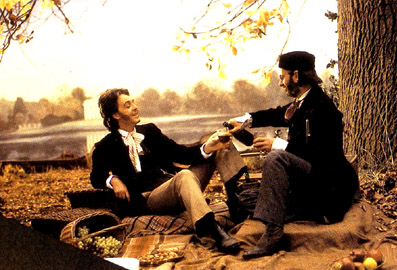
Now it’s evening and we’re well into the third act and Paul has still not reacted to the inciting incident. Instead, as he sings “Eleanor Rigby” in a studio for an audience of stupid, uncaring radio personnel (no one in this movie is the slightest bit impressed with the idea of working with Paul McCartney), he has a very long, bizarre, over-produced Victorian fantasy that dares to invoke both “Le Dejeuner sur l’herbe” and Dr. Jekyll and Mr. Hyde. This fantasy ends with a vision of his wife and friends dying in a tragic boating accident — all because of those lousy missing tapes.


This baroque, incoherent vision apparently rouses Paul to some kind of action, and he drives out to some kind of pub or hotel or something, where he runs into Ralph Richardson, who lives in a dumpy, overstuffed apartment with a monkey. Aha, you think, here’s the big scene where the truth is revealed — it’s Ralph Richardson with a monkey!
Nope. Nothing. Ralph lectures Paul on spending too much of his time running around, because, you know, you never see the world that way. This from a man who does not seem to have left his room, or his monkey, in years.
Now midnight is approaching and the tapes are no nearer to being gotten. Then, a revelation! Paul remembers singing “Give My Regards to Broad Street” to Harry as he went off with the tapes! Aha! To the Broad Street railways station!
Where he wanders around for about ten minutes. No seriously. He’s not looking for anything, he has no clue or hunch, he just wanders around. As midnight approaches, he sits down on a bench and imagines life as a busker, singing Beatles tunes on a railway platform.
Is this the movie’s message? Is this McCartney’s fear, that if a big evil corporation takes over his record company he will become a homeless busker singing Beatles songs on a railway platform?
Anyway, turns out Harry left the tapes on a bench while he went into a storeroom he thought was a bathroom. Case closed.
So Paul calls his wife (the first time he’s spoken to her in the movie) and she calls the record company, who seem relieved, but not that relieved, and everybody’s happy, and the big evil corporate guys are chagrined. And the viewer goes “Whaaa — ?”
Then it turns out the whole thing was a dream. No really. Turns out there are no missing tapes, no corporate threat, no days crammed full of the joyless drudgery of creating pop hits, nothing. The whole thing was a dream Paul had while passed out in the back of his limo on the way to his office. No really.
I note that this was the first and last feature by director Peter Webb.
McCartney, part 5
HOST: Tonight on Hardball, Beatle Paul McCartney, singer Stevie Wonder and screenwriter/blogger Todd Alcott. Our subject is racism, let’s start with Sir Paul. Paul, what is your answer to the age-old, seemingly insoluble problem of racism?
HOST: An indelibe metaphor for a cogent and seemingly irrefutable argument. Mr. Alcott, how do you respond?
ALCOTT: Ebony and ivory may live together in perfect harmony onMr. McCartney’s keyboard, but Mr. McCartney’s keyboard is not the real world. What the esteemed composer neglects to mention is that, speaking generally, there are real social, economic and cultural differences between black and white people, genuine grievances and imbalances, ones that cannot be wished away through a simple musical metaphor. I would also like to point out that on this keyboard of “perfect harmony” that Mr. McCartney refers to, the “ivory” keys play “major” chords while the “ebony” keys play “minor” chords. So this idea of “perfect harmony,” as far as Mr. McCartney is concerned, is perfect only so long as whites remain a majority and blacks remain a minority. This is not an “irrefutable argument” Chris, this is blatant racism, pure and simple.
HOST: A stinging rebuke. Mr. Wonder?
WONDER: We all know that people are the same wherever you go —
ALCOTT: Now, I’m sorry, I can’t, I’m sorry, I can’t let that stand —
HOST: Please, Mr. Alcott, let him finish —
ALCOTT: No. No, I’m sorry, “We all” don’t “know” anything of the sort. What can this statement possibly mean? People are not the same wherever I go. There are vast differences between classes, income levels, personality types —
HOST: Okay, you bring up a good point. Mr. Wonder, what do you mean by this broad, general statement?
WONDER: There is good and bad in everyone —
ALCOTT: Well so what? That clarifies nothing. You might as well say “The sun comes up in the morning.” That’s not an observation.
HOST: Please, let him finish. Mr. Wonder, I apologize —
WONDER. But we learn to live when we learn to give each other what we need to survive —
ALCOTT: We do? Since when?
WONDER: — together alive —
ALCOTT: What planet are you from?
HOST: Now, now —
ALCOTT: You can’t expect me to sit here and listen to this bullshit. “There is good and bad in everyone, but we learn to live?” That’s not even a statement, that’s just a bunch of words strung together. They sound like they mean something, but they’re just meaningless crap. Why is Stevie Wonder even supporting McCartney with this crappy logic? This is no platform for ending racism, this is no prayer for tolerance, this is an abomination. Since when does anyone give anyone else what they need to survive? If you look at the history of the world, you see that it’s the story of people taking from other people what they need to survive. This isn’t a support for racism, it’s a simple honest truth, and no piano keyboard is going to change any of that.
HOST: I think what Mr. Wonder is saying, in his passive, roundabout way, is that we, as a people, we will learn to live when we learn to give each other what we need to survive. And I think there is some logic in that — Sir Paul, any further thoughts?
McCARTNEY: Ebony and ivory live together in perfect harmony on my piano keyboard, oh lord why can’t we?
ALCOTT: I’d also like to know where Mr. McCartney is buying his pianos. I was under the impression that the ivory trade was illegal, yet Mr. McCartney seems to have no trouble locating plenty of pianos made with ivory. Ivory, for the kids at home, is made from the tusks of dead elephants, elephants killed illegally by poachers. And ebony is a valuable wood — both of these are precious resources which Mr. McCartney is all to happy to squander on musical instruments, all to fuel his pie-in-the-sky metaphors of white supremacy. I should also point out that ivory comes from the jungles of sub-Saharan central Africa, and ebony comes from India. So, if I might shed a little light on Mr. McCartney’s position, he apparently feels that everyone in the world can live in perfect harmony, just so long as whites are in the majority, all the elephants are killed, and Africa and India are stripped of their natural resources.
HOST: And we’re out of time. Next up, we talk to Sir Bob Geldof and ask if they do or do not finally know it’s Christmas.