some thoughts on Green Lantern

The big news in Hollywood this weekend is that Green Lantern “failed,” bringing in “only” $52.6 million. “Only,” here, refers to gross-to-expectation ratio.
The reviews were scathing, and when I took my son Sam, 10, to see it on Saturday afternoon, I was fully expecting to see a movie that is thin, noisy, incoherent, poorly plotted, silly and preposterous.
I was pleasantly surprised to find that the movie is none of those things. Rather, it’s entertaining, fast-moving, articulate, and very faithful to its source material. If you are curious about the character and concept of Green Lantern, you will find no better introduction than this movie.
Is it perfect? No, it’s not. But, for some reason inherent to the genre, I find that very few superhero movies are. A movie like the original Spider-Man, for instance, I kind of have to push through the plot and character problems and take it for what it is before I can enjoy it, and then it’s very enjoyable. I can’t think of a single superhero movie, except perhaps The Dark Knight, that really stands up to simple tests of plot, character, motivation, chronology, plausibility, etc.
(Having worked on a number of superhero projects, I speak from experience — they’re really hard to get right, to keep all the elements in line and all the balls up in the air. A contemporary working screenwriter can only watch The Dark Knight from a position of awe.)
Why did the critics hate Green Lantern? I can’t say for sure, but I think it’s a matter of fashion. Marvel has done extremely well for itself presenting a brand of “grounded” superheroes, superheroes who work within a realistic, nuts-and-bolts world that people can recognize. “Grounded,” in fact, has become a buzzword around Hollywood, a town that loves buzzwords, that clings to buzzwords like magical talismans. Iron Man is “grounded,” and so now all movies, especially fantasy movies, must also be “grounded.”
Green Lantern, on the other hand, is not “grounded.” It asks us to buy, before the movie even starts, the concept of an intergalactic police force staffed by goofy-looking aliens and overseen by a bunch of ancient blue guys with see-through skulls who watch over the entire universe.
To a Green Lantern fan, this “buy” is easy — well of course the Green Lantern Corps exists, that’s what the whole thing is about. But to the average non-geek moviegoer, the response is, most likely, “Are you kidding me?”
Think about this:
Nine years ago, The Onion ran this editorial: “When You Are Ready to Have a Serious Conversation about Green Lantern, You Have My E-Mail address.” The piece, a classic, not only perfectly captures a certain type of comics fan, but also perfectly reflects what the average walking-around Joe knows about Green Lantern, which is: who cares?
Now, as if by magic, there is a $200 million movie based on Green Lantern, with a huge marketing campaign and all its attendant pomp and flourish.
(The Onion, not a publication to drop the ball, does it again with this lovely bit of video reporting.)
The fact is, Green Lantern is a hard character for the average moviegoer to “get.”
Why? Because Green Lantern isn’t a character, it’s a job. There is no audience response to the phrase “Green Lantern” because there isn’t any specific guy who is Green Lantern. Clark Kent is Superman, and Bruce Wayne is Batman, Tony Stark is Iron Man, but no one in particular is Green Lantern. My own son, who has no trouble with the concept, only really knows John Stewart as Green Lantern from Bruce Timm’s brilliant Justice League shows. It’s like WB made a $200 million movie called Intergalactic Beat Cop. Who would see that movie, without knowing who the character was? They didn’t make a movie called Hal Jordan: Green Lantern, they made a movie called Green Lantern and showed, on all the marketing, that this is a movie about a job, a job with thousands of other employees, with a headquarters in outer space.
That, in my opinion, is why Green Lantern underperformed this weekend. In order to sell the Green Lantern concept, you have to get the audience to understand that this is not a movie about “Peter Parker, who gets bitten by a radioactive spider and thus becomes Spider-Man.” Rather, you have to get the audience to buy the idea that there is a job, out there, somewhere, called Green Lantern, and this is the story of Hal Jordan, who gets called to fill an opening in that job.
That doesn’t sound like that much for an audience to buy, but that is what happened — the idea that Green Lantern isn’t a guy but a job make Green Lantern a tough sell for civilians. I should know, I’ve encountered this exact same problem in my own life. Sitting down to discuss superheroes with non-initiates, everyone knows who Batman is, everyone knows who Superman is, everyone knows who Wonder Woman is, everyone knows who Spider-Man is, but when you bring up Green Lantern, they draw a blank — there is no character there. And when it comes time to part with $35 for a 3D movie, the average couple will go for something they “know” over something they do not.
Blood Relative wraps principal photography

One of the joys of shooting at night in the hills is seeing the fog come in in the pre-dawn light. Instant atmosphere! Too bad we were never able to get it into the movie.
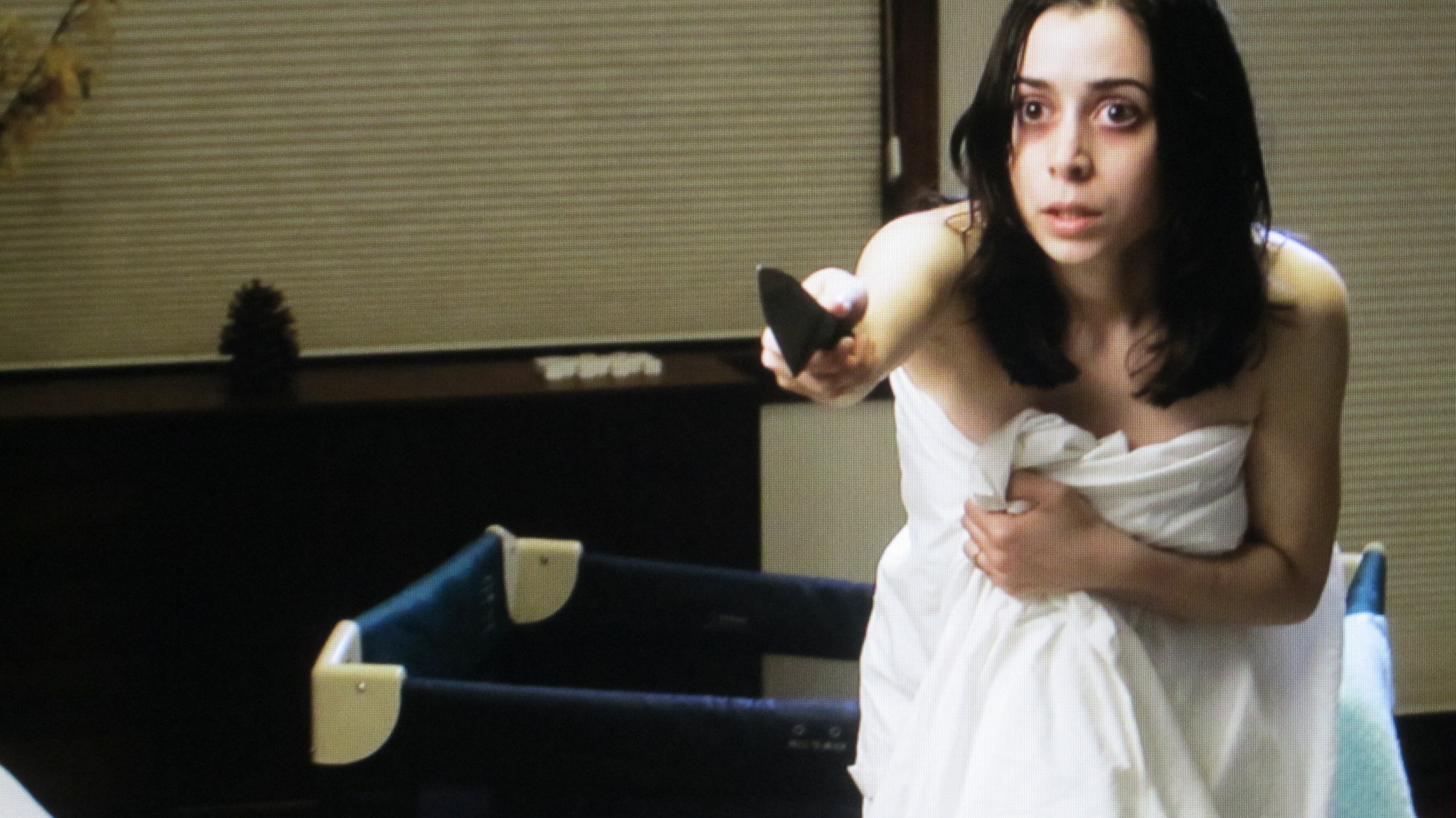
So, yeah, Blood Relative is the kind of movie where a woman wraps herself in a sheet and waves around a kitchen knife. That is, it’s a romantic comedy.

Our fake baby takes a break between setups.

We feared this every night: the sun coming up. Late spring is a terrible time to shoot a thriller — the nights are some of the shortest of the year.

For the last three days of the shoot, we moved to our secondary locations, most of which were inside, or adjacent to, our executive producer’s offices. Here, Cristin Milioti gets some bad news from her co-worker, James Urbaniak.

Last week I mentioned that James Urbaniak would be required to wield a pen. You thought I was kidding.
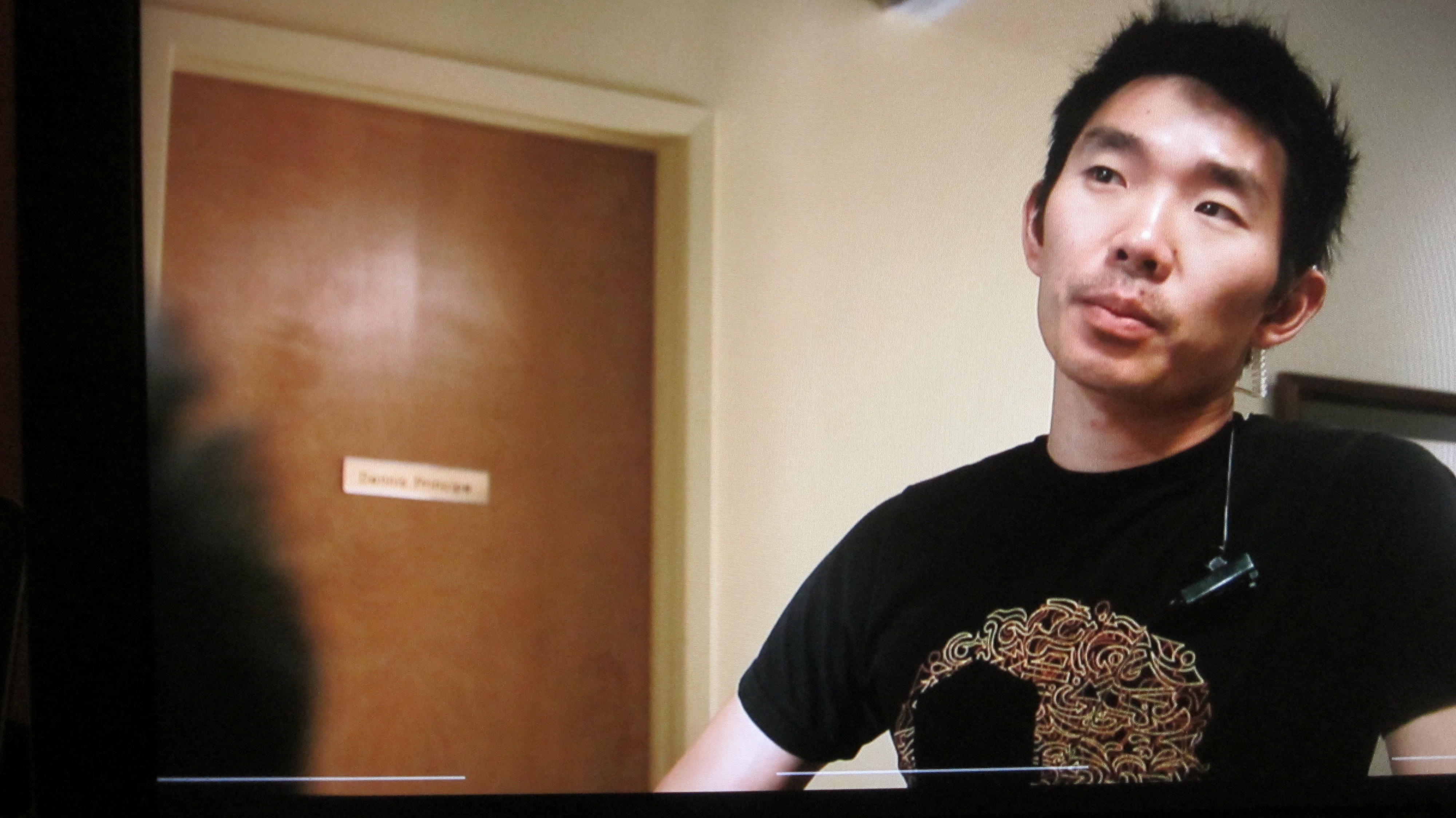
DP George Su contemplates a shot. Or what is for lunch.
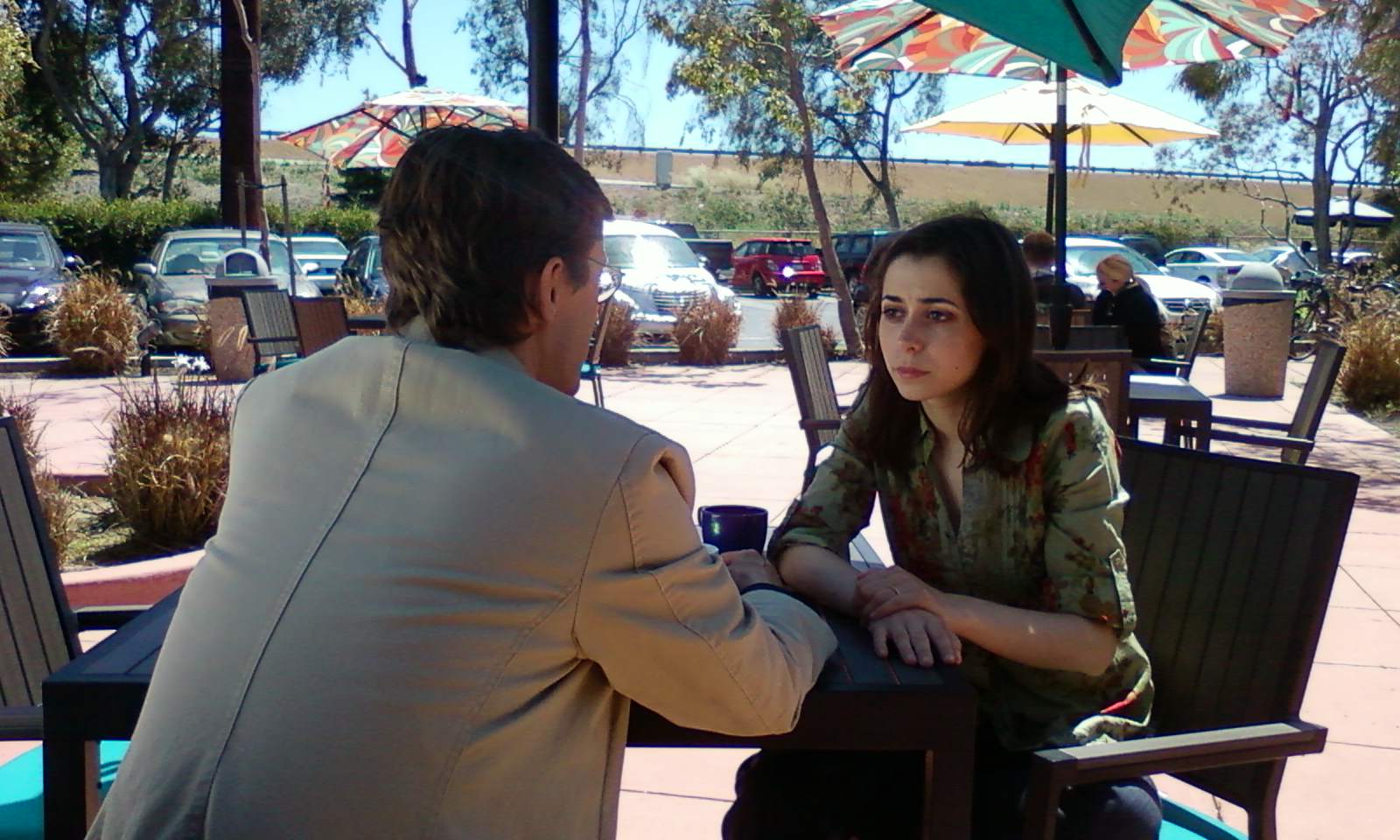
Our final setup of the shoot is a subtle reference to All the President’s Men. We’ve also blatantly ripped off Ingmar Bergman, Stanley Kubrick, the Coen Bros and Paul Greengrass.

At the wrap party, James Urbaniak sings David Bowie’s “Rock and Roll Suicide.” You had to be there.
Blood Relative week 2

Important filmmaking lesson: real houses don’t have bathrooms you can shoot in. We had a handful of simple scenes to shoot in a bathroom, and they took hours to light and set up because there’s no room to do anything. In fact, I’m keeping a running list of things never to include in a script. Bathroom scenes are only one. Food is another one — it’s a huge pain in the neck to shoot scenes involving food.
Here, Cristin Milioti perches on a bathtub for a pivotal scene. Cristin has been exceptionally brave and unflinching in her performance, in addition to being a joy to work with.

On the other hand, another important filmmaking lesson is to cast good actors who show up on time, understand what they’re doing, know without asking what the scene is about, don’t complain about low-budget privations, remain in good cheer and have real talent. We’ve been very blessed on this project. Our leads — Cristin Milioti (super above), Michael Rady (above), Toby Huss (below) and James Urbaniak (super below) have all been astonishing. In the case of Mr. Rady, he does all of this while also being handsome, polite, funny, open and generous. Plus he’s a vegan. I’m guessing he also saves kittens from burning buildings in his spare time.
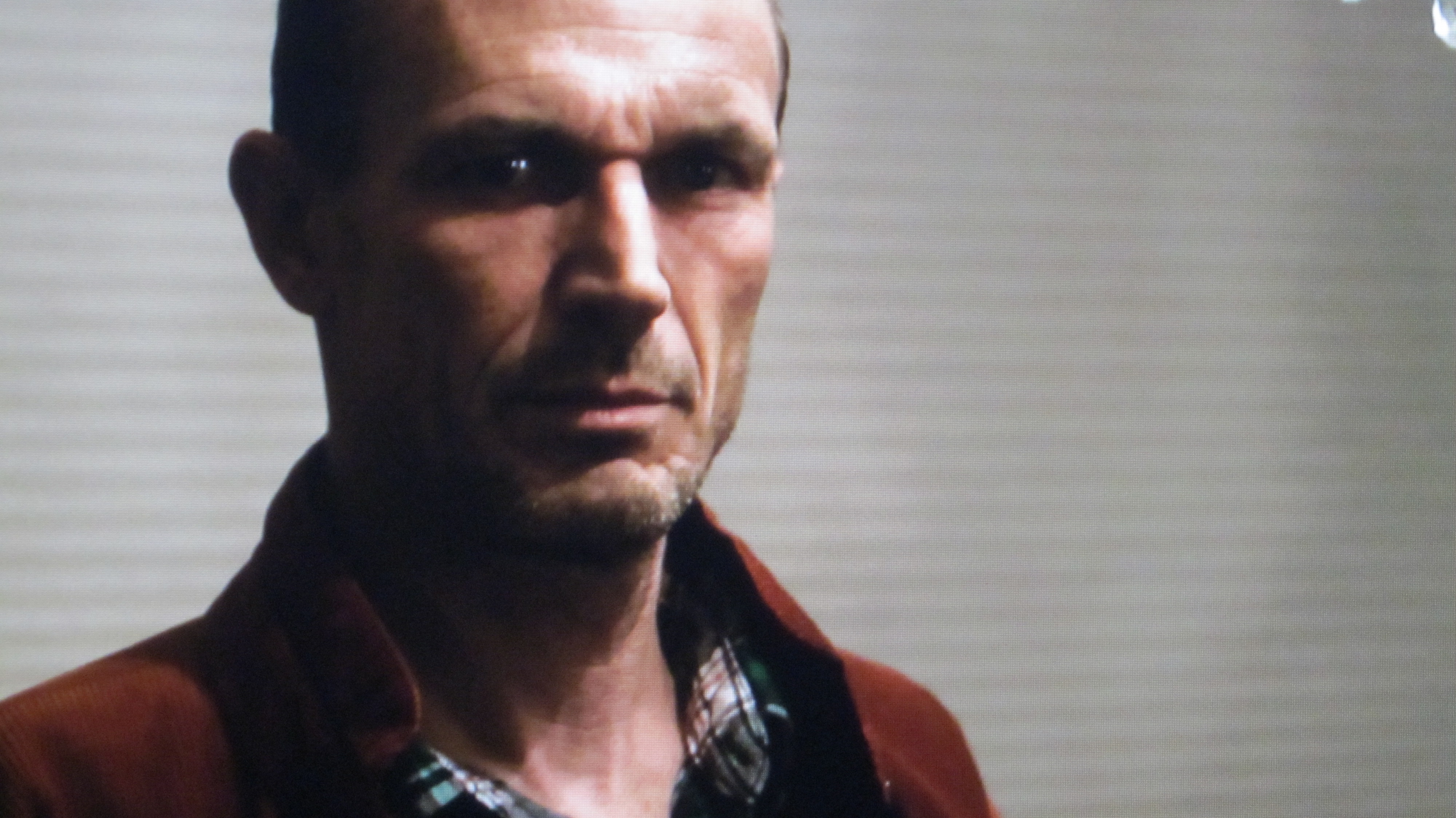
Here’s Toby Huss, as our nominal bad guy. I’ve seen Toby be side-splittingly funny on stage and in movies and TV shows, and I honestly thought I’d have a difficult time getting him to tone down his anarchic spirit. But it never even came up — he understood immediately what the role required and has been absolutely terrifying in every shot, no questions asked.
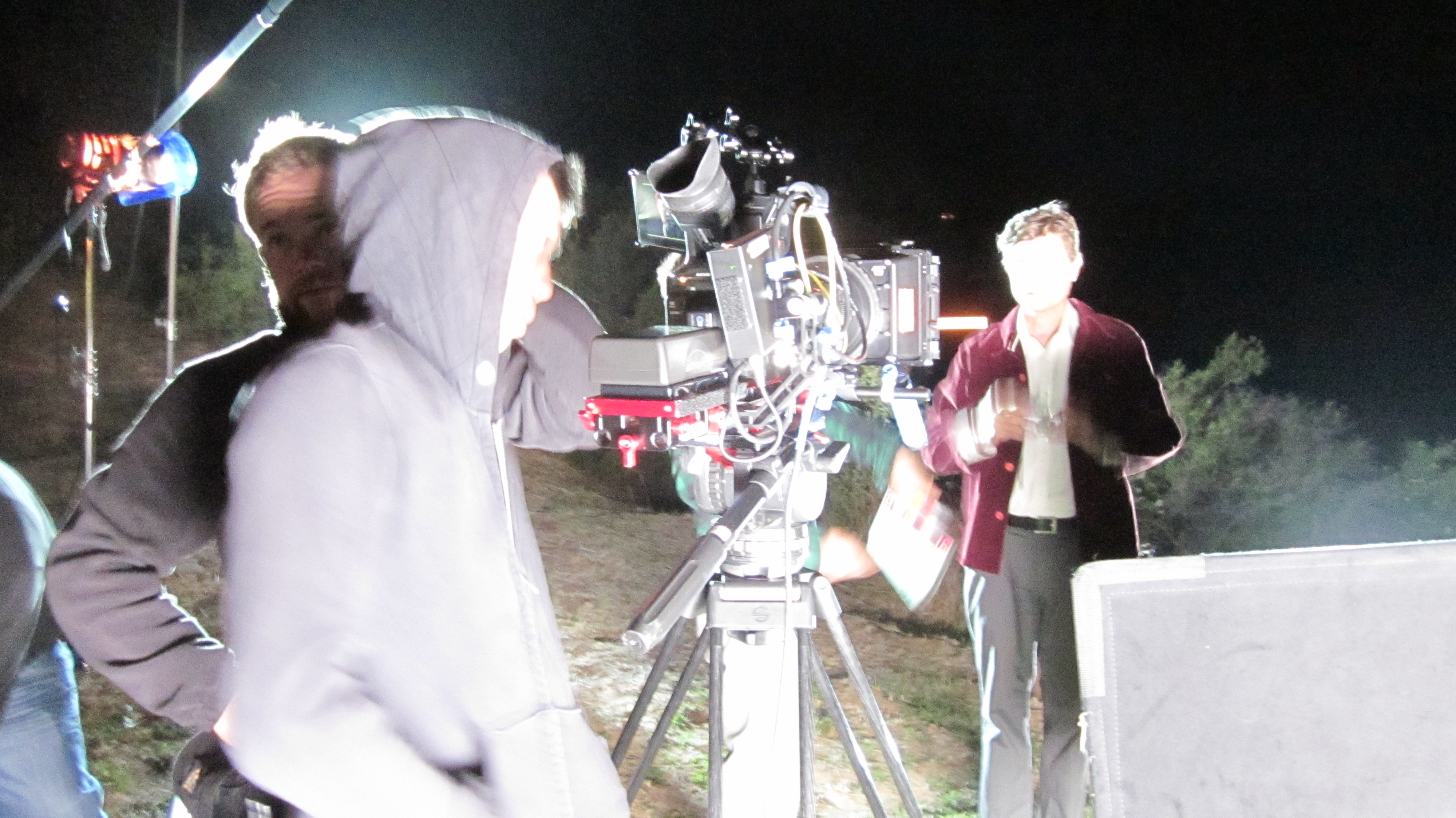
Here is Mr. Urbaniak during an outdoor setup. He has a face in real life. There are many pictures I could post of him on set, but they would give away crucial plot points.
The bulk of James’s work comes in Week 3, where he will be required to sit at a table, walk down a street and wield a pen.

This shed is also an important character in the movie, although it’s hard to tell from here.
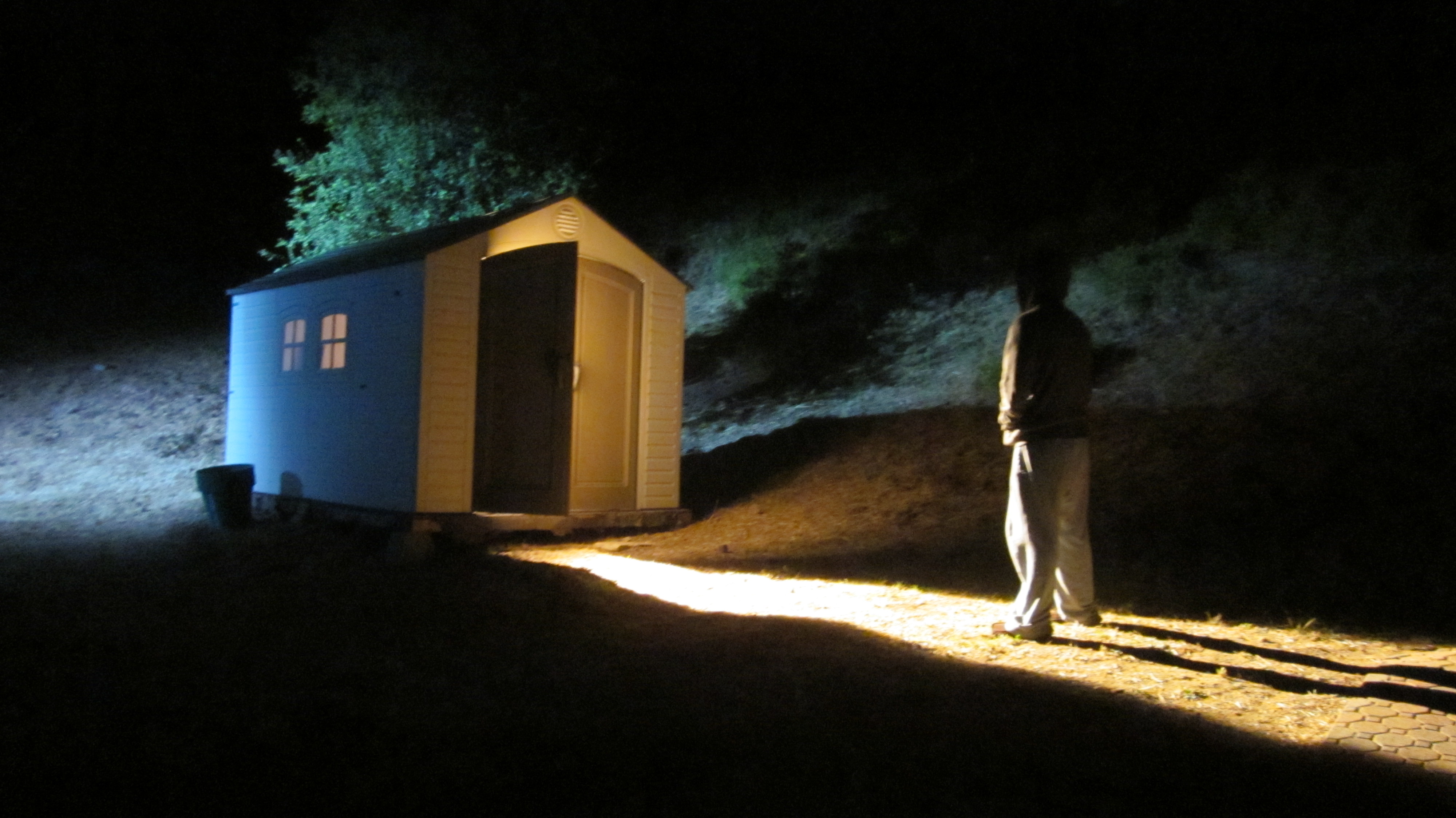
Ah, there we go.

Stunt baby meets real baby. Real baby is on the right.
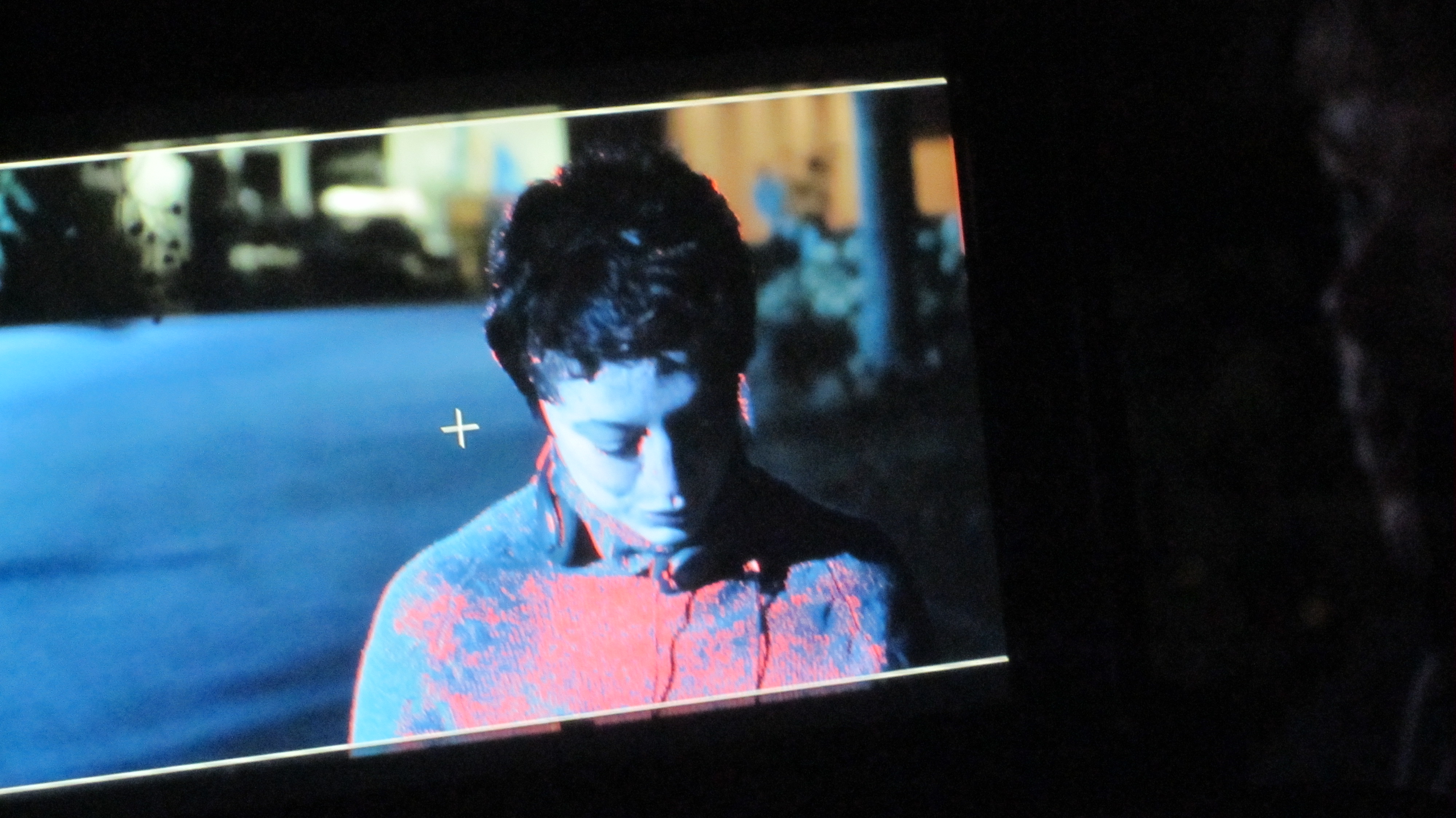
My co-writer and producer, Holly Golden, in addition to serving a million different production needs, also stands in for Cristin during lighting. Here she is on the camera monitor in what our DP, Mr. George Su, calls “Predator Vision.”
Blood Relative week 1
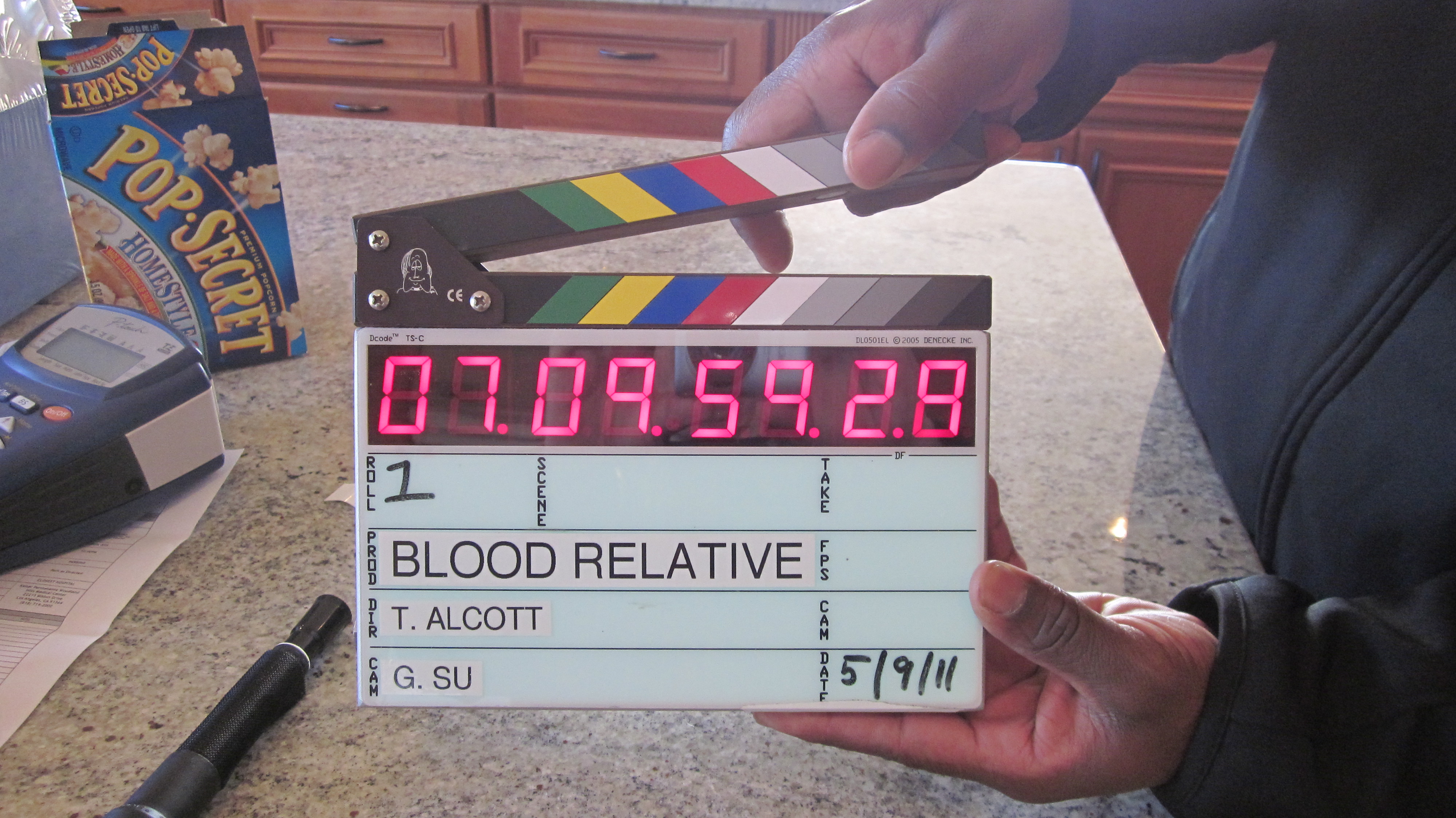
That’s my slate! Blood Relative is not affiliated with Pop Secret brand microwave popcorn, except that the crew sometimes eats it.
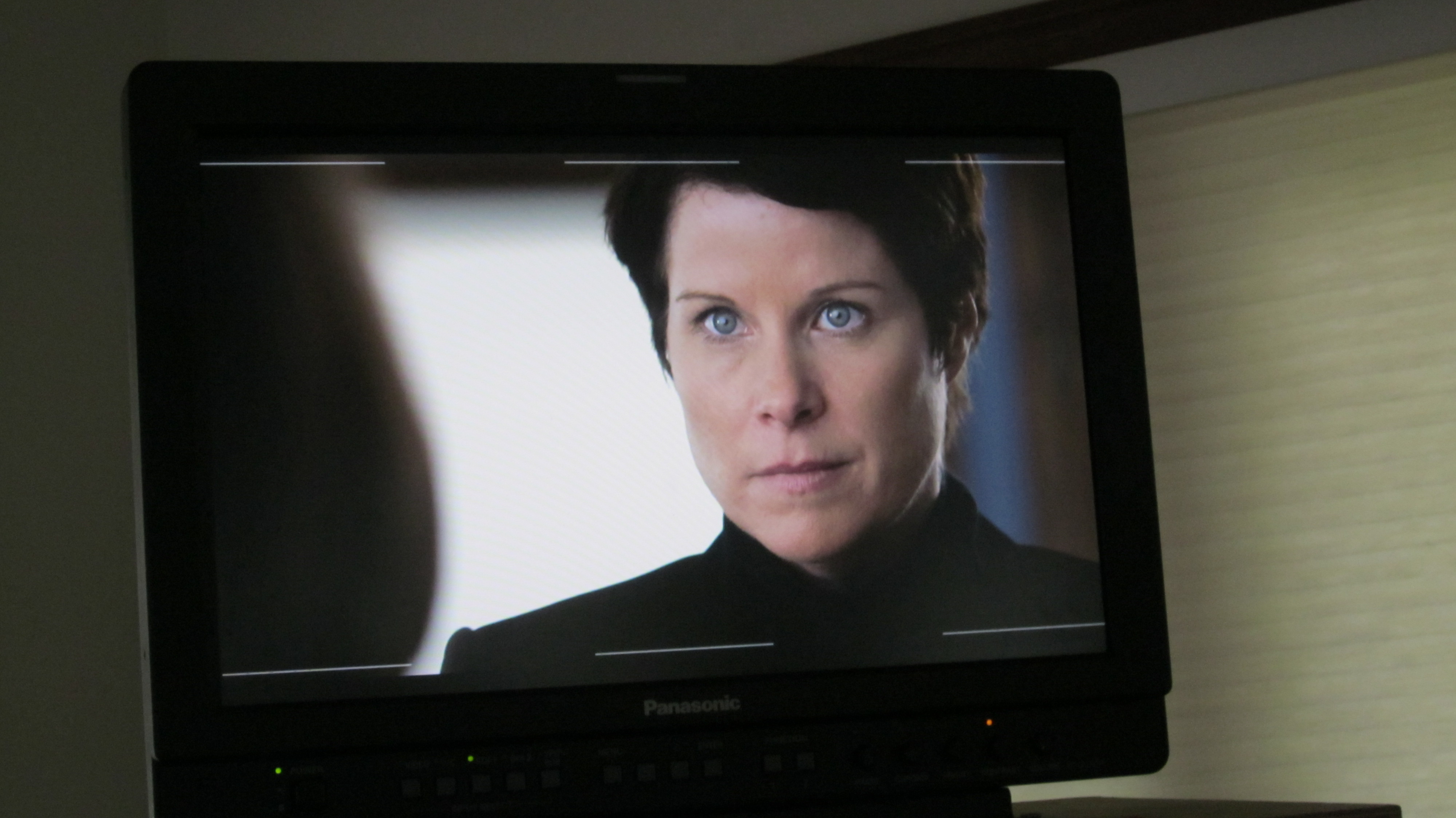
Marypat Farrell plays a psychic — with a taste for murder!
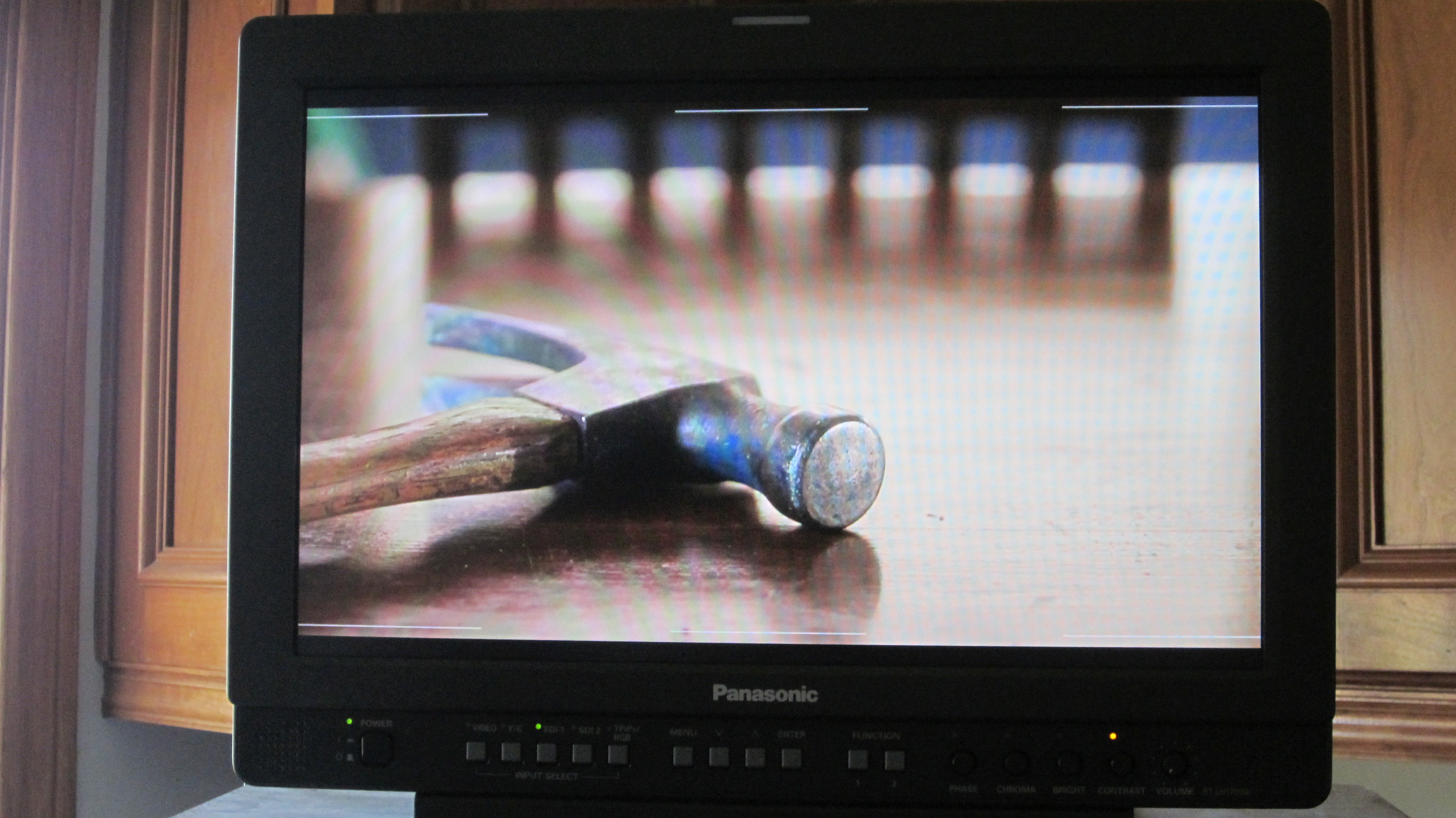

A nice hero shot of the true protagonist of Blood Relative.

Toby Huss and James Urbaniak confer between takes.

It gets lonely for lights on the set sometimes.
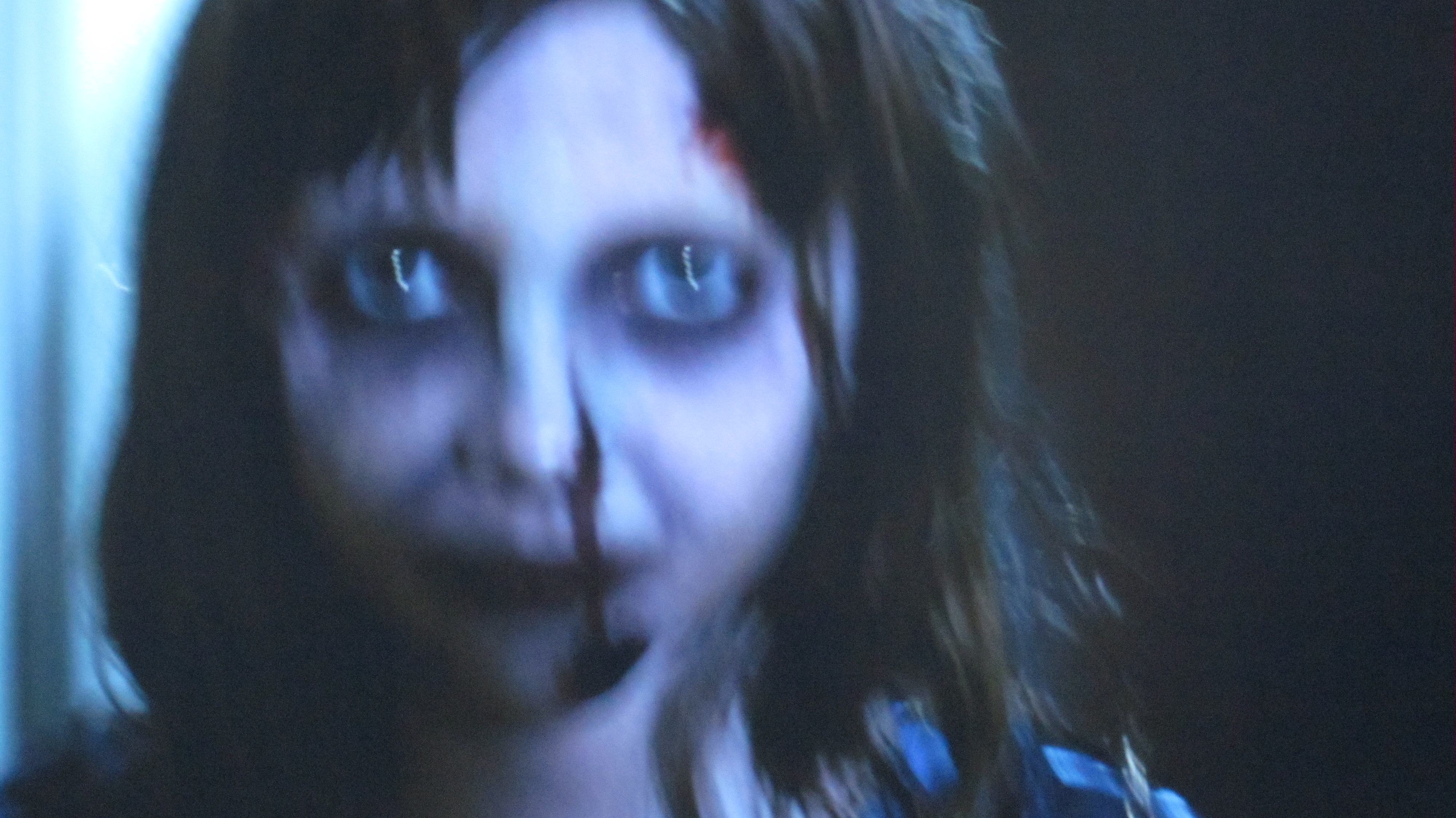
Oh yes, it’s a horror movie.
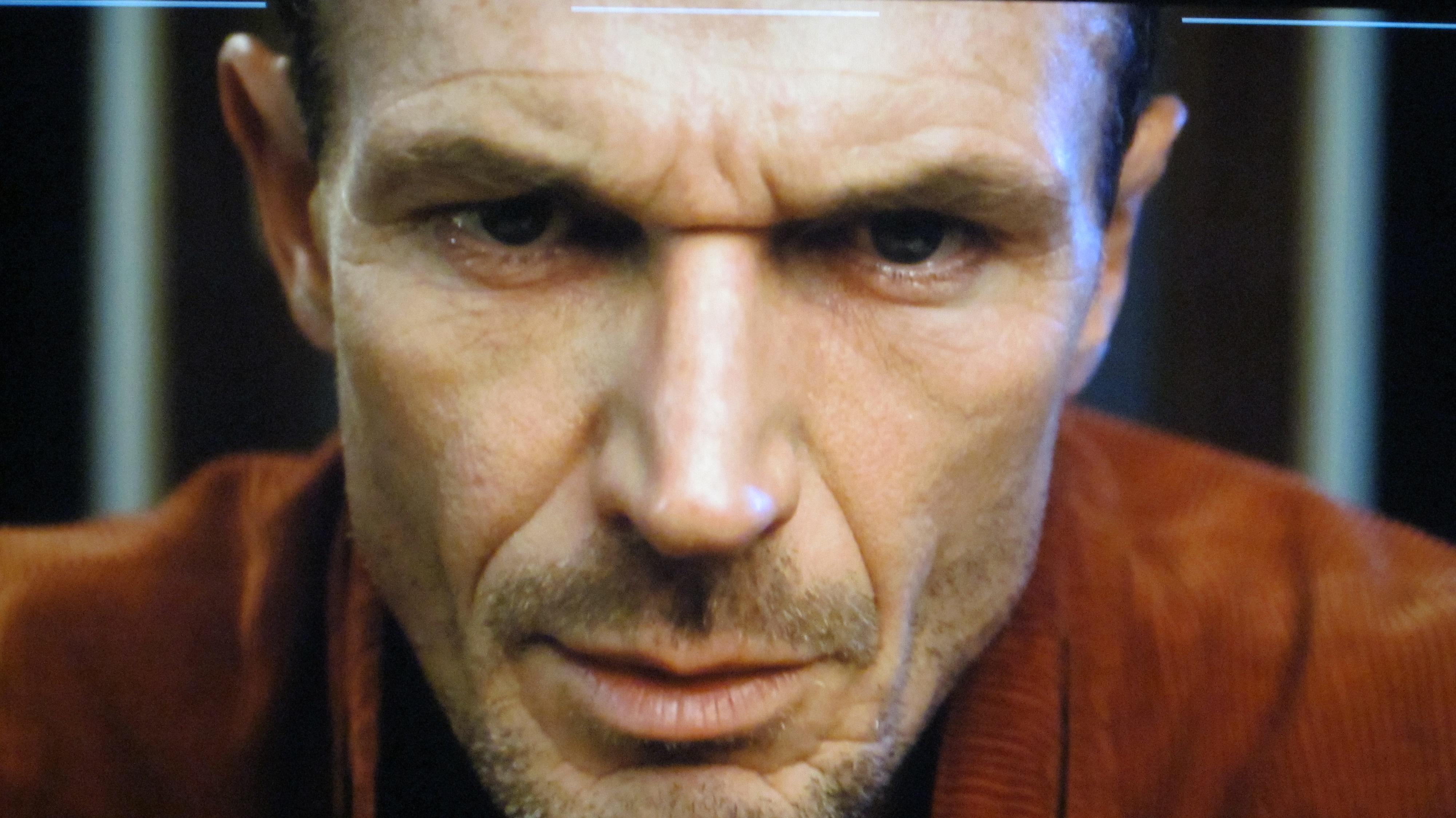
Toby Huss. Do not mess with this man.
Blood Relative Day 1

Director on set, underdressed — it was freaking freezing on Day 1.
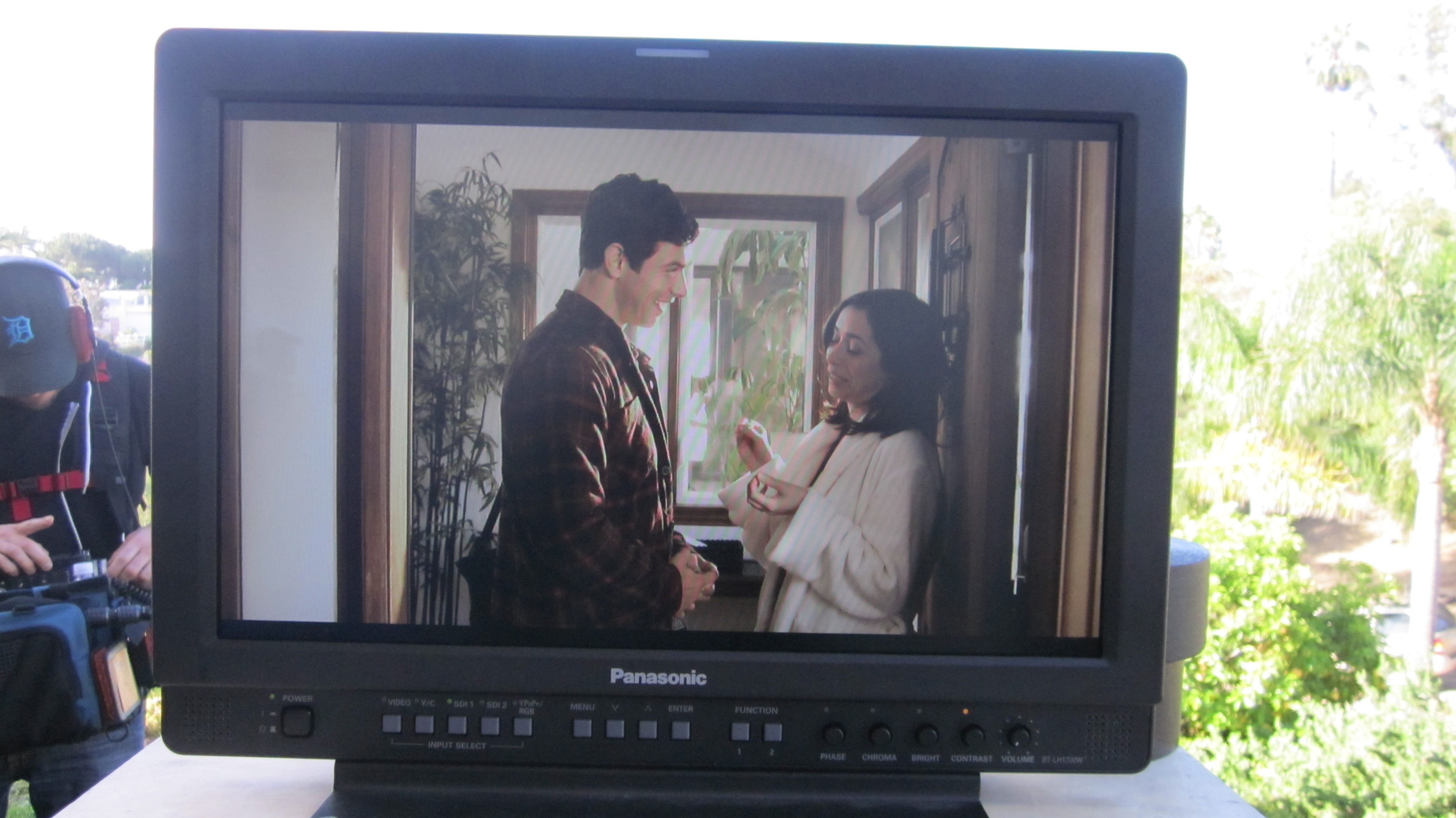
Our first scene shot, as it appears on the monitor. Michael Rady and Cristin Milioti.

Fake baby on set.
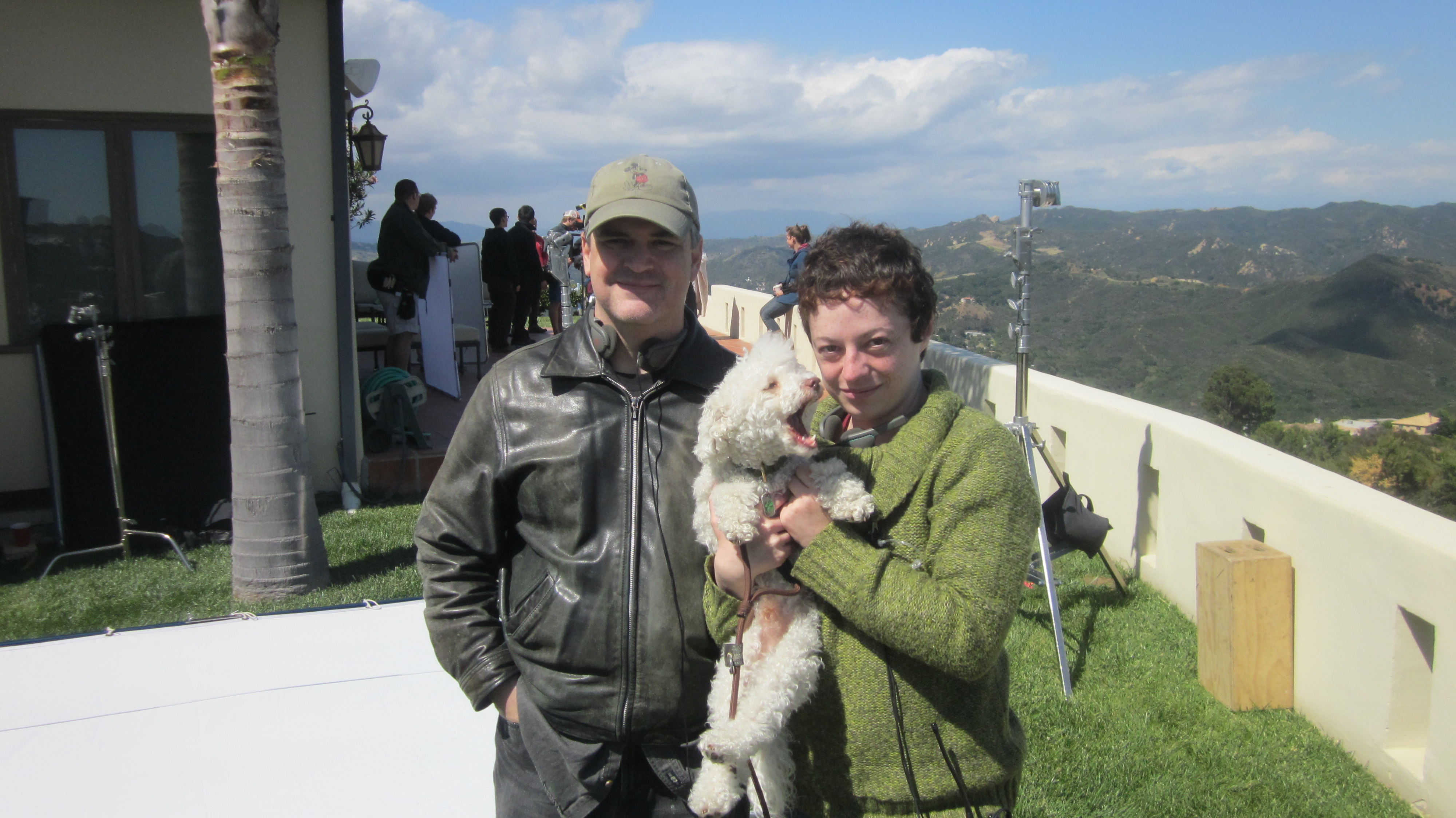
Writer/Director Todd Alcott, Writer/Producer Holly Golden, and Eddie.
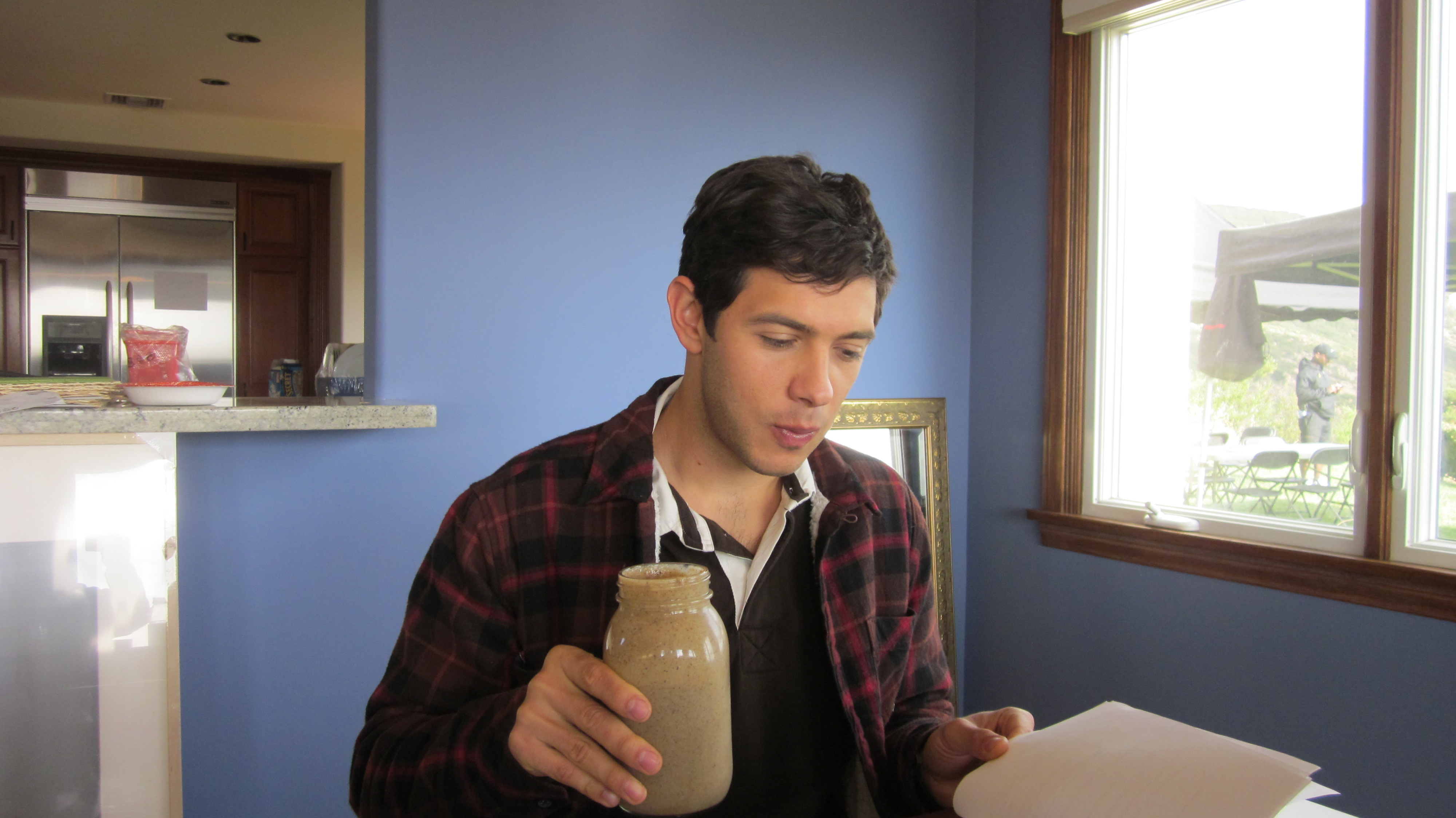
Michael Rady, who is a vegan in addition to being a tall, good-looking actor guy, drinks mason jars of green and gray gunk every day.
Blood Relative rehearsals day 3
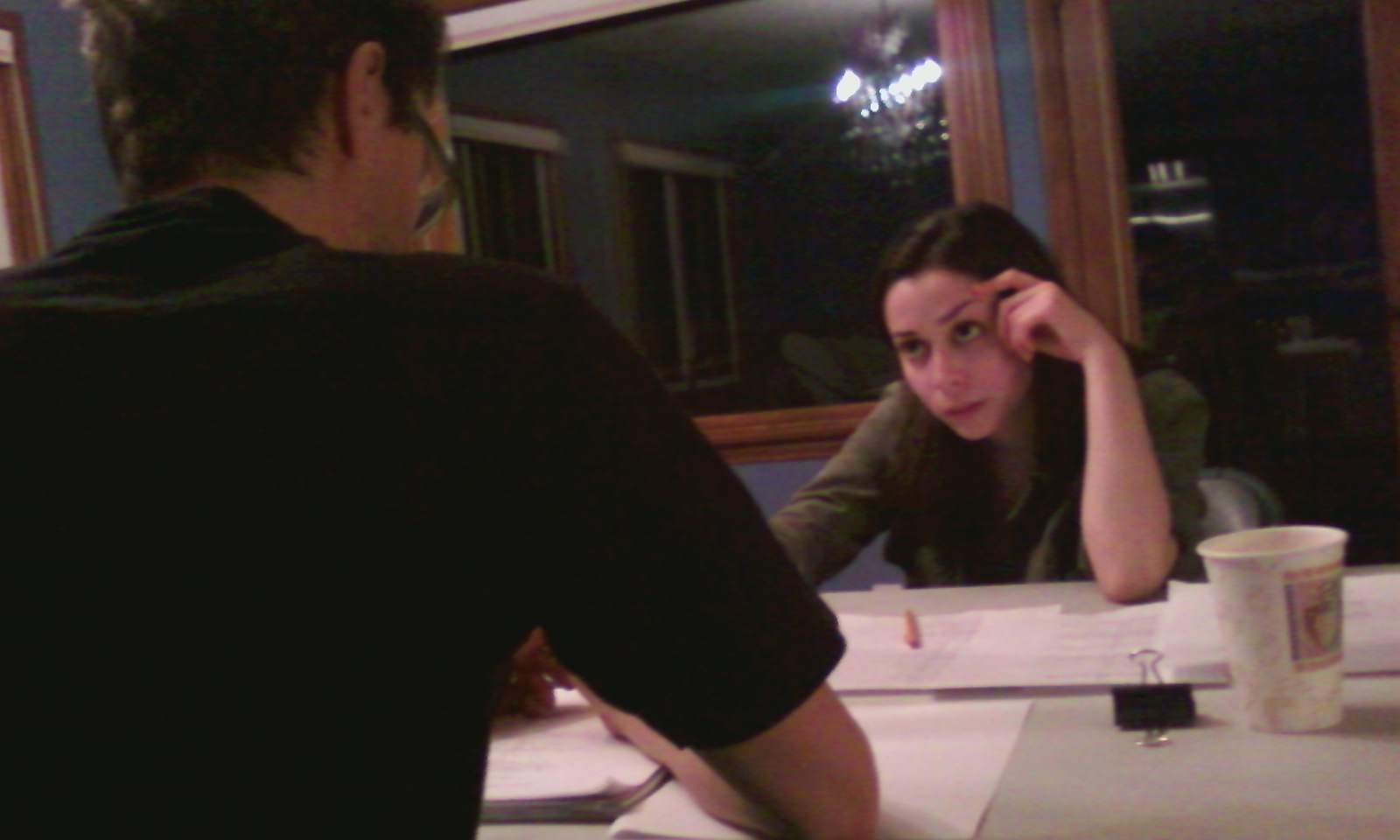
Cristin Milioti meets James Urbaniak on the set of Blood Relative, and two worlds collide on my crappy cell phone. Cristin has never seen The Venture Bros, and James has never seen Year of the Carnivore. And yet, when the two of them sat down to rehearse a handful of scenes, which form a crucial spine of Blood Relative, joyful sparks flew.
(James plays a co-worker of Cristin’s, a man whose past harbors a dark secret!
What brought them together? Stories of mutual friends — both James and Cristin have worked with actors Thomas J. Ryan and Steven Rattazzi — and “Drinking Out of Cups.”
At one point during rehearsals, James went to get a drink, took down a plastic cup and said, seemingly apropos of nothing, “Drinking out of cups,” to which Cristin added, again, seemingly apropos of nothing, “Bein’ a bitch.” I was baffled and bemused as the two of them started trading and echoing lines from this infamous internet meme I’d never heard of.
The ice broken, both Cristin brought out their strong suits — expert mimicry, and mastery of show-biz trivia. There is no tributary of show-biz trivia James has not swum in, and Cristin, while a good deal younger than Mr. Urbaniak, had no trouble keeping up with him. As for the mimicry, the important thing to note is that James doesn’t just do impressions of movie stars — Pacino, De Niro, Walken — but also dozens of obscure character actors even I have trouble identifying. Cristin, meanwhile, revels in accents and behavior, and watching the two of them screw around is really something to watch. Python routines, song lyrics, theater stories and tales of overindulgence fly by, which is, honestly, more important than running lines any day.
Blood Relative production meeting

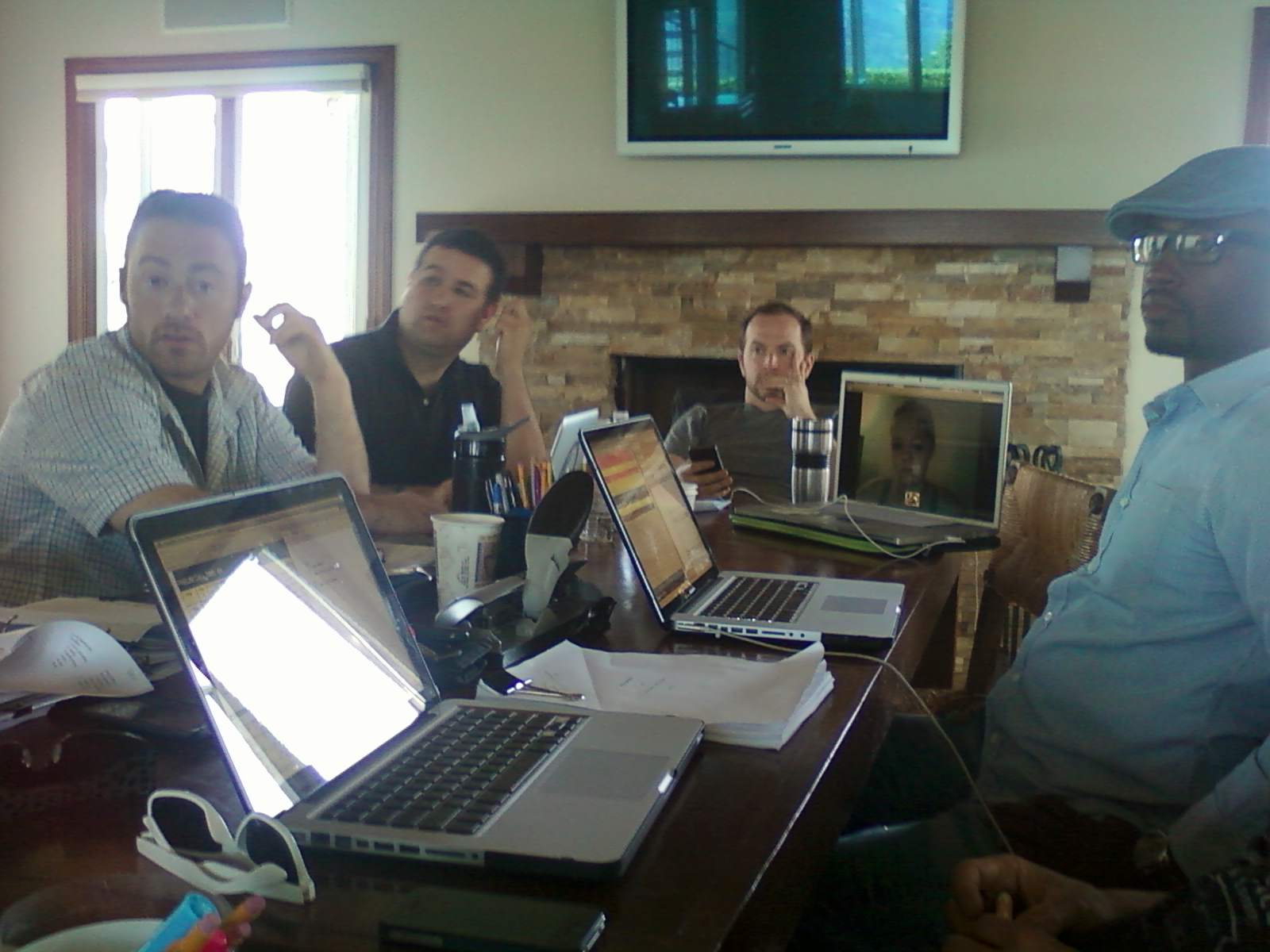
It takes a lot of people to make a movie. Here we are at our first all-department production meeting, at our primary location.
1. Dan Scruggs, our special-effects guy, who will be in charge of figuring out how to murder people safely and realistically in the digital realm. Next to him is James Logan, our stunt coordinator, who will be in charge of figuring out how to murder people safely and realistically, in the physical realm.
2. Next to James the stunt coordinator is our stylist Megan Hofferth, who will be in charge of making sure the people who are to be murdered look appropriately spooked before they are brutally murdered. Next to her is Reuben Saunders, our associate producer, who assists the producers in making sure people get murdered on time and in an orderly fashion.
3. Will Potter, our Art Department head, who will be in charge of making sure that our empty house is no longer an empty house, but rather a house where a married couple with a baby has lived for a number of months. This he will do on a budget of about six dollars. Next to Art is our producer Holly Golden, who organizes everything and makes sure everyone is talking to everyone else, so that we’re all working on the same movie. Holly also happens to be co-writer of the screenplay. Behind Holly are two production assistants, AJ Havrilla and Greg Matthew, who are in charge of anything that needs to be done that no one else has the time to do, since we’re shooting in a few days and everyone is very over-extended.
4. Our production manager Luca DeSando-Grassi, who is in charge of making sure the trains run on time. Next to him is our producer Ilan Arboleda. Now, keen eyes will note that I’ve already listed a producer. This producer is not that producer. Ilan works alongside Holly to organize the approximately thirty-two billion things that need to happen before cameras roll on Monday. For those curious, that is what a producer does: makes sure thirty-two billion things happen by Monday. Next to the producer is (wait for it) our producer Chris Lauer. Chris is a “line producer,” who’s in charge of running the set, making sure that this gets connected to that. (Not pictured is the executive producer, Gary Auerbach, whose job it is to provide funds and encourage the writer-director). On the computer, attending the meeting via Skype (we are living in the 21st century) is Tara Lang, our special-effects makeup woman, whose job it is to make people look appropriately murdered, once they’ve actually been murdered. Next to her is Roger Melvin, our First Assistant Director, whose job it is to run the set on a daily basis, to make sure that one thing follows another in an orderly fashion, to crack the whip with regard to schedule and to keep crew members from crunching chips during takes. Next to Roger is the hand of George Su, our director of photography, whose job it is to make sure everything looks beautiful while people are murdered.
I notice that we all use Macs. Because we are hip.
Blood Relative rehearsals, cont.
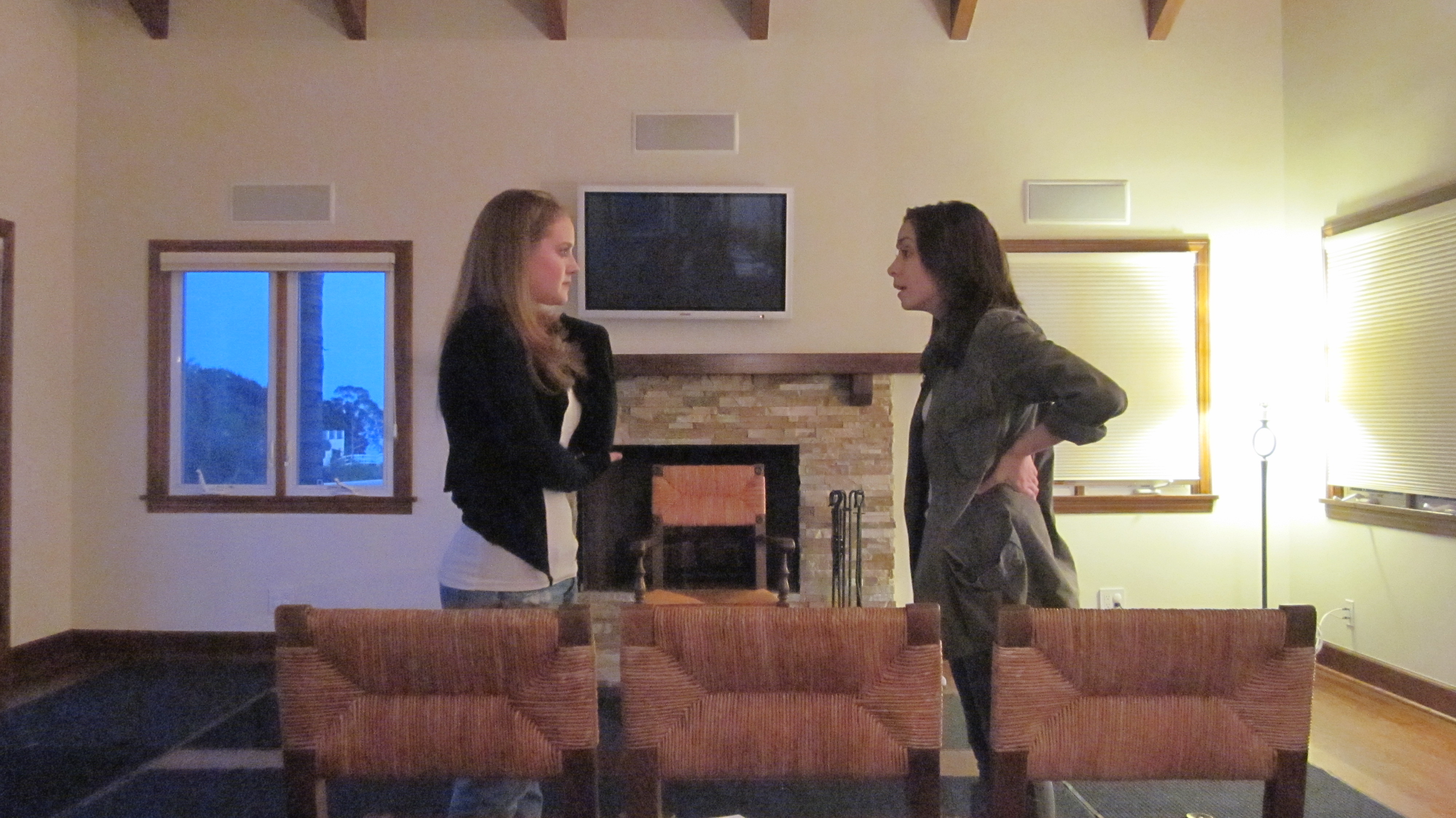
Rehearsals for Blood Relative are going swimmingly. Here, Macey Cruthird holds an imaginary baby as Cristin Milioti interrogates her for some reason. Macey is playing Ruth, a babysitter who has a dark secret. Or does she? Meanwhile, Cristin is playing a new mother who has a ghost problem. Or does she?
Blood Relative rehearsals: day 1

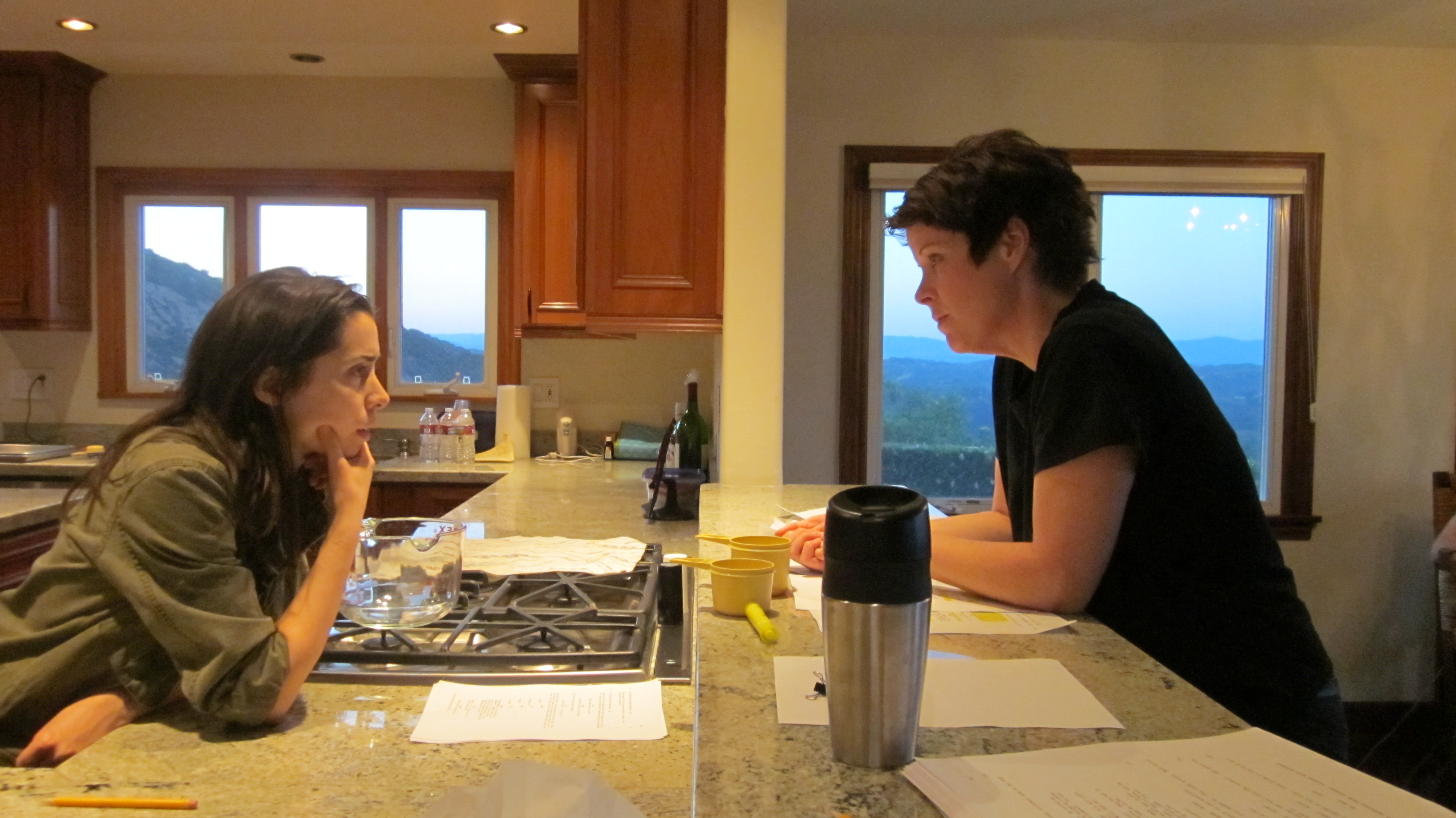
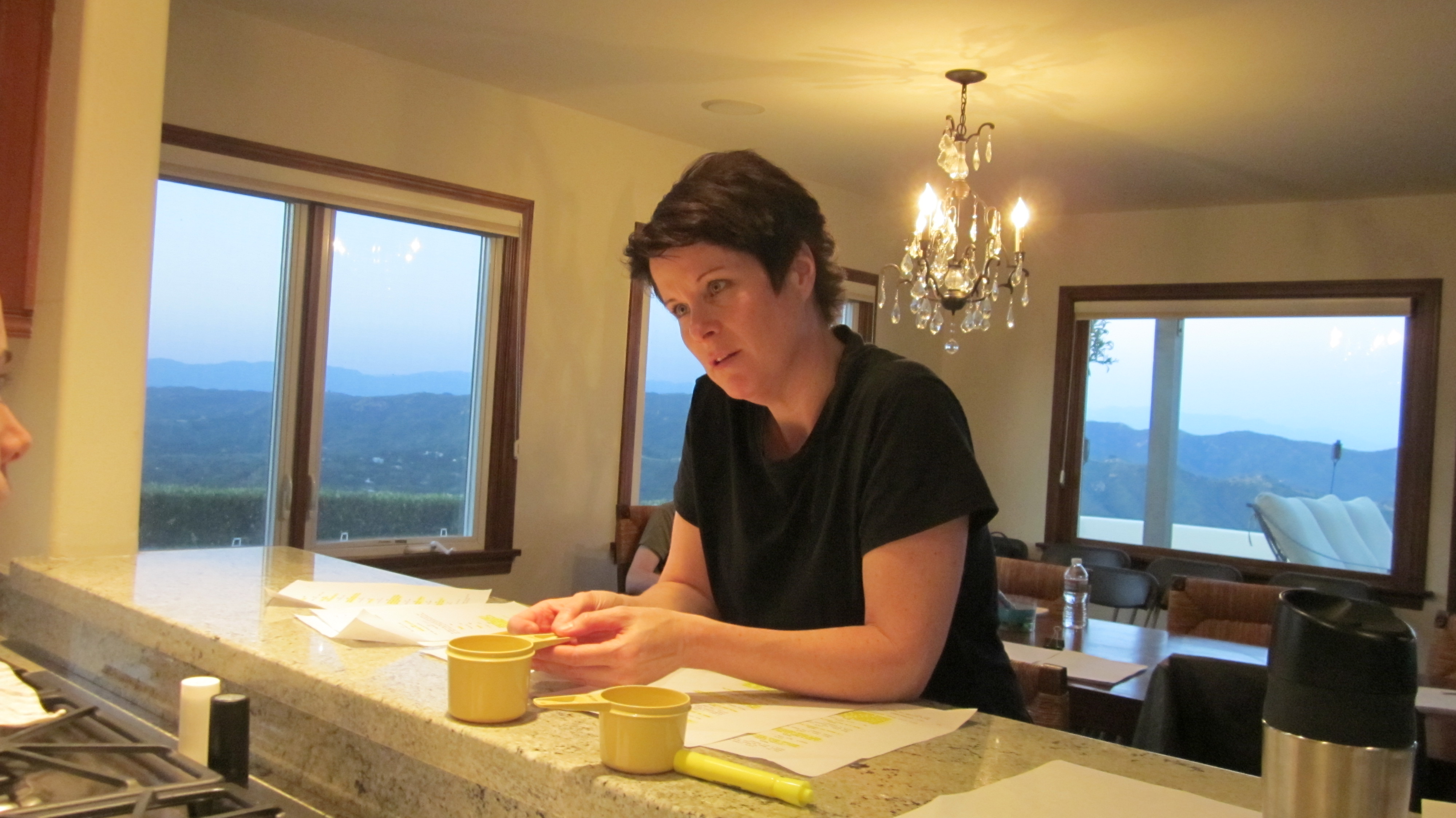
Cristin Milioti and Marypat Farrell rehearse a scene in the kitchen of our primary location. Cristin plays a distraught young mother who seeks the advice of a psychic — and gets more than she bargained for!
If you haven’t heard of Cristin Milioti, that will change. She gave a clobbering great performance on a recent episode of 30 Rock, and this fall she’s scheduled to be the female lead in the Broadway production of Once. She’s been in all kinds of New York theater and, although she is a generation younger than your humble journal-keeper, knows everyone in New York that I know.
Blood Relative: the party

To celebrate the beginning of production, we had a party for the cast and crew of Blood Relative at our primary location, a house in Topanga Canyon. A splendid time was had by all, and then we all sat down to read through the script. Which is a scary thriller with lots of twists!
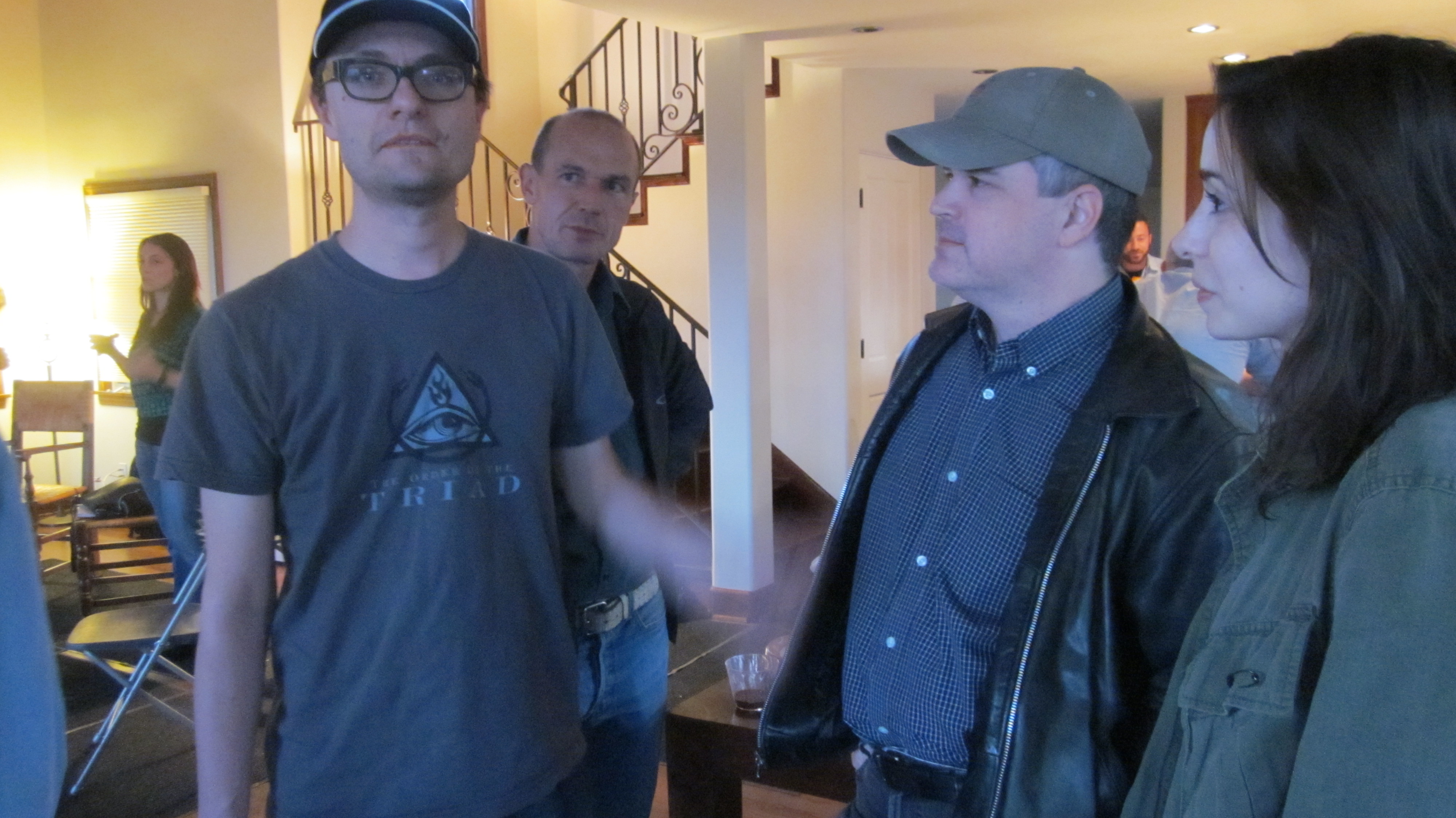
Left to right: James Urbaniak, Toby Huss, your humble correspondent and Cristin Milioti. Mr. Urbaniak’s left hand is still whole: the blurring is an effect of the camera’s shutter speed. For those interested, Mr. Urbaniak here models his Order of the Triad t-shirt. (Mr. Urbaniak informs me that he doesn’t actually intend to wear Venture Bros clothes everywhere he goes, he just gets dressed in the dark, like any other aging slacker.)

Ms. Milioti contemplates calling her agent to see if there’s any way she can get out of this project.

Mr. Urbaniak, on the other hand, is an old hand at dealing with the director, and calms down with a nice brewski.