Screenwriting 101: Le Trou, and The True


I’m very angry that I’ve gone this long and nobody ever bothered to tell me about Le Trou, Jacques Becker’s exemplary 1960 prison-break movie. What am I paying you people for?
Yay SAG!
No Country cast takes top acting prize. Congratulations are in order to Mr. Gene Jones.
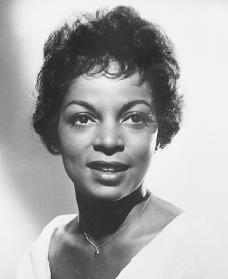
Meanwhile, Ruby Dee kicks ass all over Cate Blanchett for thinking she can get away with stealing her hairdo.

Metablog
As my “Screenwriting 101” posts seem to be developing a loyal following of their own, I have gone and given them their own tag for easier reference.
Try it now!
True Hollywood Story: Famous Older Director
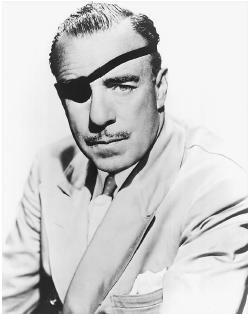
Not Famous Older Director.
I’m working on a picture. We have a script everyone likes, a Movie Star who will justify our budget, an excellent supporting cast, and we have just found a Famous Older Director, a real icon of 70s-era moviemaking, to direct the movie. Everyone is very excited about this: a miracle of miracles is about to occur, we are actually About To Make A Movie.
FOD has some ideas about the script. Some of them are good ideas about the script. The meeting is going well. I’m sitting there thinking “Omigod, I’m actually going to have my name on a movie directed by FOD, I’m going to go down in movie history.”
FOD has an idea for the ending. Everyone wants to hear it.
Here is FOD’s idea for the ending — “What if we show two of the main characters, in a romantic climax, kissing — “
— yes, we’re with you so far —
” — in the mists rising from Niagara Falls?”
A beautiful image. Indelible. One problem: the movie is not set at Niagara Falls. The third act of the movie isn’t set at Niagara Falls. The climax of the movie isn’t set at Niagara Falls. In fact, none of the movie is set at Niagara Falls. In fact, there isn’t even a single reference to Niagara Falls anywhere in the script.
I’m puzzling about this as Producer and Movie Star exclaim to FOD about what a beautiful image it is. Then all three of them turn to me and say “So, Todd, what do you think?”
And I say “Um, I think it’s a beautiful image but, um, I’m just wondering, why Niagara Falls?”
And FOD expounds upon the iconic glory of Niagara Falls, and how gorgeous it will be to see the two characters kissing in the mists as the mists rise from the falls. And he still hasn’t told me why Niagara Falls, except he thought of it.
And so I say “Yes, I see, I totally get it, but, um, why Niagara Falls?”
And now FOD starts to get a little impatient, and starts putting down my script, which everybody loved when we first got into the room fifteen minutes earlier, but which is now apparently a steaming pile of crap in bad need of an overhaul. Which, as far as I know, it is, but in which case, I’m wondering how it attracted Movie Star and FOD in the first place.
And I assure FOD that I have nothing against Niagara Falls, or his shot, but there’s no reason why these characters would suddenly be kissing in the mists of Niagara Falls at the climax of our movie.
So FOD, on the spot, makes up a reason why they might be there, which involves rearranging a few of our third-act scenes in order to justify the change of location.
And I say “Okay, but then why do these scenes in the third act take place in Niagara Falls?”
And FOD makes up a bunch of charming nonsense about why these third-act scenes take place in Niagara Falls, which involve changing the nature of the second-act climax.
And I ask why the second-act climax needs to change, since it was working perfectly well before, and if we change it then we will need to change the action of the second act, since everything builds to that second-act climax.
And FOD says no problem, we can just change who the protagonist is and what his goals are, and what his conflicts are, and who the antagonists are, and that will give us a different first act, which will of necessity create a new second act, which will then allow us to set our third act in Niagara Falls, which will give us this wonderful shot of the two characters kissing in the mists of Niagara Falls. QED.
And Producer and Movie Star are sitting there going “Yeah, that sounds great, let’s do that, sure, wow, this is going to be some movie,” and they all turn to me and say “So, what do you think?”
And I furrow my brow and purse my lips, because I’m just Shlub Screenwriter, I’m not Producer or Movie Star or Famous Older Director, I can’t just say “but this is the stupidest idea I’ve ever heard!”
So instead, I take a moment, and a deep breath, and say: “Well, everything I understand about film theory tells me that The Shot serves The Scene, and The Scene serves The Plot, and The Plot serves The Story, and The Story is the whole point of the movie being made, and now you’re asking me to change the entire story of our movie because the director has an idea for a shot.”
And everyone glares at me like I’ve just pulled down my pants and shat on the floor.
And Producer sternly reminds me that Famous Older Director is Famous Older Director, and How Dare I Speak That Way, and Who Do I Think I Am, and Apologize To All Of Us. And now I’m beginning to think that maybe I’m not going to go down in movie history after all, and I say “I mean, that’s fine, I don’t mind, I’m not afraid of work, and if we can make this work, then for Heaven’s sake, let’s do that.”
And that seems like a much better attitude for me to have, and everyone is pleased, and arrangements are made for me and FOD to travel to Niagara Falls together to scout locations for what has now become a major overhaul of our script.
And I do travel to Niagara Falls with FOD, and we do scout locations, and every location we see gives FOD another idea about a new direction for the plot of our movie, and by the end of the day the movie bears absolutely no resemblance to the screenplay we already have, the one everyone loves, the one that a week ago was all ready to shoot. And I’m looking at at least a month of rewrites on a movie that’s supposed to start shooting in a couple of weeks, and new characters and plot complications are being added by the minute and I don’t even know what the hell I’m writing any more.
And Producer calls me in my hotel room in Toronto after my day of scouting locations with FOD and he asks me how it’s going. And I do my best to relate to Producer this new movie that FOD is laying out in our travels, and he says “No, no, this is ridiculous, why are you letting him get away with this?!” (To begin with, FOD’s plot changes are about to double the budget of the movie, which will kill the project right there.) And I remind Producer that I tried to point out the absurdity of FOD’s changes at the earlier meeting, a fact that Producer has now forgotten. “You have to tell him, Todd,” he says, “You have to tell him that this won’t work. I mean, my God, he’s changing the entire story just for the sake of one shot!” And I remind Producer that I am only Shlub Screenwriter, it’s not my place to tell FOD that his ideas aren’t going to work. That would, I think, be Producer’s job.
In any case, FOD and I fly back to New York and, the next thing I know, I’m going to a meeting at Producer’s office, and it’s me and Producer and Movie Star again, and FOD and I talk about our trip to Niagara Falls and what we learned there and how our movie will be affected by the changes, and I say that if this is what everyone wants, I’m happy to dive right in and change the entire script. And Movie Star has brought a book that FOD wrote, so he can get FOD’s autograph, and FOD is charming and eloquent and everyone tells FOD he’s a genius and FOD has to leave to go meet his publisher or something and the second FOD leaves the room Producer and Movie Star tell me that FOD’s ideas are ridiculous and unworkable and they’re firing FOD and replacing him with someone else.
Yay DGA!

My heartiest congratulations to the Coen Bros for winning the DGA award for their work on No Country For Old Men, a decisively victory over the frail, diminutive Italian Martin Scorsese, who won last year for The Departed.
In accordance with DGA tradition, after the award is announced the previous year’s winner is always given a chance to defend his title in a kind of improvised cage match. (In 1947 John Ford easily fended off an attack from that year’s winner Vincent Minnelli.)
Reports indicate that Scorsese did not give up his title easily. Although an asthmatic child, Scorsese has known a lot of “tough guys” in his time, and was heard remarking that “The DGA must be nuts if they think I’m gonna hand this thing over to a couple of skinny Jews from Minnesota.” He reportedly tried to enlist the aid of Robert DeNiro (who famously trained as a boxer for his role in Raging Bull), but DeNiro is a strict observer of DGA rules — there can only be one great director of motion pictures in any given year. As Joel and Ethan Coen are now officially two great directors, they were both allowed to take on the 90-year-old, 4’10” Italian-American. (Joel was heard snarling to his brother “Now I know why they call it Little Italy” as they entered the ring with Scorsese.) Scorsese pulled out an impressive home-made shiv at one point, which made Ethan Coen laugh. “Leave it to an Italian to bring a knife to a cattle-gun fight,” he sneered, as sibling Joel turned the handle on the oxygen tank they had cleverly concealed in a hollow leg.
PT Anderson, who had brought a bowling pin with him to the ceremony, “just in case,” declined comment.
There Will Be Syrup
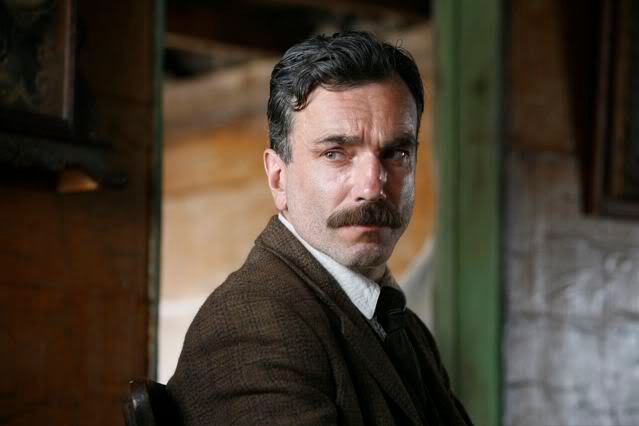

Daniel Plainview and his madeleine.
Several loyal readers have written in to ask me to analyze the plot of Paul Thomas Anderson’s latest masterwork There Will Be Blood. This is a daunting task for your journeyman screenwriter, but, as Blood is obviously an important new movie and will inevitably be seen as a lodestar of the cinematic movement that will, no doubt, spring from it, I figured I would give it ago.
As this movie is still very much in theaters, I strongly caution the unlearned reader against advancing below the cut — vital spoilers are involved in every sentence.
Movie Night With Urbaniak: Inland Empire


The only things I knew about David Lynch’s Inland Empire, before sitting down to watch it with
![[info]](http://stat.livejournal.com/img/userinfo.gif)
, was that it is a David Lynch movie, it was shot on video, it is three hours long, it has been called quite boring, and it did not enjoy a traditional studio release (in fact, it had not played anywhere near me during its patchy run last year). All of those things pointed toward a movie that could be easily dismissed as the work of an artist with not enough control imposed upon him, who has run amok with his creative energy and gotten lost in his own little aesthetic curlicues.
So it pleases me greatly to say that not only is Inland Empire a very good movie, it is also something of a breakthrough for Lynch, who succeeds in making an essentially plotless three-hour psychodrama riveting cinema.
Something about Inland Empire kept reminding me of Pinter, the oddball scenes full of oblique dialogue about mundane topics, suddenly turning fierce and weird when you least expect it. And the more I thought about it the more apt the comparison became. Pinter was looking to move theater beyond “a show” that has some kind of “meaning,” where the audience could all pat themselves on the back afterward for “getting” whatever “message” the show was trying to impart. He wanted his plays to be a kind of provocation, a deeply unsettling event that didn’t have a “meaning” beyond the absurd, terrifying actions presented on stage.
I think Lynch has accomplished something similar with Inland Empire. More so than any of his earlier movies, which eventually “make sense” after enough viewings, he seems to have finally thrown off the shackles of “meaning” and “plot” to present something like experience itself, outside of “meaning,” and have it not only work on its own aesthetic level but over a period of three hours.
While the movie was running, I kept a running tally of ideas that seemed important at the time, in the hopes of, by the end, “figuring out” what the movie was “about” and thus appearing to be a smarty-pants.
(My list reads, in part: Record, Poles, Polish whore, Rabbits TV show, Blurry video, New neighbor, Wealth, Actress, Mulholland Drive-like moviemaking, Story of little boy, If it were tomorrow, Cursed remake, Purgatory of ex-girlfriends, etc.)
But the longer the list got, the less I feltI understood, and yet I was never less than entertained and always intrigued and sometimes horrified. And I finally thought, well, maybe that’s the point, that ultimately there is no “meaning,” no final “point” to the thing, ie “Laura Dern plays Nikki Grace, an actress who gets a part in a big movie and it messes up her mind so much that she doesn’t know who she is anymore.” I mean, that statement certainly covers most of the “action” of the movie, but it doesn’t really explain anything. Nikki (if the movie is, indeed, about Nikki) goes from being an actress to being the character she’s playing in the movie she’s making, to being a lower-class woman married to a Polish man, to being a prostitute who (I think) turns out to also be the character in the movie she’s making, but the way that all this information unfolds is so poetic, mysterious and alarming that it defies not only summation but rational explanation. Why do people keep talking about how they’re “good with animals?” Why is the movie’s producer so broke that he needs to ask crew members for handouts? Who are the people dressed as rabbits and how did they get their own TV show? Who is the Polish whore crying on the bed?
Inland Empire, it seems to me, if it is “about” anything, is about identity, and how extreme emotional circumstances allow/force us to alter our identity. So the actress getting into her role may find herself becoming the character, and the character may echo back to an earlier version of that character, and that earlier version of the character may find herself in the shoes of the “real person” the character is based on, and a distressed woman watching the finished movie on TV may find herself identifying so strongly with the character the actress is playing in the movie that she may imagine herself the actress playing the role. And even this paragraph only “explains” about fifteen percent of what we actually see unfold in Inland Empire.
To put it another way, you could say that Inland Empire is a David Lynch movie for people who thought Mulholland Drive was a little too pat. It’s not that it’s impossible, necessarily, to explain what it’s about, but Lynch shifts perspectives so often and peels back so many layers of perception and possible meanings that I think, in the end, it’s folly to try to nail the damned thing down. When the movie started, I was bracing myself for a three-hour bore, and by the end of it I thought I could probably see this movie a dozen times and not get to the bottom of it.
Nikki, and Laura Dern’s performance of the character, also reminded me of Vonnegut’s Billy Pilgrim, who was “unstuck in time” and who spent his whole life in a state of anxiety, not knowing from moment to moment what part of his life he was going to be expected to perform. Dern moves through the movie with a similar level of apprehension, not knowing if, the next time she goes through a door, if she’s going to be herself, the character she’s playing, one of the other characters, or a Polish prostitute, or what, until by the end of the movie she really isn’t sure who she is any more.
Now then: it’s not all peaches-n-cream. Whatever freedom Lynch seems to have found with his video camera has not resulted in a thing beautiful to behold. Which is a shame, because if nothing else, a David Lynch movie is always absolutely gorgeous. But the picture in Inland Empire is blurry and smeary, and Lynch’s shooting style has changed to the point of being almost unrecognizable. Where his scenework is usually graceful and enigmatic, here it is sometimes remarkably clumsy, even amateurish, as though he didn’t have the coverage he needed and had to steal shots from other scenes to compensate. Extreme, distorted close-ups of actors’ faces dominate, and some sections of the movie are so dark as to be essentially invisible. Those technical aspects aside, Inland Empire is a unique, powerful experience.
W.H. Macy appears, for one shot, as a TV announcer for a Hollywood talk show. I’m still puzzling over that one.
Urbaniak and I improvised the following:
LYNCH (loud, flat Midwestern twang). Bill! It’s David!
MACY (ibid). David! How the heck you doin’?
LYNCH. Great! Great! Hey listen, you know I’m doing this crazy Inland Empire thing —
MACY. Yeah, yeah Laura was telling me all about it! Sounds like a gas!
LYNCH. Well listen, I think I’ve got a part for ya!
MACY. You’re kidding! Me?
LYNCH. Yeah, whaddaya doin’ tomorrow?
MACY. Well actually, I’m traveling tomorrow for a shoot in Vanc —
LYNCH. I’m sorry Bill, I’ve got a bunch of static on this end! Can you come by Paramount around ten?
MACY. I — well —
LYNCH. It’s a great part, it’s the star part, it’s practically a second lead to Laura!
MACY. Really? Because I heard Justin —
LYNCH. Can’t hear ya, Bill! No, it’s a key role! You’re gonna steal the picture! You remember Dean in Blue Velvet? It’s like that!
MACY. Sure, he’s great in —
LYNCH. My girl here is telling me eight! Can you be at Paramount at eight instead of ten? We should be able to get you out of there by two!
MACY. Uh, sure David, sure! What — I’m sorry, do you have a script or something?
LYNCH. I’m sorry David, I’m heading into a tunnel! It’s gonna be great! Oh hey!
MACY. Uh huh?
LYNCH. You have a bow tie? Because the character wears a bow tie, and we don’t have the budget for it! Thanks a lot babe, love ya!
Screenwriting 101 — The Treatment
Okay. So:
*You have a cool idea for a movie
*You know who the protagonist is and what the protagonist wants and who is in the protagonist’s way
*You’ve sketched out a basic act structure
*You’ve expanded upon that sketch and written your outline.
Now the work begins: it is time to write a treatment.
In my experience, this is the point where screenplays are won or lost. Almost anyone can have, and has had, a cool idea for a movie. A dog accidentally gets issued a credit card — there, I just had one myself!
And a similar number of people could sketch out a basic three act structure for that movie: Act I, the dog gets the credit card and goes hog-wild, buying all kinds of things, Act II, the dog’s bills come due, and he finds he must get a job in order to pay for all the things he bought, Act III, the dog, through his experience, learns that he was happier not having a credit card after all.
Putting together an outline starts to get a little more difficult, but the treatment is where the rubber hits the road.
Basically, a treatment is a prose version of your screenplay, your screenplay, in a way, told as a short story.
You may ask, hey wait, if I was any damn good at prose, what the hell would I be doing writing a screenplay? If I could freakin’ write prose, I’d be freakin’ Raymond Carver, I wouldn’t be scraping around trying to write a screenplay! And I understand your pain, for I have felt it myself.
Okay then, let’s not think of it as prose, let’s think of it this way: you’ve just seen a really cool movie, and you can’t wait to tell me about it.
The movie’s just let out and you’re totally buzzed about it and you meet up with me at a good restaurant afterward and you have to tell me about the movie and get it all out before the food comes. Go!
“There’s this guy, Rob, and he lives in New York, and he’s got a job working for some big-deal corporate thing, and he’s all psyched because he just got transferred to Japan, and he can’t wait to go, but guess what? There’s this girl, Beth, and she’s got this totally awesome apartment on Columbus Circle that belongs to her dad, and Rob has been friends with her off and on for a long time but now he’s, like, totally fallen in love with her, but he decides he can’t really tell her that, because, right, he’s about to leave for Japan forever. So he’s conflicted about that, and then the night before he leaves, all his cool friends get together and throw him a surprise party, and Beth is there, but she’s with some other guy, some douche we don’t know, and all his other friends are there, and his best friend is, like, shooting the whole party with Rob’s video camera, so Rob can’t, like, say anything to Beth, even though he really wants to, because he’s leaving the next day and everyone wants to say goodbye and his dorky best friend Hud is shooting everything with this video camera. And get this — the whole movie? is shown from the point-of-view of Hud, through Rob’s video camera. So it’s this really cool cinema-verite kind of thing, we pick up random pieces of behavior, and we see Hud is trying to put the make on this girl Marlene, and he’s really not doing his job very well, and it’s totally funny and awesome and everything, because Hud’s, like, taping over this tape that Rob made about his one date with Beth, so like he unknowingly is, like, being a total dick. And anyway, Beth leaves the party with the douche and Rob gets really upset and everyone’s concerned and Rob’s brother Jason or somebody tells him he absolutely has to go after Beth, and then you know what happens? A GIANT MONSTER SHOWS UP AND STARTS BLOWING STUFF UP!!”
There. The above paragraph is, in essence, a treatment for the first 20 minutes of Cloverfield. I, personally, would not hand this in to a producer for consideration, but BELIEVE ME, I’VE READ WORSE.
Now, look at that paragraph again. It’s not great prose, it’s barely prose at all, but it describes the plot with a kind of propulsive energy and sense of movement, and what’s more, it does it in a language that gets across the 21st-century, internet-generation sensibility (or at least my 46-year-old’s interpretation of same). And that’s all a treatment really has to do. It has to tell the story, the whole story, and get across the general feeling of the movie. If you were writing the treatment for There Will Be Blood, it would probably be more like this:
“There’s a landscape. A harsh, unforgiving landscape. Rocks. Dirt. Punishing sun. Texas. Or Hell. And there’s a hole in that landscape. A wound. And deep in that wound, silent but for the steady pound of his pick, there is a man. Filthy, strong, mustachioed. Deep in a wound in the Earth, the man slams his pick, a tool of destiny, against the flinty walls of this hole, this grave he has prematurely dug in order to bury his soul. Sparks fly from the rocks, each one a symbol of the life of man, which flares only for an instant before being forever snuffed out.”
And so on.
Again, while the treatment should be readable, the most important thing about it is that it gets across your story points in a voice that gets across the feeling of the movie. The hard part is that it has to get across all the story, scene by scene, all the way through, with no “and then there’s this cool action set-piece I’ll figure out later” thrown in.
Now, what’s the point of this exercise? Why not just write the goddamn screenplay? Wouldn’t that just take less time?
Well, perhaps. But if you’re anything like me, what you will have at the end of your process is a screenplay no one will want to read. Because you haven’t worked out the story ahead of time as a treatment.
The point of all this pre-work work is to iron out all your plot points, character arcs and whatnot so that, when you sit down to write your screenplay, you’ve already done all the work and you can enjoy the process of writing.
Some people, I guess, can just sit down at their computer and open up Final Draft and just go ahead and start in writing their screenplay, and “feel” where it should go next, and those people can allow themselves to wander and surprise themselves and come up with something new and startling and original and amazing, something they wouldn’t have come up with if they had sat down ahead of time to think things out.
Two things:
1. I am not one of those writers.
If I start a screenplay working like that, what happens is I have a great idea for an opening sequence, then I get to page 25 or so and I realize that the great opening sequence isn’t going to work because it contradicts something that happens later in the act, but I’m loath to go back and kill my great opening sequence because I loved it so dearly when I was writing it and it turned out so nice and, well, what if I just typed up some brilliant bullshit to cover up the fact that I started without knowing where I was going?
2. I find that if I have done the difficult work of ironing out my story before I write my screenplay, I am able, once I sit down to do that, to do that creative thing, where I take chances and just “let ideas come” and “fool around” with the ideas and so forth. Once I have the tracks laid and nailed in place, I find that I can make the train engine fancy or plain or asymetrical or goofy and know that it will still get to the station on time.
There is no set length. I’ve read treatments as short as two pages and as long as 42. The ones that are two pages long, I’ve found, favor sensation over logic and leave out a lot of crucial stuff. (My favorite sentence in a treatment ever, written by a very successful writer/director, for a project that didn’t happen, was “And did I mention the radioactive sharks?” I guess you had to be there.)
Yay Oscars!
Best Motion Picture of the Year
Nominees:
Well, close readers of this journal know what my favorite is. But these are five pretty strong movies. Well I’m guessing in the case of Atonement — has anyone out there seen it? It looks too much like The English Patient to me. Which may mean, of course, that it will win. Because let’s face it, not only are three of the nominees about the murderous roots of capitalism, none of them were runaway hits. They may split the “I dislike the evils of capitalism” vote in Hollywood. And then there’s the fact that Juno is the only movie here that resembles anything like a popular hit. There Will Be Blood seems to have the critical momentum, and it is a fine, fine movie, but in my heart of hearts I hope it’s the Coens’ year.
Best Performance by an Actor in a Leading Role
Nominees:
I hate bowing to conventional wisdom, but this really seems like Daniel Day-Lewis in a walk. No one saw In the Valley of Elah (and frankly I preferred TLJ in No Country), and if Viggo Mortensen wins an Oscar, I don’t think it’s going to be for playing a Russian Gangster. Johnny Depp was great in Sweeney Todd, but Clooney just won recently and Day-Lewis has all the momentum.
Best Performance by an Actress in a Leading Role
Nominees:
Julie Christie in a walk. No one saw Elizabeth (and besides, Blanchett will probably win for I’m Not There), Laura Linney will one day have a part equal to her stature as an actress but her role in The Savages isn’t it, Ellen Page is great in Juno but, well, it’s a comedy, and I didn’t see the French movie.
Best Performance by an Actor in a Supporting Role
Nominees:
Obviously, Javier Bardem will crush the competition. Given his performance in No Country, who would dare vote against him?
Best Performance by an Actress in a Supporting Role
Nominees:
Five more wonderful performances from great actors (again, I’m giving Atonement-girl the benefit of the doubt) but I think Blanchett’s only real competition is from Ruby Dee. And given American Gangster’s otherwise stunning lack of nominations, I don’t see it happening.
Best Achievement in Directing
Nominees:
I’ve heard weird buzzes around town that Schnabel stands a real shot at winning this thing. And his direction for Diving Bell is original, daring and innovative. But come on, so is PTA’s work on Blood. My heart is on the Coens, but I’m always wrong about these things.
Best Writing, Screenplay Written Directly for the Screen
Nominees:
Of these movies, I liked the screenplay for Michael Clayton best, and Ratatouille a close second, but I’m going to guess that Juno will win this one (and not its other nominations).
Best Writing, Screenplay Based on Material Previously Produced or Published
Nominees:
Hey, there are four women nominated for writing awards this year! What the hell am I paying dues for in my Boys’ Club moviemaking guild if we’re going to keep encouraging these people?!
Again, my heart is with the Coens here, but these are all swell screenplays. Looking at this list, I get the feeling that Blood may win Picture and Director, but the Academy will give the Coens the writing award just to show, you know, no hard feelings.
Best Achievement in Cinematography
Nominees:
These are all handsome movies, but Jesse James has the best cinematography I’ve seen in a decade.
Best Achievement in Editing
Nominees:
Again, good work here by everyone. I’m a big fan of Roderick Jaynes’s work, but Bourne was surprisingly well-reviewed this year and they might just go ahead and acknowledge that, especially if Blood or No Country sweeps other awards.
Best Achievement in Art Direction
Nominees:
I think the best work here is in Blood, but American Gangster, like all of Ridley Scott’s movies, has stunning art direction. Sweeney Todd may win for having the most obvious art direction.
Best Achievement in Costume Design
Nominees:
I think Sweeney has this category, er, all sewn up.
Best Achievement in Makeup
Nominees:
How odd that Sweeney wasn’t nominated for its extraordinary hair and makeup. I have no idea about this category.
Best Achievement in Music Written for Motion Pictures, Original Score
Nominees:
Having no memory of the score in Michael Clayton, having disliked the score in 3:10, and not having seen the others, I’m going to say Ratatouille.
Best Achievement in Music Written for Motion Pictures, Original Song
Nominees:
Best Achievement in Sound
Nominees:
Again, good work here by everyone, but boy the sound in No Country is so subtle and so crucial to the success of the picture.
Best Achievement in Sound Editing
Best Achievement in Visual Effects
Nominees:
I think it’s about time to expand this category to five nominees. Since everyone hated Compass and Transformers, I’m going to say Pirates.
Best Animated Feature Film of the Year
Nominees:
I have a hard time imagining Ratatouille not winning this.
Best Foreign Language Film of the Year
Nominees:
Best Documentary, Features
Nominees:
Best Documentary, Short Subjects
Nominees:
Best Short Film, Animated
Best Short Film, Live Action
Nominees:
No freakin’ clue.
Good luck to everyone! And remember, I’m always wrong!
Sweeney Todd: The Demon Barber of Fleet Street

Well I have to admit, this was a pleasant surprise. I mean, as pleasant as a movie about people getting their throats cut could be.
I sat down to watch this movie, knowing only that it was a musical, composed by Stephen Sondheim, an artist whom I rarely think about, some sort of black-comedic Victorian revenge drama, directed by Tim Burton and featuring a cast that promised a Pirates of the Caribbean/Harry Potter smackdown, with a guest appearance by Borat.
First I was surprised by Johnny Depp, who gives his most sincere, honest performance ever in a Burton movie. Whatever he’s doing in Sleepy Hollow and Charlie and the Chocolate Factory I’m sure is amusing to someone, but I’ve never quite understood it myself. But here he’s just smashing, committed and balanced and strong. Then I was surprised to learn that I like his singing, which in this movie reminds me of a record I have of David Bowie singing Brecht.
I also like Helena Bonham Carter in this movie, although I have a lingering question with regards to her choices as an actress. She made her name playing period roles in Merchant-Ivory movies (and their imitators), and then about ten years ago, around the time of The Wings of the Dove, suddenly seemed to make the decision that she wasn’t ever going to play another high-buttoned collar part again in her life. No, she decided, she was going to spend the next decade playing slatterns, psychos and witches. Which, more power to her, but there’s something about a beautiful, refined, obviously strong woman like her playing a character as bizarre, needy, manipulative and amoral as Mrs. Lovett. It’s my understanding that Angela Lansbury played the part on Broadway a million years ago, when she was merely “old” and not “as old as dirt.” Which seems to make a lot more sense to me — Sweeney Todd and Mrs. Lovett shouldn’t be young, robust, good-looking people who could attract anyone in London, they should be broken, over-the-hill, ruined, bitter people who’ve been around the block more than a few times (Sweeney, in fact, arrives from having traveled around the world). We’re supposed to believe that Mrs. Lovett has loved Todd since before his wife and child were taken from him, which has to be at least fifteen years, but Mrs. Lovett in this movie doesn’t seem to be that much older than Todd’s daughter.
Alan Rickman, however, blew me away, as did Sacha Baron Cohen, who managed to get all kinds of levels of play into his few scenes.
I have no idea what, if anything, has been changed to get the play onto the screen, but they did a terrific job. The plotting keeps the story engrossing, suspenseful and surprising, the production design is extraordinary (as it generally is for a Burton movie) and the hairdos alone should make it a lock for the makeup Oscar. And not just because they are clever (although they are), but because of the way they are actually integrated into the scenery around them — they look as though they were not meant to merely reveal character, but to be shown as a symptom and product of their environment.
And then there’s Burton’s direction, which, well, it seems strange to say it, but I think this is the best work he’s done. I’ve enjoyed plenty of Tim Burton movies in the past, but there was always some weird distancing thing going on, some kind of glibness or archness or lack of depth that always made them seem a little hollow. This movie, like Depp’s performance, seems honest and deeply felt in a way that a “deeply felt” movie like, say, Big Fish did not. To put it another way, I always knew that Tim Burton was a great artist, but this was the first time I felt like he had actually gotten in touch with the human side of his art as well as the technical side.
Which I guess sounds weird, because it’s hard to think of a less human, less organic construct than an almost-sung-through musical about an insane barber and how he slaughters people to feed a grudge. And yet, as my wife said about half-way through the movie, “It’s really good that these people all got together to make this,” because it’s hard to imagine another group of people understanding the material as well as this bunch.
Todd and Lovett, of course, make two more wonderful addition to this year’s unrivaled crop of movieland’s murderous capitalists, in addition to There Will Be Blood‘s Daniel Plainview, No Country For Old Men‘s Chigurh, Eastern Promises‘s Russian ganglord and Michael Clayton‘s homicidal corporate climber. The fact that all these roles have not only appeared in the same year but have been nominated for Oscars has got to say something about the state of our Union.