Guardians of the Galaxy part 2
After its heart-rending “cold open” in the hospital, the narrative of Guardians leaps ahead a few decades. Peter is now in his 30s, and is engaged in some high-tech sci-fi shenanigans. As the titles roll, a one-man heist sequence plays out, an affectionate parody of the opening of Raiders of the Lost Ark. Peter is no longer a sobbing boy or a helpless victim, he’s now a swaggering space-pirate looting ancient cities for lost treasure. His Walkman is no longer his shield, exactly; it’s now more like the vessel of his mojo. Instead of Indiana Jones carefully reading clues, dodging traps and insisting “That belongs in a museum!” we have Peter casually jiving his way through a ruined planet’s rainy landscape, kicking deadly lizards out of his way and even using one as a pretend microphone.
Guardians of the Galaxy part 1
For a big-budget, gee-whiz, goofy-space-opera summer blockbuster, Guardians of the Galaxy begins surprisingly quietly.
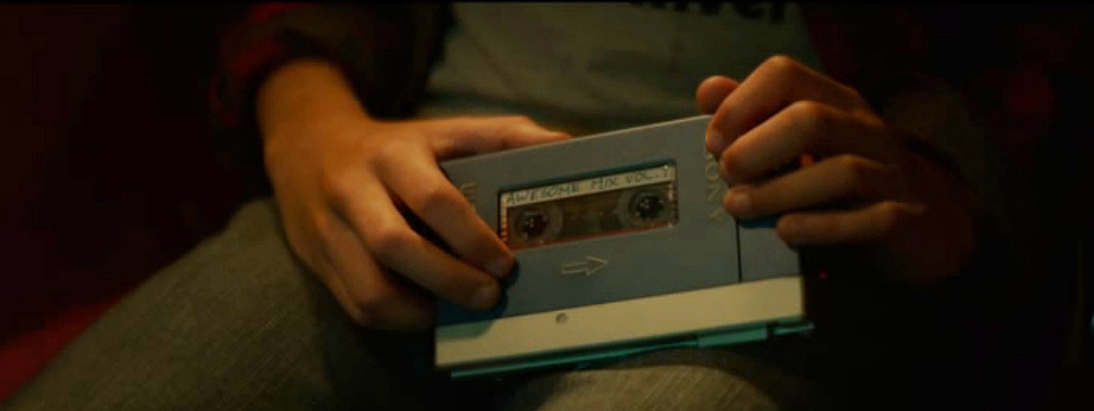
A boy sits in a hospital corridor in 1988 cradling his Walkman. “Awesome Mix Vol 1” reads the label. He’s listening to “I’m Not in Love” by 10cc. “I’m Not in Love,” from the summer of 1975, was instrumental in launching the career of 10cc. Originally written to a bossanova beat, it was reworked to feature an all-choral backing, made up of hundreds of overdubbed voices. Whether this was on the minds of the makers of Guardians or not, but the strength-in-numbers / linking together vast chains of individuals theme resonates throughout the movie. The subject matter, oddly, is a young man refusing to say he’s in love, until finally he’s deluding himself.
What does that have to do with the boy in the corridor? Well, his mother in dying in the next room, and he’s intent on holding in his feelings. His Walkman here is his shield, his way of holding the world and its horrors at arm’s length. And we will find that, in a way, the whole narrative of Guardians, with its reluctant hero who eventually joins society and does so, successfully, on his own terms, is about a boy who insists that he’s not in love until he finally admits that he is.
(“I’m Not in Love” is also a song from an album titled Original Soundtrack, which is a fine enough joke in its own right.)
On top of all that, “I’m Not in Love” sets the tone for Guardians‘s meta-narrative of “modern” humanity and its relationship with culture, especially culture of the past. A pop song from 1975 is an odd thing, I think, to find on the Walkman of a boy in 1988, until you realize, much later, that the “Awesome Mix Vol 1” was a gift from his mother, the same mother who’s dying in the next room. It’s not “his” music the boy is listening to, it’s his mother’s. The “Awesome Mix” is a kind of parting gift from mother to child, an invitation to popular culture and a sweet sampling of “adult” emotions, to guide a son through the rockier moments of life. The culture the boy’s mother has chosen to share is unabashedly popular, populist, “fun” (as opposed to “serious”) and life-affirming, all of which adjectives describe Guardians as well. Just as the boy’s mother’s mix-tape is designed to guide and celebrate, so is the movie.
some thoughts on Guardians of the Galaxy
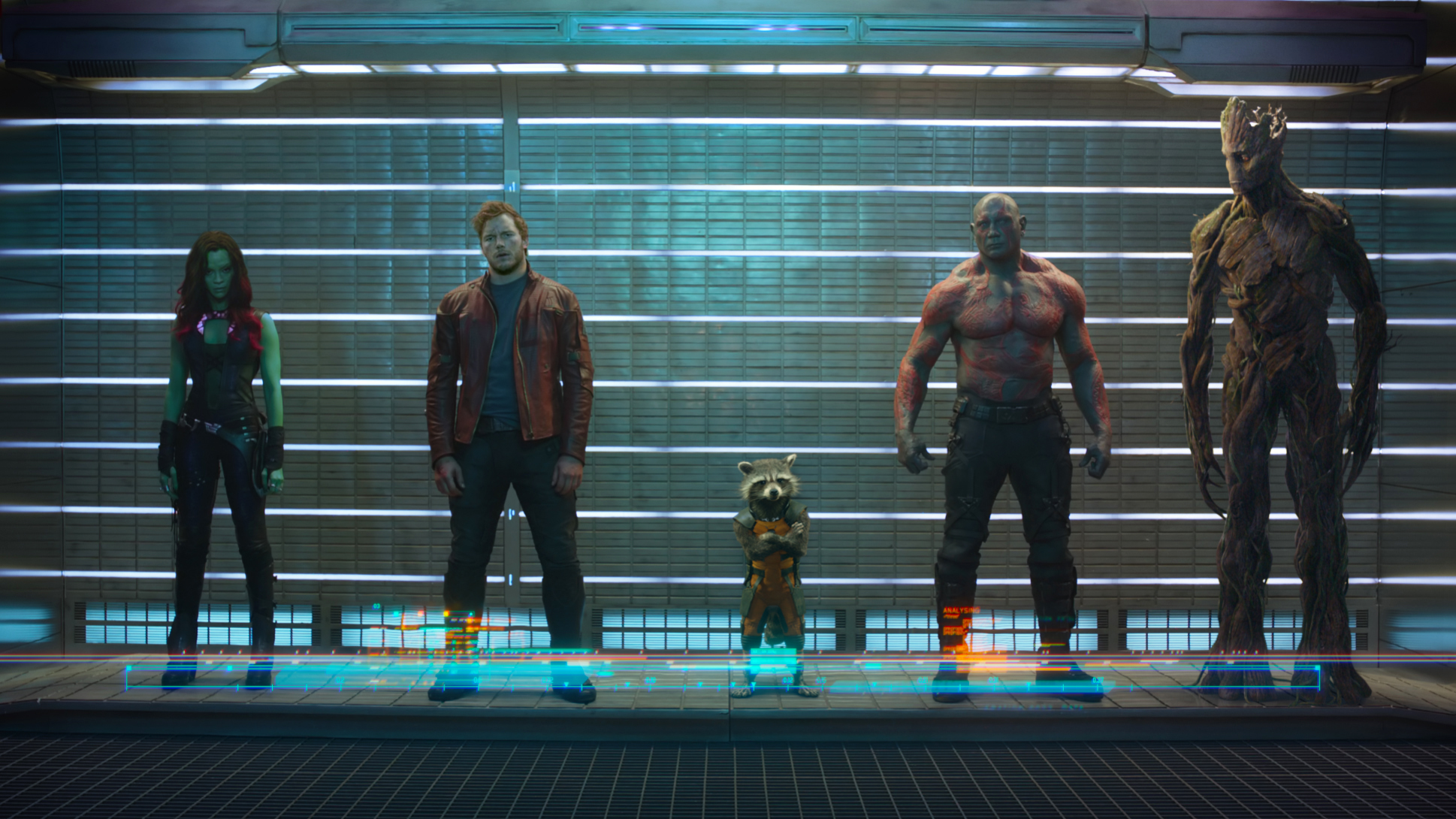
When the previews for Guardians of the Galaxy started showing up in theaters, I was struck by the ways they used Blue Swede’s “Hooked on a Feeling.” That song was a nutty novelty hit when I was a wee lad in 1974, and I wondered if anyone else in the theater even remembered the recording, much less felt the sense of nostalgia I did when I heard it. Would people think that “Hooked on a Feeling” was some kind of message from another planet? What could its inclusion in the trailers for a Marvel movie possibly mean, except that, obviously, Guardians of the Galaxy was not a movie to be taken entirely seriously? And yet, that song, and the aesthetic choice that led to its inclusion in the movie, is a key part of understanding the appeal of not just Guardians but of the entire Marvel Cinematic Universe project.
Superman: Superman: The Movie part 6
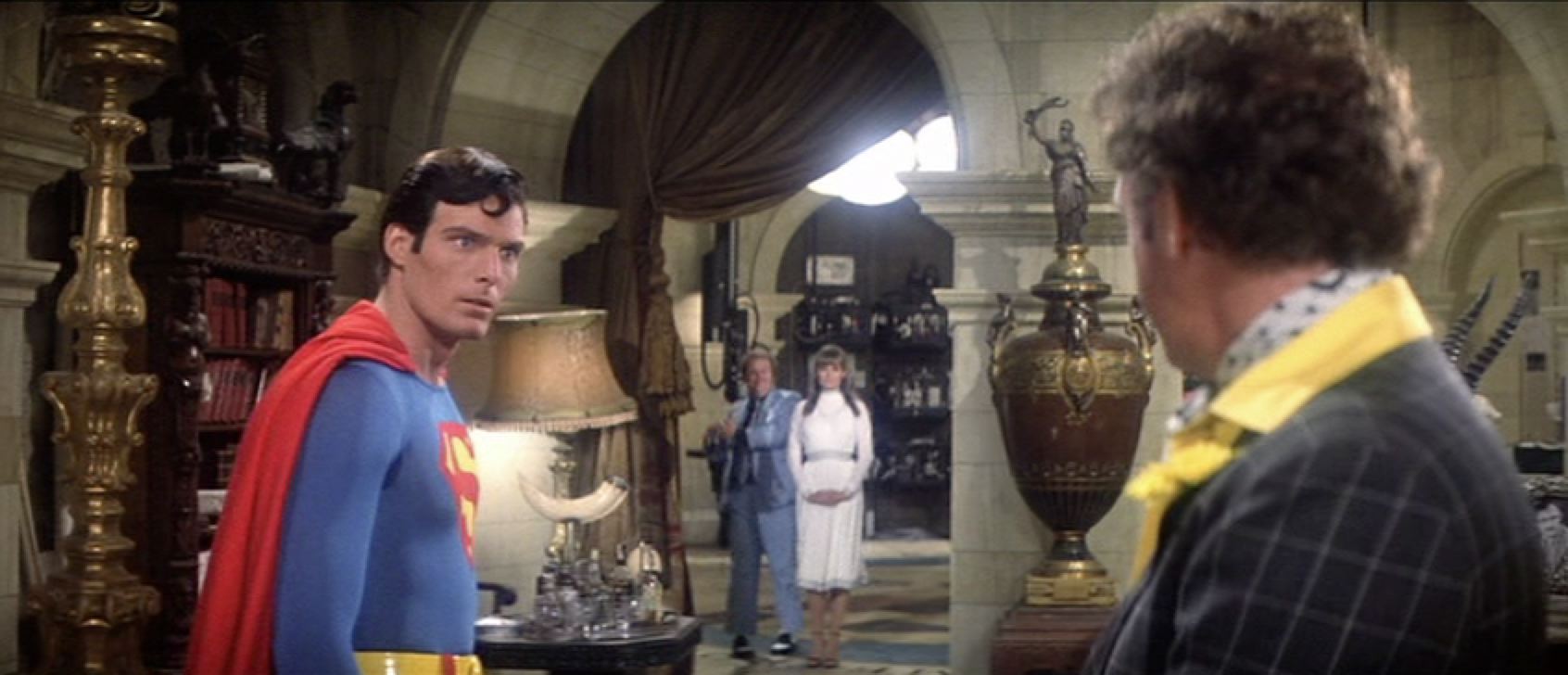
Superman reaches its crisis point as Lex Luthor explains his scheme to Superman and Superman stands there and looks shocked. Keep in mind, Superman knows that the army and navy are testing two nuclear missiles that day, and he also knows that Lois is “out west checking into a big land sale,” and yet, as Luthor patiently explains his plan to him, he still puts nothing together on his own and does not act even after Luthor is done with his presentation. Luthor was banking on Superman’s goodness, but he needn’t have bothered – he could have banked on Superman’s total lack of deductive reasoning.
Superman: Superman: The Movie part 5
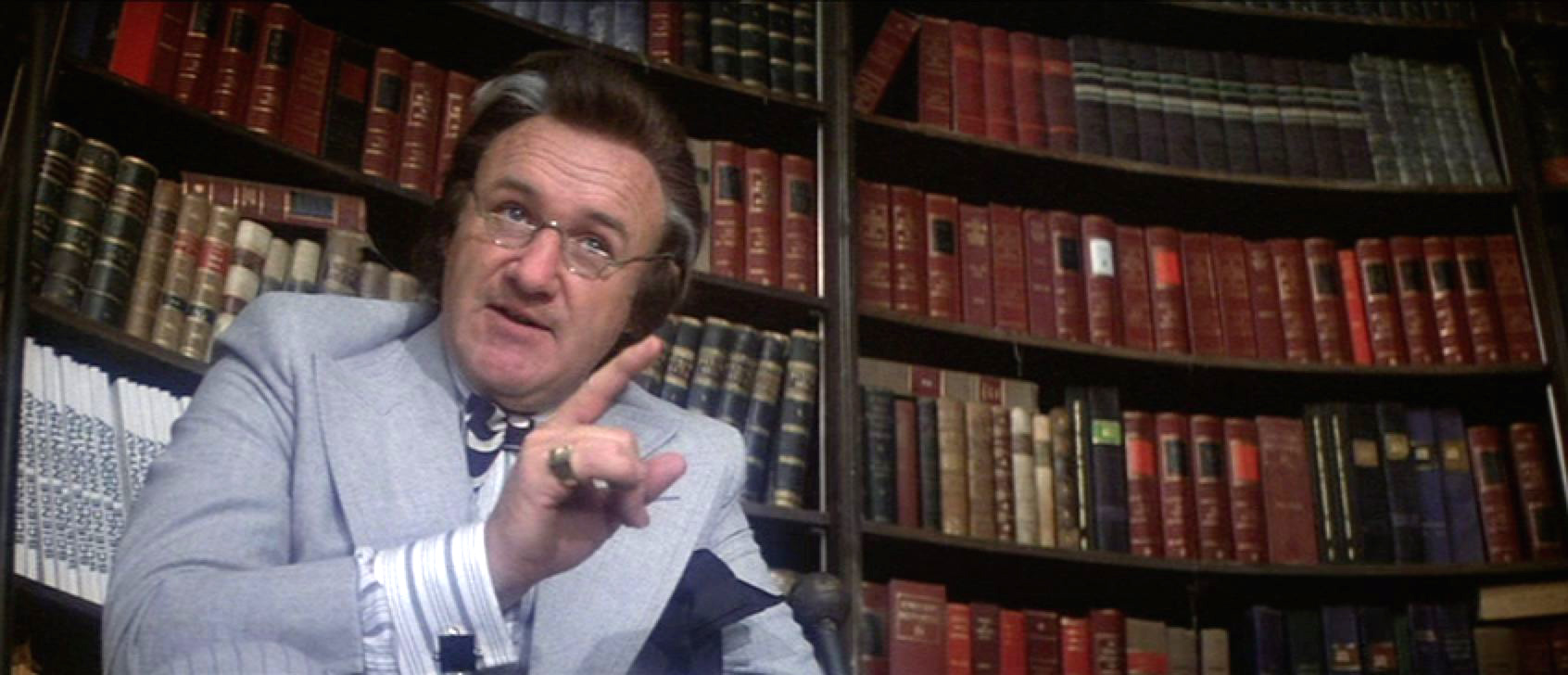
Ninety minutes or so into Superman, Lex Luthor, in his luxurious basement, puts together a chain of logic that leads to a chance to murder Superman.
Here is his chain: Superman is from Krypton, which exploded. Exploding planets create debris. Debris, drifting through space, becomes meteorites. Meteorites from the exploded Krypton would have specific radioactive signatures. Ergo (his word), a meteorite from Krypton will kill Superman.
Let’s examine this a little more closely. Lex Luthor, by his own admission the most brilliant man in the world, has a plan to kill Superman that involves exposing him to a rock from his home planet. Let’s set aside, for the moment, the fact that no aspect of his chain of logic makes any sense whatsoever. The first question is, why does Lex Luthor need a plan to kill Superman? We know at this point that he has some kind of diabolical scheme in play, but why does that create a pressing need to kill Superman, indeed, a need that supersedes all planning for his nefarious plot? For that matter, why, if Lex Luthor has a diabolical scheme, do we never see him actually executing any aspect of that scheme? Ninety minutes into the movie, all we have seen Lex do is lounge, swim, proclaim his greatness, insult his underlings and bitch about stuff. Whatever his evil plot is, its implementation takes up not one second of his time.
Superman: Superman: The Movie part 4
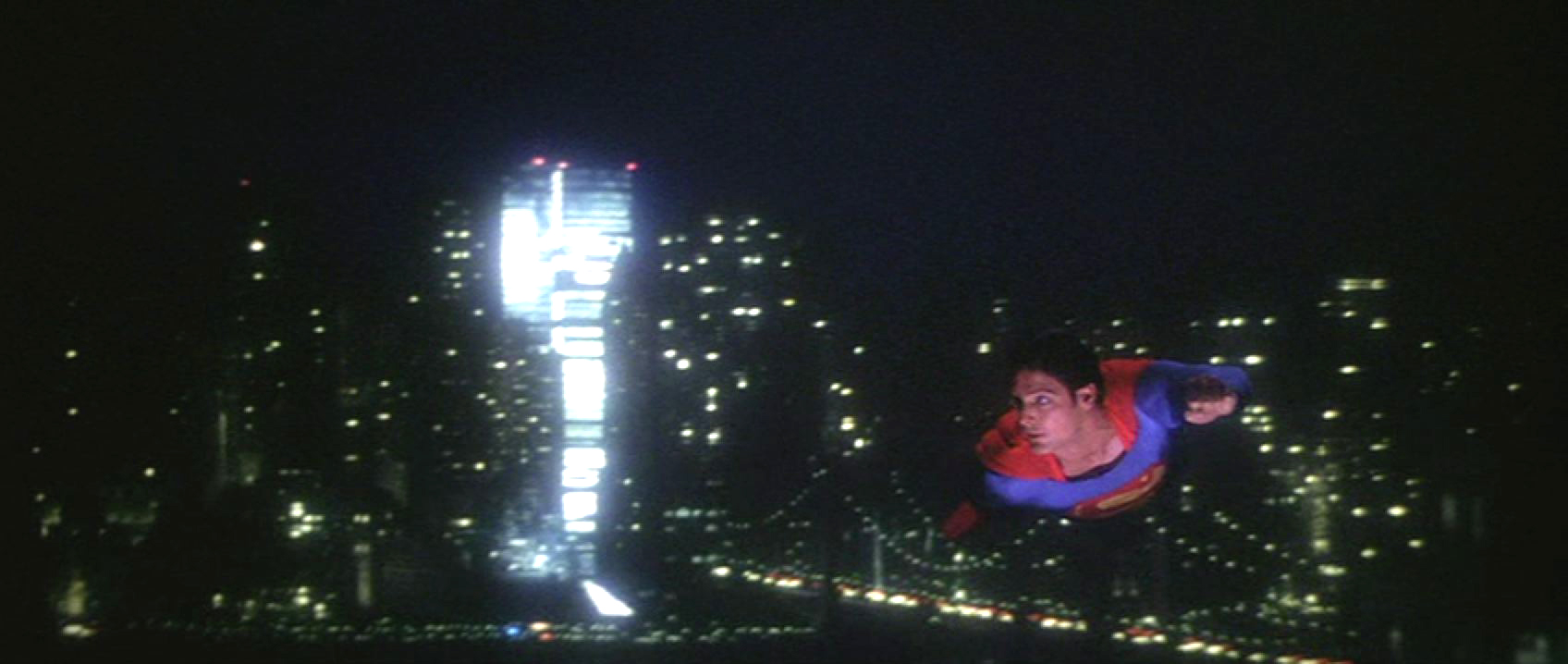
What does Superman want? It seems like an odd question to ask at this point, but the movie Superman spends its first seventy minutes setting up a conflict between impulses for its title character, and now that he’s emerged, it’s a question worth asking. Once Superman shows up to save Lois Lane, the genie is out of the bottle, so to speak, and the movie, once again, does something odd – it stops for a few minutes for Superman to buzz around town doing Superman stuff. It’s a no-brainer for him to save Lois from a plummeting helicopter (he’s in love with her after all), but then we see him 1) stop a jewel-thief in the midst of a building-climb, 2) foil a robbery getaway, 3) rescue a cat from a tree, and 4) save Air Force One when it is struck by lightning in mid-flight. Saving people (and a cat) is an easy choice, but why does Superman necessarily foil criminals? And, once he’s made the decision to foil criminals, why does he foil only these criminals? Was there really no other crime happening in Metropolis that night? Was the city otherwise a peaceful idyll for the time he spent saving the cat? For that matter, to save Lois Lane is one thing, he’s in love with her (although the narrative has shown no good reason why), but when he makes the decision to save the president over other people (or a cat), he’s making a specific choice. Superman decides who is worth catching and who is worth letting go, and he decides who is worth saving and who is not.
How does this sequence funcion narratively? I’ll tell you, as teenager watching the movie in 1978 (he said, contemplatively stroking his long white beard) the feeling was “Finally, the movie is starting.” This sequence, beginning over an hour into the narrative, is like a title sequence for the rest of the movie. No plot emerges from Superman’s randomly-selected salvations and punishments, but tonally the sequence is a miracle, literally. It presents a world-changing night when suddenly there is a god on earth, nabbing the bad and protecting the endangered. As the first-ever sequence presented in a wide-screen, big-budget superhero movie, it’s a complete game-changer. It’s what we came to see, and the notion that there would be a god out there deciding who was worth imprisoning and who was worth rescuing was a brand-new, very powerful thing in the movies. Not even a Biblical epic could give an audience a secret god, Moses and Jesus and Noah (I can’t think of any others who got their own movies) could never disguise themselves to mete out punishments and rewards. In 1978, America very much needed a way to feel good about itself and Superman suggested that somewhere there was a man, a man with heavenly origins but Midwestern upbringing, who knew what made America great and could show us the way with politeness and good humor. And let it be said that Christopher Reeve rose to the challenge magnificently and became the image of Superman to my generation. When the authors of Kingdom Come dedicated their book “to Christopher Reeve, who made us believe a man could fly,” they spoke for everyone who saw Superman in the theater.
Superman: Superman: The Movie part 3
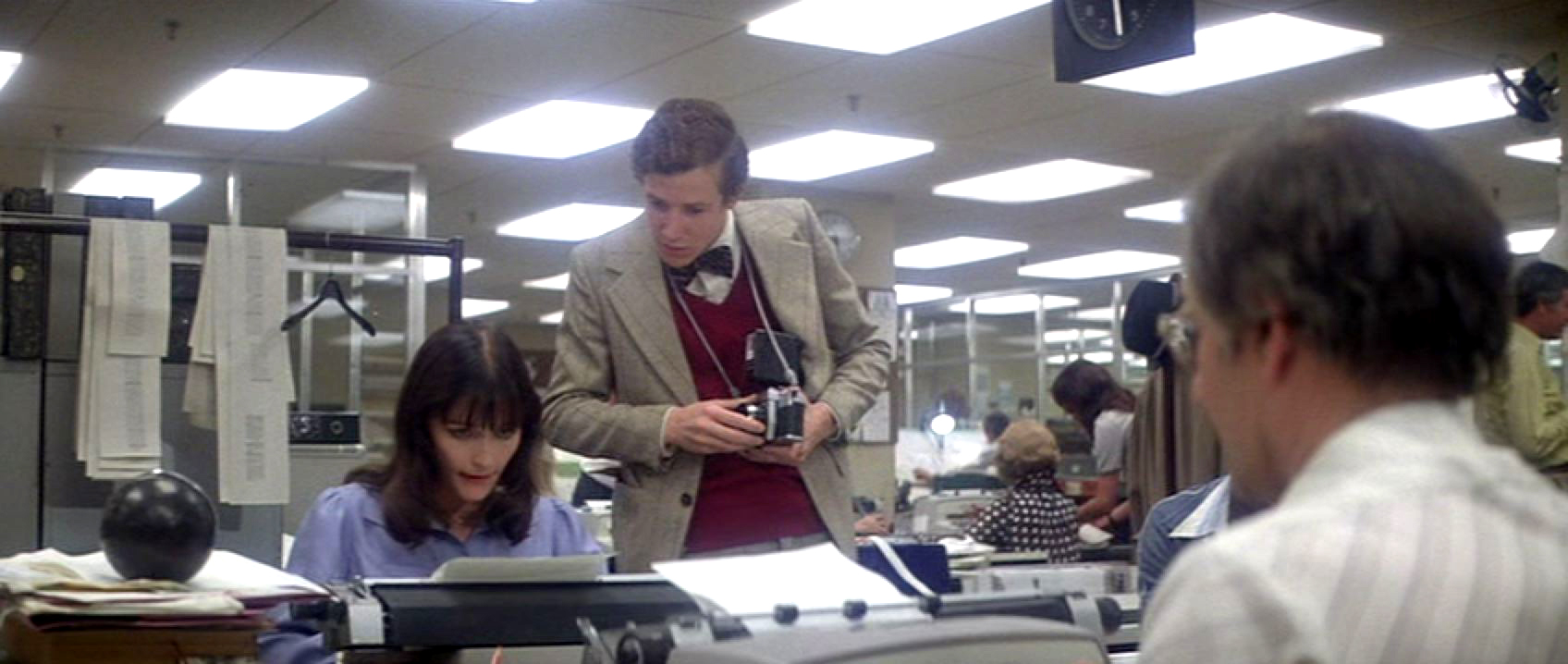
Superman is 49 minutes old and its protagonist has arrived at his fourth home: Metropolis, for which the movie doesn’t bother disguising Manhattan. Keep in mind, this is not the Manhattan of today, with the theme-park Times Square. This is the Manhattan of 1978, the Manhattan of Taxi Driver and Death Wish, the Manhattan of the 1977 blackout and the looting that followed, the broke Manhattan, the Manhattan Gerald Ford had told to drop dead. In the Manhattan of 1978, it was considered suicide to enter Central Park after sunset. As far away from Krypton as Kansas was, Metropolis is as far away from Kansas. The shift in production design is immediate and impactful: there are no vistas or lone figures in windswept fields, the streets of Metropolis are skyscraper canyons and the offices of the Daily Planet crowded and buzz with life. Lois Lane’s first line is “How many ‘t’s in ‘bloodletting?'”
Superman: Superman: The Movie part 2
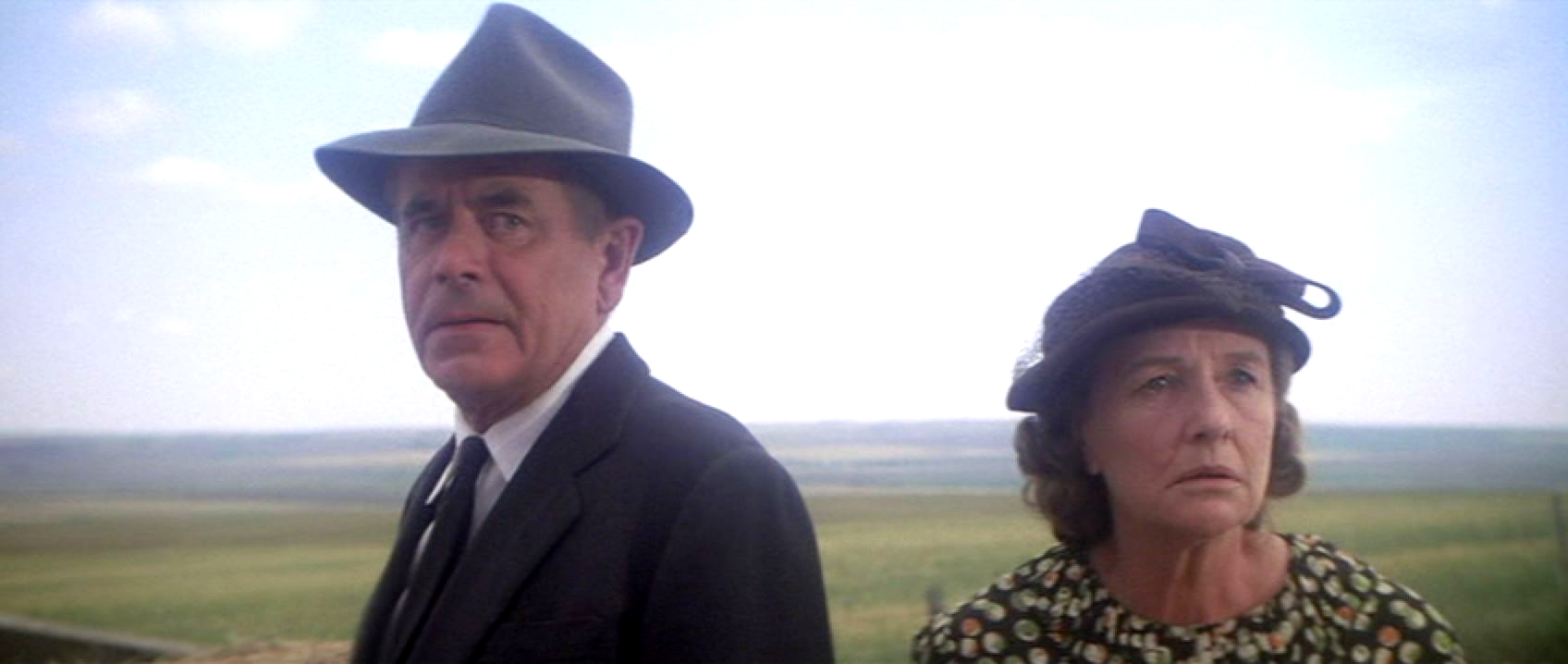
So Jor-El sends his son Kal-El to Earth because his planet, Krypton, is destroyed. Yesterday I was talking about how Krypton doesn’t seem to be that great a place, and it occurs to me that, if Superman is an immigrant allegory and a krypto-Jew, then Krypton is Poland and Jor-El’s clan are Jews among Poles: outcasts even among their own people. Or, rather, they are what David Mamet calls “our Jews,” part of the Kryptonian establishment but not really considered true Kryptonians and mistrusted when the going gets rough.
In any case, Jor-El sends his son away from the icy sterility of Krypton and into Kansas, the breadbasket of America and the place Dorothy was so sick of. So the people who find Kal-El’s set-adrift basket in the rushes are not high-level Egyptians in the capital of the state, but precisely no one from nowhere, Ma and Pa Kent from Smallville, “the people” mentioned at the top of the US constitution and the least Jewish people in America’s least-Jewish state.
At the end of Tarantino’s superlative Kill Bill, we finally meet the titular Bill, and the first thing he does is regale us with his opinion of Superman. Superman, he says, is the only superhero who puts on a disguise when he’s not saving the world. Superman is his real identity, says Bill, Clark Kent is his opinion of what an Earth-man is: clumsy, oafish, meek, skittish, terrified of girls. Tarantino is one of our greatest living directors, but in this he is dead wrong: Superman is Clark Kent, and that’s his defining characteristic. Born a god, he is raised as a human, a Kansan no less, which makes him more human than most people. The answer to “Why doesn’t Superman just take over the world?” is: because his parents raised him to be polite. The brilliant graphic novel Red Son asks “What if Superman had landed in the Soviet Union instead of Kansas?” because yes, Superman may be from Krypton, but he is not a Kryptonian, he is a nice young man from Smallville. Yes, his homeland was destroyed, but his homeland wasn’t even a homeland to his own family – Kansas is the only home he’s ever known.
Superman: Superman: The Movie part 1

The thing to remember about Superman: The Movie is that it was the first of its kind. Made in 1978 by middle-aged men, it was poised between nostalgia and hipness, gravity and camp, cutting-edge verisimilitude and old-fashioned Hollywood spectacle. It wants to take its subject matter seriously, but can’t quite commit to it fully.
I was 17 when it came out, and theoretically its target audience. The advertising, John Williams score and space-bound title sequence made it clear that it was going after the Star Wars audience, which included children who didn’t know about Buck Rogers serials and nostalgic grownups who did. Having never read the comics, my concept of Superman in 1978 was limited to the syndicated reruns of the George Reeves show from the 1950s (which had borrowed heavily from the radio shows of the 1940s). The stunning Fleischer Superman shorts were a long-gone artifact at that point, not yet available at the counters of every drugstore in America. Only one, “Superman and the Mechanical Monsters,” had been shown to American audiences in recent decades, in the 1977 Fantastic Animation Festival, which was, in and of itself, a cultural touchstone in the pre-cable days of American geekdom.
The George Reeves show never went to Krypton or dwelled on Superman’s tragic backstory (much as the 1966 Batman show never once mentioned why Bruce Wayne dresses up as a bat to fight crime), so the idea of a movie presenting, with grandeur, “serious” actors, a large budget and state-of-the-art special effects (that look laughably terrible today) was breaking new ground for a viewer like me. And the first couple of acts really hammered home the weighty mythology and came to form the idea of Superman in the minds of my generation.
So the movie opens with a shot of curtains opening to reveal a 1930s movie screen, with standard 1:33 aspect ratio. The curtains, in an of themselves, were significant in 1978 because that was the moment that multiplexes were exploding, and curtains in movie theaters were becoming a thing of the past. The curtains in the movie palace were there to remind the audience of the ritual of the theater, of the glamour that awaited the audience on the other side of those curtains – the multiplex did away with glamour and ritual. They turned moviegoing into a transaction, not a passport to adventure. By opening with a shot of curtains, black-and-white curtains at that, the movie seeks to frame its presentation in a sense of tradition, of promises made and kept.
(The theater where I saw Superman was, in fact, a converted vaudeville house from the 1920s, complete with stage, dressing rooms, orchestra pit and fake “Spanish Piazza” decor. When the curtains opened to reveal a movie that begins with curtains opening, it made the moment doubly somber.)
Batman: The Dark Knight Rises part 15
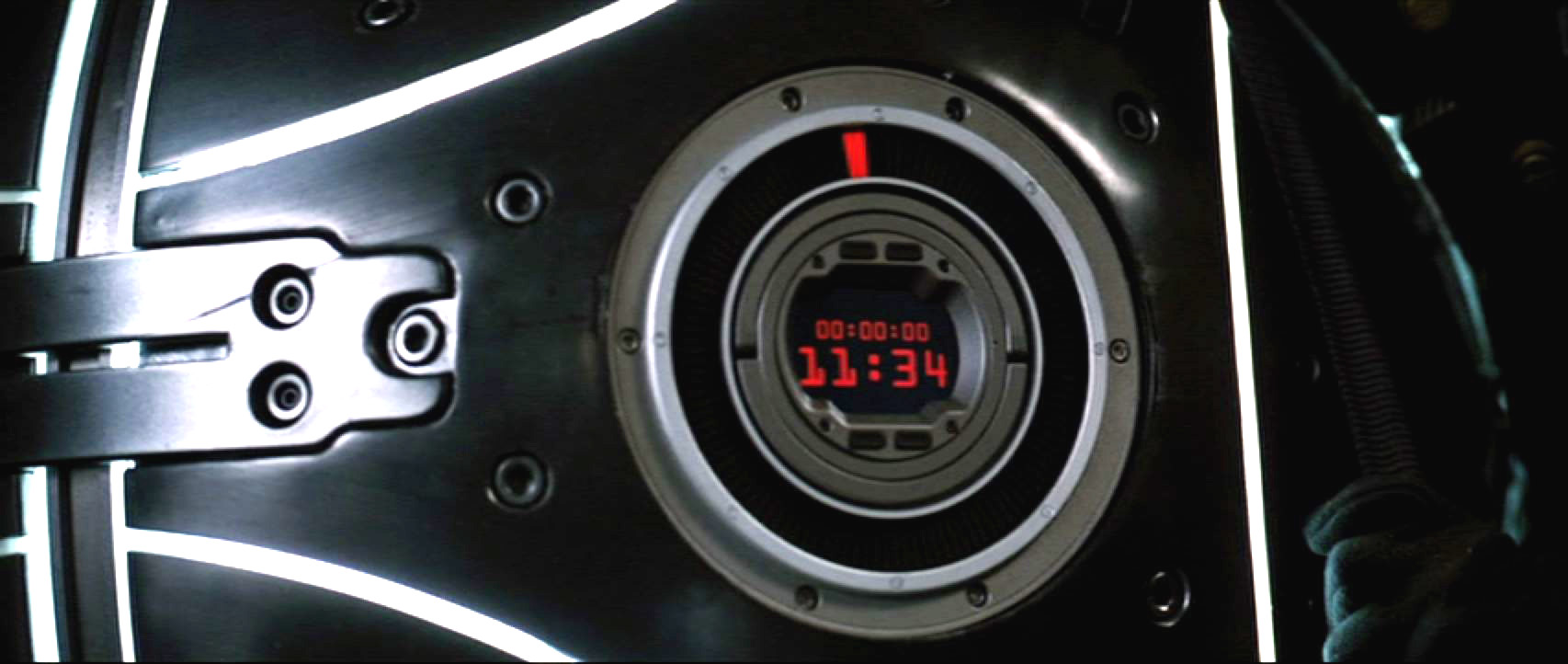
So, in eleven minutes, Gotham City is going to blow up. A lot can happen in eleven minutes, in a movie, when a nuclear explosion is imminent.
First, we have Blake leading the orphans (and some other citizens) on an exodus out of the city. Depending on where they are in relationship to the bomb, they’ll all die in the explosion regardless of whether they get across the bridge or not, but let’s say that somehow crossing the bridge will magically get them out of harm’s way. Blake gets them halfway across the bridge and runs into another police force (Newark?), whose job it is to keep people from trying to escape (for the public good). As at the top of the sequence, it’s a confrontation between civilians and police, but the positions are reversed. No civilians were in the fight against Bane’s army, because they’re all here with Blake confronting another police force. (The police, don’t forget, are the “thin blue line” separating civilians from criminals — it’s their job to confront thugs, they’re urban warriors. It’s appropriate that the police don’t enlist civilian aide in their attack on Bane’s HQ, just as it seem garishly inappropriate for a police force to threaten to fire upon civilians whose only crime is to wish to escape a nuclear blast.)