Spielberg: Jaws Act I

The protagonist of Jaws, Police Chief Martin Brody, wants to Prove His Worth. The banner he fights under, and the theme of the movie, is “One Man Can Make a Difference.” Act I of Jaws illustrates Brody’s first attempt to Prove His Worth, which in this case involves Doing What He Is Told.
There is a temptation to give an unnecessarily sexual reading to this opening scene. Chrissie takes off her clothes as she lures her date along the beach, she is obviously after more than some swimming. The boy may be unable to attack, but the shark seems to be up to the task. This is the “Friday the 13th” reading, that the sexually promiscuous woman is “asking for it.” I think this is the wrong reading — the point of the opening scene is not that Chrissie is sexually active but that she, and the other teens at the beach party, are “free.” They are free to smoke, drink, do drugs, play music and go swimming naked. They are, in all but name, hippies. Like the US on September 10, 2001, they are living in an open, permissive society that takes its freedoms for granted.
Chrissie’s nakedness also happens to make for better drama, as she, like Marion Crane in Psycho, is presented in the most vulnerable light possible at the moment of the attack on her person. There’s no reason Spielberg could not have put her in a swimsuit, but having her naked raises the dramatic stakes that much more.
The scene establishes genre, announces This Is A Horror Thriller, and presents the primary antagonist, a brutally inhuman monster, unthinking, unreasoning, implacable.
5:15 — We meet Brody, as we meet many a protagonist, getting up in the morning. He awakens and looks out to the sea. Several times in the movie Brody will look out to sea, this is the first. The sea, we could even say, is Brody’s nemesis.
Brody’s state of being as we meet him is that he is disoriented — he asks his wife why the sun is shining in the window. Next he reports to her where their children are, and there is some dialogue that indicates that he’s new in town and not doing a good job of fitting in. (He’s a cop from New York, essentially the same character Roy Scheider played in The French Connection and The Seven-Ups. Here, he’s a — pardon — fish out of water.)
His older boy comes in from the yard. He’s cut his hand; this is the level of domestic turmoil Brody expects to find in Amity. He’s so new to the town that he picks up the wrong phone when it rings. Beautiful scene where his wife tends to his boy’s cut and he talks to his deputy on the phone in the foreground.
(A third reason for the opening scene is to create suspense. Generally, the writer wants to put the audience in the same position as the protagonist, unless for the purposes of suspense. If the audience knows there’s a bomb under the table but the protagonist doesn’t, the writer can wring out minutes and minutes of suspense as the audience gets more and more upset about the bomb. Here, we know what the phone call is about, even though Brody doesn’t, and his family in the background, still “free,” knows even less.)
7:30 — Brody takes off in his car to investigate the disappearance of Chrissie Watkins. There’s a nice shot of his car zipping along a country road. And I’m thinking “Hmm, an ordinary shot of a car traveling on a road, why is this in there?” Then the car passes the AMITY ISLAND billboard, which tells us four things: 1, the name of the town, 2, the fact that the town is on an island, 3, the fact that the town promotes itself as a swimmer’s paradise, and 4, that there is a “SUMMER REGATTA” coming up July 4th — which of course, turns out to be a ticking clock driving the narrative. So this one simple shot tells us a ton of exposition, without any dialogue, and raises the stakes without making a big deal out of it.
8:00 — Brody talks with Tom about Chrissie’s disappearance as they pick up her clothes from the beach. The concept of “Islanders” is introduced: the natives of Amity consider themselves a clan unto themselves and everyone else, it seems, is a second-class citizen. Tom “belongs” in Amity, Brody is the outsider.
Brody’s deputy Hendrickson, himself an Islander, sees Chrissie’s remains first — another good use of a suspense beat. Brody stands over the remains, clutching Chrissie’s purse, literally “left holding the bag.” Brody’s Gap opens here: his job has just gone from cleaning up after a drunken party to investigating a death.
9:00 — Polly, an elderly secretary to Brody, reports for work, unaware of Chrissie’s death. As Brody types up Chrissie’s death report, she tells Brody about the local kids “karate-ing” fenceposts. Again we see the juxtaposition of “business as usual” with the urgency of Brody’s predicament. (Spielberg even places Brody in the same place in the frame for both scenes.) The Medical Inspector calls and tells Brody that Chrissie died from a shark attack, and the news strikes Brody like a thunderbolt. As Police Chief, it his duty to protect the citizens of Amity from a threat and, seeking to Prove His Worth, he leaps into action.
10:00 — The newly-charged-up Brody heads into town to get supplies to paint “BEACH CLOSED” signs. As he’s in the hardware store, we hear a customercomplaining to the store owner about an order — he is going to be unprepared for the big 4th-of-July Regatta. This is to remind us of that ticking clock that will form the climax of Act II in another 50 minutes or so. There is a marching band rehearsing in the streets and, again, the “free” populace goes about their business, complaining to Brody about trivial things, and his anxiety set against the town’s blissful ignorance raises the dramatic stakes.
11:41 — Brody learns of some boy scouts out swimming and goes to warn them out of the water. As he takes the ferry across the bay, he is accosted by the Mayor.
It is impossible for me to watch the scenes with the Mayor without thinking of George W. Bush. Everything he does is straight from the Bush playbook. The town is under attack and the only thing the Mayor can think to do is ignore the problem, hope it goes away, cover it up and tell people to keep on shopping. There’s a great beat where the Mayor tells Brody that Chrissie may have been killed by a boat propeller, then turns to the Medical Inspector for backup. The Medical Inspector, the same man who told Brody that Chrissie was killed by a shark, stops to try to think of something to add to the Mayor’s comments, then realizes he can’t and instead simply parrots the Mayor, and Alberto Gonzales suddenly leaps to mind. The Mayor is concerned that, without summer dollars, the town is going to be on welfare come winter. He is, literally, willing to feed his citizens into the mouth of a shark for the sake of making money. The scene ends with the Mayor turning to the ferry operator and saying “Okay, take us back.” Indeed.
Brody, who only wanted to close the beach because the Medical Inspector told him that Chrissie was killed by a shark, is now powerless to act. One Man, it seems, cannot Make A Difference after all. But he wants To Get Along, so he Does As He’s Told.
(Of course, statistically speaking, the Mayor is correct — shark attacks are absurdly rare and the likelihood of another attack is a statistical impossibility. But that wouldn’t make a very good movie.)
13:40 — The beach. Later that day, I’m guessing. We meet Alex Kintner and his mom. Alex is destined to soon die, but we don’t know that yet. We also meet the guy with his Labrador Retriever. Brody, alone, watches the beach, a Man With A Secret. All around him, banality reigns. His neighbors discuss the “Islander” thing again, and one of them comes to pester him about some parking hassles. The frisson between the triviality of Amity life and the life-and-death struggle Brody is silently engaged in is unbearable. There’s the “Bad Hat Harry” scene, a false-scare that serves as a small misdirect. Brody thinks it might be a shark, but we, the audience know better, because we haven’t heard the shark’s musical theme. There is some more suspense as the guy calls for his dog, as Brody’s youngest son plays in the sand and sings “Do You Know the Muffin Man?” Again, we know more than the protagonist and the suspense builds. The music kicks in, we know what’s coming, and then little Alex Kintner gets it, in a spectacularly violent scene.
18:15 — The city council meeting. What is Brody going to do? He’s seen the monster for himself (in that dramatic rack/zoom), and he knows that the same shark killed Chrissie Watkins. He can’t pretend the problem doesn’t exist. And yet at the city council meeting, faced with the concerns of the local merchants, he caves. He is overwhelmed by commerce — the merchants of Amity don’t want the beaches closed for even 24 hours. In his pursuit of Doing What He’s Told, he is bulldozed by the very people he’s supposed to be protecting.
20:40 — Quint appears, in an all-time classic entrance. Quint tells the city council that he’ll catch the shark, but it will cost more than the $3000 dollars Mrs. Kintner is offering — he demands $10,000 and walks out of the meeting. He is dismissed by the city council, and again I can’t help but think of Bush, who not only doesn’t give a damn about the people he’s supposed to be leading, he doesn’t want to spend the money it takes to do a job properly. What does the Mayor do? He pushes the task of protecting the populace onto the “private sector,” secure that market forces will settle the problem and not cost him any money. And Brody is helpless — it seems that One Man is completely incapable of Making A Difference.
22:30 — Brody retires to his home and reads about sharks. Know Thy Enemy. There is a teeny bit of exposition as Brody commiserates with his wife about his burden and she offers to lighten his load. So again we see a juxtaposition between Brody’s problems and his family’s. His wife has come around to his side, a little anyway, but his boys are still “free” and innocent (even though they were on the beach that afternoon too). Brody orders his son off his sailboat, even though it’s tied to the dock, then worries that he’s pushing his authority too far — his job (as both father and police chief) is to protect his family so they can live freely, not to order them around and curtail their freedoms. As it happens, his wife, at just that moment, sees an illustration in one of Brody’s shark books of a shark attacking a fishing boat and screams for the boy to get out of the water.
So this scene, it seems, argues for a slightly more conservative viewpoint — the enemy is out there, and it’s better to instill a little fear into your charges than allow for the possibility of their getting injured or killed.
This scene, and specifically the illustration that provokes Brody’s wife’s hysteria, becomes an important cue in the movie’s visual schemata: the WATER, Spielberg tells us, is where the evil is. As long as you are NOT IN THE WATER, you are safe. If you are IN THE WATER, there is no hope for you. Again and again for the rest of the narrative, it is suggested that if you have even a finger or toe IN THE WATER, you are in danger.
24:30 — Like in this very next scene, where the two local clowns try to catch the shark with a holiday roast for bait (the “holiday”, of course, being the 4th of July, that ticking clock again). The shark takes the bait and heads out to sea, taking the end of the dock, and one of the clowns, with it. The second the clown goes into the water, we fear for his life, and we do not relax until his feet get out of the water. Spielberg even lets the camera linger on his feet scrambling over the collapsed dock, knowing that we are crawling out of our skin waiting for the shark to leap up and snatch the man away.
Of course, it does not, and the scene works as both a good scream and as good comedy. And let me add the beauty of the dock being towed out to sea, then turning around to come back for the clown as his friend screams on what’s left of the pier.
(There is a connection, of course, between the shark and the Mayor, and the visual design of the clown scene shows it. Jaws is about the largely-invisible forces that pull us around — we don’t see the shark in the clown scene, but we see the dock-end pulled around. Similarly, we don’t see the market forces that pull the Mayor around, but we see his discomfort at being in their grip. And, like the shark, the market forces in Jaws are brutal, unthinking, uncaring, inhuman, implacable and unanswerable. But more on that later.)
28:00 — The Yahoo Armada. Amateur fishermen from all over descend upon Amity. Market forces are allowed to run free, and the result is chaos. Brody is more overwhelmed than ever. (We could say that Brody is the US Forces in Iraq and the Yahoo Armada is Blackwater.) Out of this Yahoo Armada, Hooper appears. Hooper is, like Brody, a fish out of water, which is why his introduction in the midst of the Yahoo Armada works well. He is an Expert, and more to the point, he is a Reasonable Man, educated at some Eastern University. That is, he is the opposite of a Yahoo, and a “sissy” to boot, a bespectacled Academic, and he is here to Discover The Truth of the death of Chrissie Watkins. (I note that Spielberg takes the beard and glasses from Hooper, his Effete Academic in Jaws, and puts them on the face of Henry Jones, the Effete Academic in Indiana Jones and the Last Crusade.)
31:15 — Hooper examines Chrissie’s remains and loses his cool. And I’m thinking “Why does this scene work? We already know Chrissie was killed by a shark, why do we need Hooper to declare it so?” The reason is, the act isn’t about “A Shark Comes to Amity,” the act is about Brody trying to Prove His Worth by Doing What He’s Told. And now here is an independent authority coming along and telling him, like a slap in the face, that he’s an irresponsible jerk who’s no better than the Mayor or the Gonzales-like Medical Inspector. Brody, who thought he was doing such a good job of Doing What He’s Told, has just been informed that his goals, as the protector of the people, should be higher than that.
33:00 — Back on the dock, a tiger shark is caught. We know it’s not the shark who killed Chrissie and Alex, but Brody breathes a sigh of relief: maybe he’s off the hook, maybe the system works, maybe Doing What He’s Told will turn out to be the wise move after all.
The Mayor comes along and, again, is concerned only with image and publicity. When Hooper expresses doubt as to the validity of the shark (like a good liberal, he feels a simple examination of facts will produce a sane response from authority), the Mayor dismisses him with talk about the “appropriateness” of cutting open the shark “in front of everybody.” His hope, of course, is that no one will ever cut open the shark, the problem will go away and everyone can make a lot of money.
36:00 — Mrs. Kintner comes down to the dock and has her brilliant scene where she confronts Brody, and Brody is brought face to face with Responsibility, and the true meaning of his job. He is on the island to protect the citizens of Amity from harm and instead he Did What He Was Told. One Man could have Made a Difference in the life of Mrs. Kintner, but that One Man hewed to the beaten path instead. And as Act II begins, we will see Brody go from being a man who Does What He’s Told to a man who Takes Charge.
Spielberg: Night Gallery: “Eyes”
Steven Spielberg directed this segment of the pilot episode of Night Gallery. His direction is smooth and adequate to the task.
On the other hand, this is one of the most seriously bad scripts I’ve ever seen, and for that reason it merits further scrutiny. Gather ’round, students of screenwriting, and witness a virtual compendium of What Not To Do In A Screenplay.
Who is the protagonist of “Eyes”? That would be Miss Claudia Menlo. Serling doesn’t like Miss Menlo, and he wants to make sure we don’t like her too. So, before the segment even starts, he describes her to us, in moralistic terms — she’s clearly a horrible, horrible woman.
Once the story begins, we find that Serling still isn’t sure we’re clear on how high is his disregard for the abominable protagonist of his story. So this doctor walks into an apartment building and runs into a portraitist in the elevator, and the portraitist tells the doctor that he, too, finds Miss Menlo to be a horrible, horrible woman. Serling, unable or unwilling to dramatize Miss Menlo’s nature, instead has a character announce her horribleness.
The doctor meets up with the horrible, horrible Miss Menlo, who is revealed rather in the manner of a Bond villain, missing only a white cat in her lap. And here comes the number-one Must To Avoid Dialogue Exchange in the book of bad dialogue exchanges:
DOCTOR: Now then, what are we to talk about?
MENLO: What we’ve already talked about on the telephone.
DOCTOR: Well as I’ve already told you Miss Menlo…
This is bad screenwriting at its peak. Any time you have a character say “Well, as I’ve already told you” or “As you know” or “as we’ve discussed,” you’ve lost the game. It’s good to “come in late” to the story, but if you have to resort to exchanges like this to bring the audience up to speed, it’s time to give up.
Now then: what is the central dramatic situation of “Eyes”? Miss Menlo is a rich woman born blind, and she has discovered that it’s possible to gain eyesight for a few hours if she can find a donor for an eye transplant. That is a strong premise and a solid goal for a protagonist, no matter if she’s Glinda the Good Witch or Leona Helmsley. Why doesn’t the story begin on the day Menlo discovers such an operation exists? Why does the story begin with the doctor showing up and exchanging Menlo opinions with the portraitist? We could see her take the steps she needs to take to find a doctor sufficiently compromised to perform the operation for her, and that would be drama.
Serling has committed a cardinal screenwriting sin: he doesn’t like his protagonist. Worse, he has no interest in her. There are plenty of stories with unlikeable protagonists. There Will Be Blood leaps immediately to mind, Taxi Driver is another, The Godfather another, Doctor Faustus another. The protagonists of these narratives are called anti-heroes, and their stories are compelling in so far as we get wrapped up them in spite of the fact that we’re watching bad people do terrible things. We’re compelled because there is part of us that is evil too and revels in their badness. A good screenwriter cannot help but love his antihero — if he holds his protagonist at arm’s length, the character will be a strawman, unworthy of the audience’s attention. Serling feels the protagonist of “Eyes” is an evil bitch and his lack of generosity shows –not only has he made her a passive protagonist, he’s decided she’s unworthy of screentime. Instead, he squanders most of the screenplay on tedious exposition regarding the doctor’s conscience, the life and sadness of the man forced to give up his eyes, the signing of contracts and delivery of payments. He’s got a protagonist who’s facing the most exciting, most frightening moment of her life and he spends at least a third of the story sitting around in a lawyer’s office, carping once again about how horrible the protagonist is.
For a moment in the first act, it looks like maybe the doctor is going to be the protagonist of “Eyes.” Hey, maybe that would be cool, a story about a compromised man who is forced to perform an immoral operation against his will and the toll that takes on his soul. But no, the doctor disappears half-way through the story, after delivering one more vicious, self-pitying monologue about how evil the protagonist is.
There are a lot of monologues in “Eyes” — here comes one now, as the doctor patiently describes the eye-transplant deal to the protagonist. There is, apparently, no cinematic way to show what will happen to Miss Menlo, it can only be described in a painfully expository monologue. This monologue is then followed by a monologue about how the doctor would never, ever do such a horrible, immoral thing, which is then followed by a monologue from Miss Menlo that puts the doctor in a corner. So now we’re a third of the way through the story and there hasn’t been a moment of action — it’s all been people standing in a room, catching each other up on who they are and what they mean to each other.
Imagine this scene: you go over to your significant other’s house. You want sex. You ring the doorbell. The significant other answers. You go into the house. What happens next? If you are a human being, what happens next is not:
YOU: Well. Hello. What are we to do now?
SO: We are to do that thing we discussed doing on the telephone.
YOU: Do you think that’s the right thing to do?
SO: Well, as you know, we’ve been together as a couple for a long time now —
YOU: Yes, it’s been many months.
SO: And it is, I suppose, normal for people of our age and inclination to engage in some sort of physical closeness.
YOU: I have heard that, yes.
SO: Well, let me tell you who I am. I am your lover, that’s who I am. I love you. I’ve been your lover for some time now. I’ve spent a good deal of time with you and in that time I’ve formed certain emotional attachments, and that has led to us being in this room together.
And yet, that’s exactly what the first third of “Eyes” is. There’s a protagonist who desperately wants something, and is doing everything she can to get it, and the writer doesn’t think that’s a very dramatic premise.
What happens next? Next, we find Sidney Resnick, a Runyonesque New York loser, being tortured by a gangster in the park. How ruthless is this cold-hearted bastard gangster? Here’s how cold-hearted he is: he tortures Sidney by putting him on a merry-go-round. He doesn’t even chain him to the merry-go-round, he just puts him on it and makes it spin around. He even gets on the merry-go-round with him. This has got to be the lamest gangster in the history of filmed drama, yet we’re to believe that Sidney fears for his life from this lame-o. More to the point, this scene, and the scene that follows, is apparently of more interest to the writer than what’s happening to his protagonist.
Sidney meets the lawyer and the doctor, and guess what happens? Everybody tells each other what’s going on all over again. Dramatically speaking, we didn’t even need the first scene with Miss Menlo! We could have started the story here in the lawyer’s office! Serling’s got twenty minutes to tell a story and, incredibly, he pads it out! And then Sidney, yes, delivers a long, self-pitying monologue about his life and his misery. In fact, everyone in “Eyes” has a whining monologue about miserable their lives are — it’s almost as though the writer is trying to tell us something.
We then get a brief montage that is somehow meant to describe the operation. Yes, the central event of the narrative, the thing that the protagonist has been working toward all this time never gets shown.
Now comes Act III. The operation is complete, the doctor leaves Menlo in her apartment (after they’ve exchanged more monologues) and she unwraps the bandages. And, in a “cruel twist of fate,” at precisely that moment there’s a blackout.
Ha Ha! snorts the writer. I have triumphed over my evil protagonist! And we can see that Serling, master of leaden irony, has been building up to this moment the whole time. This was the “point” of the story — “Hey, you know what would be cool? A mean, blind rich woman pays off a loser to get his eyes, and then there’s a blackout!” You can tell that Serling felt so great about this “twist” that he didn’t bother to think of anything to follow it. “Yes! And she’s Plunged Into Darkness! That’ll show her!” Serling is so tickled by his clever twist that he hasn’t stopped to think about whether it makes a lick of sense.
Because Miss Menlo goes down to the street, where we see there’s plenty of light, from all the cars stopped. Why is she staggering around acting as though there’s no light? Why is she so upset? If there was a blackout in New York, she’d be able to see the stars, which is more than any New Yorker has ever seen. She could see the moon, she could see people in the streets with flashlights and candles, she could see the lines of cars with their headlights. The more I think about it, if you only had twelve hours to see, New York City at night during a blackout would be a totally awesome way to spend it.
But Serling hates his protagonist, so he has her stagger around as though in total darkness, and when it gets too close to stupid he simply cuts away from her to have, yes, another tedious bit of exposition from a couple of characters we’ve never met before about what a blackout is.
Where is the doctor? Where is Sidney? Where is the lawyer? Weren’t we supposed to care about those characters? If we were, why aren’t they part of the third act? If we weren’t, why the ever-living fuck did we spend half the running time with them?
Anyway, Miss Menlo gets back to her apartment and sits in the dark, the better to pity herself, then sees the sun as it comes up (in the west, I might add — her Fifth Avenue apartment looks out on Central Park). She has a moment of wonder (always a Spielberg specialty) and momentarily becomes an interesting protagonist. We feel that, in this moment, she’s learned something about the limits of her power and found some measure of humility. So, of course, Serling abruptly kills her.
Spielberg: Amblin’
It is not generally the habit of this journal to discuss movies that no one can see, but as Amblin’ is Spielberg’s first professionally produced movie and the first flowering of his particular genius, I figured it merits some discussion here. There is no image to accompany this entry because that’s just how hard it is to see this movie — there aren’t even stills from it available on the internet.
So, for those interested, here is a description of the plot. Spoiler alert, obviously:
Night falls and they make a fire. And now I feel I owe Spielberg an apology: I noted a few days ago that it wasn’t until 1993 that he was able to put a credible love scene on screen, without jokes,slapstick or juvenile attitude, but here he is, in his very first movie, doing just that. The fire is lit (so to speak), the girl takes off her shirt, the boy looks scared but desirous, he hesitantly takes off his own shirt, they kiss tenderly and zip their sleeping bags together. Even though the scene is about two adolescents having sex, the scene isn’t adolescent in its approach. Compare the above to the “love scenes” in Raiders, Temple of Doom or Always — or better yet, simply note how Spielberg tends to avoid love scenes altogether, making movies for an audience of 14-year-old boys, without anything “mushy” in them, movies for adolescents made from an eternally adolescent point of view.
(Urbaniak was shocked the other night to learn that the novel Jaws had an extensive, graphic, explicit subplot about Hooper having an affair with Brody’s wife. It’s hard to imagine the movie with it, but it bothered a number of people when it first was released. So much so, I remember at least one critic inserting the subplot into the movie in his own mind, even though there isn’t a scintilla of evidence of it in the film. Try, try to imagine Jaws with Richard Dreyfuss boinking Lorraine Gary half-way through Act II. Yeesh.)
(Oh wait, it just occurred to me that there’s a love scene — a lesbian love scene, no less — in The Color Purple. And now that I think of it, it bears a strong resemblance to its counterpart in Amblin’.)
(One more parenthetical. The campfire-leading-to-lovemaking beat returns, of course, in Jaws, and the two scenes even share a couple of the same shots.)
Anyway, morning comes and the boy and the girl get passed by many more cars, and then finally get a ride to the coast. They reach the beach and their journey is over. It’s the old road-movie dilemma: two souls are joined together by their common pursuit, and when the goal is achieved they face a dilemma — do they now stay together or go their separate ways?
That’s the girl’s question anyway. The boy seems too intoxicated with having reached his goal. He runs into the surf as the girl waits on the beach, wondering what to do next. After some hesitation, she opens his battered guitar case, only to find, surprise, no guitar. Instead, the boy has brought with him to the coast a nice shirt, a tie, a copy of an Arthur C. Clarke novel, a bottle of mouthwash and a roll of toilet paper. In other words, this boy is no hippie at all — he’s a geek, and a square. As the boy romps in the waves, the girl sighs and walks away.
Of course, it’s hard not to identify the protagonist as a Spielberg stand-in. Here it is, 1968, the height of the hippie era, and Spielberg, famously, was sneaking onto the Universal lot, in a suit and tie, in order to pose as a young executive. With an Arthur C. Clarke paperback in his pocket too, I’d bet. The boy, frightened of love, apprehensive about sex, but joyous in the face of sheer sensation, romps in the beach on his way to becoming Steven Spielberg, while the girl moves on to wherever her road takes her.
There is no dialogue in Amblin’, instead there is a kind of over-produced 60s folk-rock soundtrack. No matter — Spielberg would meet John Williams soon enough and wouldn’t need another composer again.
It is, of course, primarily a director’s reel — Spielberg showing potential employers his understanding of film language — jump cuts, dissolves, freeze frames, tracking shots, dollies, zooms, simple optical effects. Images are layered with attention to dramatic flow, so forth. There’s Truffaut all over the place — it feels very much like an extended “date” sequence from Jules et Jim. The best scenes are the ones observing simple behavior — when Spielberg tries to make a “point” he sometimes falls back on a kind of glib jokiness that would never really leave him.
It feels very 70s — and since it was made in 1968, I guess that means it was actually ahead of its time.
The DVD I had access to is a painfully degraded dupe of a dupe of an I-don’t-know-what. The transfer is so bad I can’t even tell you if the movie is in color or not.
Personally, I don’t know why Spielberg doesn’t restore this and his other pre-Sugarland movies and put them all out in a DVD box. Certainly there’s an audience for the material. What is he thinking, that if people see these youthful expressions they won’t hire him to make movies any more?
Movie Night With Urbaniak: Amblin’, Jaws


As I’ve mentioned before, I was a fan of Spielberg from the time I caught his name at the end of an episode of Columbo, so I was primed to enjoy Jaws on its opening weekend in spite of the fact that the movie had huge buzz and everyone else in the nation was excited about seeing it as well. (I was also a fan of Night Gallery before that, much to the consternation of my older, Twilight Zone-fan brother, and remember the two episodes he directed clearly, but didn’t know he had directed them until later. Both of them are available at Youtube if you type in “night gallery eyes” and “night gallery make me laugh” — and Tom Bosley is in both of them!)
I had had the movie bug ever since The Poseidon Adventure in 1972, but Jaws hit my consciousness like an atom bomb. I was obsessed with the movie, saw it many times in the theater, bought, read and re-read the two “making of” books, cut out ads from the newspapers, bought the poster and had it up on my wall for many years, kept track of the grosses and how long it played in which theaters. Think of this: there were theaters in Chicago where Jaws played for over a year. I paid attention to the way scenes were shot and cut, wondered why some shots followed others, paid attention to the way the audience’s senses were manipulated. You could say that before Jaws I understood there was a thing called a movie, but after Jaws I understood there was a thing called making a movie. I wrote a short story for English class about a screening of Jaws where the projector breaks in the middle of the movie and a riot ensues, and the teacher read it aloud to the class and gave me an A.
How successful was Jaws? It made over $470 million in 1975 — that’s $1.8 billion in present-day dollars. Jurassic Park, in contrast, made half that much.
I don’t know — is there a movie out there that can affect an audience like Jaws did in 1975? For that matter, is there an audience out there prepared to be affected like this by a movie again? Jaws, and Spielberg, was one of the few cultural things my father and I agreed on (Star Wars was another, and The Godfather). There’s the famous rack/zoom shot of Chief Brody on the beach, and my father took great care to explain to me that Spielberg had lifted it from Vertigo, but couldn’t believe that this kid had taken a shot that Hitchcock had used as the exclamation point of his masterpiece and essentially tossed it away for a minor Act I plot-point — even he understood that this was a serious filmmaking talent to be reckoned with.
I have a great deal to say about the script of Jaws, which I plan to do in several parts over the next week or so, with your indulgence. But to kick things off
![[info]](http://stat.livejournal.com/img/userinfo.gif)
came over and we watched it on the big screen (which is well worth it — the 25th-anniversary DVD has a wonderful transfer) and we talked about the acting.
Urbaniak noted, first off, that the movie has some of the best extra work of all time, and I heartily agree with him. And as the first two acts of Jaws is about a man battling a society instead of a shark, that work is important. Spielberg always does well with crowd scenes for some reason (the crowd scenes in Sugarland and Close Encounters are similarly vivid) and he has an uncanny knack for casting and directing great masses of humanity, a much greater talent than, say, Cecil B. Demille, where the mass is always just that — a mass, not a collection of individuals. Spielberg’s crowds always teem with detail, contradiction and humanity. Whether it’s the out-of-town fisherman who’s never heard of a tiger shark, or Quint’s little fisherman-pal with the greasy orange hat and the dog, or the prim, dyspeptic motel-owning city council-woman, Spielberg somehow manages to find people who look and act genuine and put dozens of them in scenes and have them all interacting with each other, and I don’t know how he does it. The yahoo shark-hunting armada, the Fourth of July crowd scenes, the panics on the beaches, there isn’t a single false beat in them, and these are all hugely complicated scenes with a lot going on in them.
Take the scene on the dock where they’ve caught the tiger shark. There are a half-dozen brilliant, brilliant one-and-two-line performances in that scene, most from people uncredited. The rhythms and cutting in the scene keep going with what I’ve come to think of as a typically Spielbergian fluidity, even though only a couple of the faces on screen belong to trained movie stars. So many little moments pass by as Brody and Hooper move through the crowd, playing their own scenes, all the beats ring true, and in the middle of all this come Mrs. Kintner, the mother of the little boy killed a few scenes earlier. In one of the great one-scene performances of the decade, easily beating the one-scene performance of Beatrice Strait in Network, an actress named Lee Fierro walks into frame, with her black dress and veil, and strikes Brody on the side of his head. I’m guessing the script said that she slaps him, but she doesn’t really. She looks like she’s trying to, but her aim is off and she kind of clubs him on the ear instead. And then delivers this incredible speech about how her boy’s death is Brody’s fault and so forth. And she’s playing a mother who has just come from the funeral of her little boy but she doesn’t play the grief, instead she plays the composure. Her grief is there as a subtext, and sitting on top of her grief is her anger, but what she’s playing is a woman trying not to reveal either her grief or her anger. The results are devastating. This is the Act I climax, a crucial scene to the protagonist’s arc, and Spielberg gave it to an actress who had never appeared on screen before and, apart from being in Jaws: The Revenge, would never appear on screen again, and she knocks it out of the park.
Then there’s Robert Shaw. And given the depth and validity that every other performance in the movie delivers, it’s kind of weird to see Robert Shaw swan in halfway through the movie and give the peculiar performance he gives here. It’s a very “actory” performance, very “look ma, I’m acting,” and while he’s never less than compelling, he never feels like he’s really that guy, which I get no problem from Roy Scheider and Richard Dreyfuss. I suppose Quint is supposed to be larger than life, that that’s the whole point of the performance, and once the movie moves out to open sea Shaw takes over the narrative and drives the conflict for the whole second half. But in my mind I keep thinking of Sterling Hayden, who played General Ripper in Dr. Strangelove and Roger Wade in The Long Goodbye and was Spielberg’s first choice to play the part. Hayden was very much like Quint, lived on a boat and wrote books about the sea, and whenever I watch Jaws these days I keep imagining Quint’s scenes as performed by Hayden. And so, as both Urbaniak and I do passable Sterling Hayden impressions, we proceeded to do just that, reading Quint’s lines as Hayden, in his gruff, slurry, side-of-the-mouth delivery — something Shaw even approximates a couple of times himself, as in: “Chief — put out the fire, will ya?”
Scheider and Dreyfuss are, of course, splendid.
Oh, and as a warm-up we also watched Amblin‘, Spielberg’s first movie, his 24-minute short that got him the Night Gallery job (it is commercially unavailable — another item courtesy of my local cool video store). I’ll write about Amblin’ shortly, but let’s just say for now that Jaws is the better movie.
Spielberg: The Name of the Game: L.A. 2017

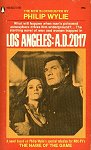
WHAT DOES THE PROTAGONIST WANT? Glenn Howard is some kind of media mogul. He has, literally, fallen asleep at the wheel and driven his car into a ditch. He awakens to find himself thrust 46 years into the future. He wants, logically enough, to know how this came to pass.
WHAT DOES THE PROTAGONIST GET? Although the people of the future are puzzled as to how Howard got there, the powers that be are happy to have him and generously show him around the LA of the future. As the philosophy of this new society gradually comes into focus, Howard becomes radicalized and eventually recruited by a revolutionary society.
Spielberg: Something Evil

WHAT DOES THE PROTAGONIST WANT? Marjorie Worden, the protagonist of Something Evil, is a housewife, mother and craftsy person, married to ad-man Paul. She wants a house in the country.
WHAT DOES THE PROTAGONIST GET? Marjorie gets a house in the country. A house…of evil!
Spielberg: The Sugarland Express

WHAT DOES THE PROTAGONIST WANT? Lou Jean Poplin wants what many Spielberg protagonists want — she wants her broken family made whole again. She is willing to do anything to achieve this goal, including a long list of felonies, crimes and misdemeanors. This leads her afoul of the state.
WHAT DOES THE PROTAGONIST GET? The state waffles, but eventually comes down on Lou Jean pretty damn hard.
Ed in Raising Arizona wants a baby from her class superiors, but Lou Jean’s beef is with the state — they have taken her child away from her for being an unfit mother. So the drama of The Sugarland Express is one of the individuals against the state and how the state responds when order is upset by an individual. Especially when the individual inspires thousands of other individuals — in other words, “the people,” the same people the state is supposed to be serving.
The structure goes something like this:
ACT I: Lou Jean busts her husband Clovis out of jail, they hitch a ride out of town, lead a state patrol car on a wild chase, kidnap a Patrolman named Slide and head to Sugarland, where Lou Jean hopes to be reunited with her baby. All this happens in a brisk 22 minutes.
ACT II: The principal antagonist, Captain Tanner, emerges and marshals the forces of the state against Lou Jean. He leads a number of patrol cars across the state on a slow-speed chase behind Lou Jean that lasts into the night. He considers assassinating Lou Jean and Clovis but then thinks better of it. A roadblock trap backfires and creates a traffic snarl that allows Lou Jean to escape into the night. This takes us to 57:00.
ACT III: Lou Jean and Clovis have a respite where they hide out in a used car lot, where they camp in a mobile home, play house and watch a Roadrunner cartoon at a nearby drive-in. In the morning, a couple of unlicensed yahoos show up with shotguns and proceed to blow the hell out of the car lot. Captain Tanner arrives with his men and allows Lou Jean to go free again, while he arrests the yahoos. This takes us to 1:17:00.
ACT IV: Lou Jean leads what is now hundreds of police cars, media vans and onlookers across the state. They are swamped by well-wishers as they pass through a small town and eventually arrive in Sugarland, where, unbeknownst to them, a trap has been set by Captain Tanner. Clovis is shot and he, Slide and Lou Jean desperately try to make it for the border. They make it halfway through the river before Clovis dies and Lou Jean is arrested.
(The end title tells us that Lou Jean finally got her baby back after serving a 15-month prison sentence — that would make her and her son just the right age to become Melinda Dillon and Carey Guffey in Close Encounters.)
NOTES:
A few minutes into the movie, Lou Jean, while visiting Clovis in a low-security prison, pulls him into a bathroom and begins to initiate sex. Clovis is flustered and upset, especially when it turns out Lou Jean doesn’t want sex at all — it’s all part of her escape plan. This is the first time a sex scene is played for laughs in a Spielberg movie, but it would not be the last. It would take, by my estimation, another 20 years before Spielberg would present a mature, straightforward scene of two people having sex.
And as long as we’re here, let’s look at the romance between Lou Jean and Clovis. Lou Jean busts Clovis out of jail against his will, then forces him to kidnap Patrolman Slide, and essentially keeps kicking his ass forward until he’s dead. It’s played well, but that’s essentially the dynamic of their relationship. That, to me, is something other than a mature view of love. It almost seems like Lou Jean would be better off getting her baby all by herself, since she has to boss Clovis into every transgression (much like Ed in Raising Arizona, except here Lou Jean is the protagonist). It’s telling that Clovis’s idea of a romantic evening is curling up on the bed and watching Roadrunner cartoons — he’s still just a kid himself.
Spielberg’s use of lenses and camera movement is as fluid and skilled as it is in Duel; what impresses here is his work with actors. There is a warm naturalism to all the acting, especially among the large supporting cast, which is essentially the yokels and goofballs from the “armada” scene in Jaws stretched out over an entire movie. Spielberg presents these yahoos with great affection and humanity. There is plenty of typical Spielbergian wit and punch as scenes move with an effortless grace created through sheer visual kinetics — Character A moves from point 1 to point 2, carrying prop B which is important to plot point 3, etc. etc. The character scenes all land nicely with only occasional broadness, but Spielberg really lets loose with the car chases and shootouts. You can tell that’s where his real interest lies — or rather, you can tell that action is what he’s more comfortable shooting (this dichotomy of action-over-character is most pronounced in 1989’s Always).
Captain Tanner is an interesting antagonist, as he is essentially sympathetic with the protagonist. As a man, he wants Lou Jean to be reunited with her child, as a peace officer (or tool of the state, if you prefer) he is required to act with lethal force to maintain order. The fact that no one’s life is ever really in danger and the only real property damage caused by Lou Jean is a wreck Buick does not concern the state — she has rebelled against the state and the state must quash her rebellion. One could say that Tanner is caught between the natural law of human families and the man’s law of the state.
Lou Jean and Clovis hit the road with their kidnapped patrolman in an attempt to mend their family, and so become a kind of ad hoc family on the way. Max Slide becomes their punished child, their palling brother and their scolding father at different times in the movie, and even briefly becomes a potential point in a romantic triangle.
There’s a wonderful scene as Lou Jean and Clovis watch the Roadrunner cartoon at the drive-in. They can’t hear the sound, so Clovis begins to supply the sound effects. As he watches the cartoon, he, and we, begin to realize that Lou Jean and Clovis, like the Coyote, are caught in an endless pursuit across the desert, a pursuit that will not, and cannot, end well for the Coyote.
Spielberg: Duel

WHAT DOES THE PROTAGONIST WANT? David Mann has a suburban house, a wife, two boys and some kind of routine sales job that requires him to make trips along the desert highways of Southern California.
What does he want? Well, like any middle-aged, middle-class cog, we could say he simply wants to get ahead. This desire is given a simple, direct, clear expression when he decides to pass a huge, filthy road-hog tanker truck while traveling to a meeting somewheredown the road.
What does he get? Well the driver of the tanker apparently decides to kill him for his sin of trying to get ahead.
The structure is basically this:
ACT I: Mann sets out for his trip. He has a couple of encounters with the truck and begins to suspect that the truck, for whatever reason, has it in for him. After an apparent attempt on his life, he stops to rest at Chuck’s Diner, where he worries that the driver of the rig is watching him, judging him. He lashes out at a man he’s convinced is the driver, but is proven wrong and made to look like a fool. He continues on his journey.
ACT II: The truck harasses Mann some more, and its attempts to kill him become pronounced and distinct. This is no coincidence, the truck is honestly trying to kill him. After a number of these attempts, Mann fools the truck into bypassing him and takes another rest.
ACT III: Mann’s attempt to elude the truck fail, and the third act is pretty much one long chase scene as Mann desperately tries to turn the tables on the truck.
SOME SUBTEXT: While sweating it out in Chuck’s diner, Mann whines to himself about how one simple thing can tear away the veneer of civilization and put a man “right back in the jungle,” but the laws of Duel seem to have a more medieval origin. “Honor” plays a significant role: the protagonist is a man stuck in an early-seventies world where honor, specifically masculine honor, is under constant attack. His wife criticizes him for not defending her honor at a party, he whinges at the prospect of his mother coming to visit (a prospect that reduces him to a child), he gripes to a gas-station attendant that he’s not the boss of his house, a caller on a radio show he listens to complains about how not having a job has removed his title of “head of family.” (Family is a burden in Duel, a rarity in Spielberg’s work, although not surprising in a movie made by a 21-year-old. 21!) When Mann(the extra “n” is for extra iNadequacy!)’s life is in danger, “real men” in cowboy boots glare pitilessly at him, old men laugh at him, he is made to sit my himself in the “pink section” of the diner, where he can barely muster the manliness to order the ultra-un-macho meal of a cheese sandwich and a glass of water. It doesn’t help his case that Mann, as played by Dennis Weaver, with his tidy mustache, at times resembles a weak-jawed Burt Reynolds.
Balancing “honor” in a civilized world, of course, is “duty.” Mann has a duty to his family, to his job, to the middle-class suburban society he represents. He’s a Civilized Man, and his sense of duty is so great that, even after he suspects that his life is in danger, he still proceeds to his job appointment — even after the truck has tried to shove his car into the path of an oncoming train and he’s hours late for his appointment, Mann does not turn around and head home — he grimly pushes ahead. Perhaps he feels his duty to his family is that great, or perhaps he decides he would rather be fighting for his life with a homicidal maniacthan back home with his shrewish wife and burdensome kids.
(To beat the truck, he runs at it head on, shoves his briefcase marked “David Mann” [his briefcase is his life] against the gas pedal and dives out of the car, abandoning his life, and his suburban morality, seemingly once and for all.)
In Act II, Mann is required to stop to help a stalled school bus get started again — his attachment to suburban responsibilities extend even into his life-or-death struggle in the desert. As he valiantly attempts to assist the bus (the car he drives is even called a Valiant, I am not making this up), the suburban kids make faces and jeer at him for his lameness. (I’m surprised his Valiant is red — the character is about as beige as they come.) The movie not called Truck Fight or Meaningless Attack, it’s called Duel, and one recalls that a duel begins when one’s honor has been offended.
The truck, of course, knows no honor at all. Its filth and smoke stand as a symbol of pollution, its size and aggression stand as symbols of everything that pushes Mann around and makes him feel small and helpless. To string all the symbols along, one could say that the tanker truck symbolizes the heartless, homicidal oil economy (cf There Will Be Blood) that created the middle class that Mann belongs to, and also created the automobile culture that allowed for the suburbs in which he lives so safely.
(Spielberg insists, by the way, that he was thinking of none of this while shooting Duel, and I believe him, but that doesn’t mean that the meaning is not there. My guess is that the highly skilled direction belongs to the young director and the cultural symbolism comes from the writer Richard Matheson.)
(Or maybe the truck is meant to symbolize a more pure evil. After all, it has “FLAMMABLE” written in huge letters on its sides [although it pointedly does not explode when it falls off a cliff] and it is involved in a set piece staged at a gas station called “Snakarama.”)
SOME CONTEXT: Mann and his bespectacled, civilized-man-in-the-moral-jungle predicament recall the protagonist of Straw Dogs (Mann’s wife even complains of being “almost raped” by another man), the physical predicament allude to Wages of Fear (and predict Sorcerer, its remake), the motiveless-evil of the truck recalls The Birds and anticipates Halloween and Death Proof. I don’t know if Hitchcock saw Duel, but its out-of-control downhill car chase is echoed in Family Plot.
Sam on Temple of Doom

I’ll admit, I was a little nervous about showing Sam (6) Indiana Jones and the Temple of Doom. It’s darker than Raiders, its sexuality is bothmore “adult” and more juvenile, its violence is more brutal, it shows children being whipped and people being lowered into boiling lava after having their still-beating hearts ripped out, its protagonist turns evil, all that stuff.
With one exception. The character of Willie Scott didn’t bother him for her whining, shrieking girlishness or her shallow, conniving gold-digging — she bothered Sam because she wasn’t Marion Ravenwood. “Wait — there’s a different woman every time?” he asked, a little worried. I’m not sure what his concern was, and I wasn’t sure how to discuss it, but it seemed to worry him that Indiana Jones, having professed his love to Marion in the last movie, is now running around with anyone else. In his world, I reckon, a man chooses a woman and that’s his mate for the rest of his life. After all, Anakin Skywalker doesn’t have a string of honeys on his way to becoming a Jedi — he picks his mate when he’s nine years old and sticks with her until she dies in childbirth, and then he’s alone forever. That’s the way it’s supposed to go.
(Once he got accustomed to the idea of Indiana Jones’s serial monogamy, he began to wonder about who might be “the woman” in the new movie. He’s kind of hoping it’s this person, but I assured him that Marion Ravenwood is back — and about damn time too, in my opinion. Karen Allen, one of my all-time movieland crushes, looks fabulous.)


Apart from that, Sam was terribly excited by Temple of Doom. He accepted the “wtf?” dance number that opens the movie, he loved the nightclub shootout and the car chase through the streets and the dive out of the airplane. As usual, he had no trouble following the exposition, even when it was delivered by men with strong accents during scenes of people eating live snakes and chilled monkey brains. I think that’s all down to Spielberg’s uncanny visual sense — I can’t think of another director, from Hollywood or elsewhere, who is able to convey so much story simply through choice of images. When Indy and company show up at the deserted Indian village, with its brown fields and bare trees and homely, sad people, Sam, who has never been to India and knows little of Hinduism, immediately said “What’s the matter with the village? Where is everyone? Did someone take the children? Why would someone take their children?” None of these plot-points had been hinted at in the dialogue, yet Sam instantly understood the emotional hook of the movie and its central mystery, instantly knew what the protagonist would want. He was easily ten minutes ahead of the narrative, which eventually has a bony child wandering into the village clutching, for no discernible reason, a fragment of an ancient scroll that explains the thing about the magic rock that blah de blah de blah.
Sam did crawl up into my lap when the Thugee ceremony began (let’s face it, it’s not every day you see a man lowered into boiling lava), but minutes later he was confiding in me that he liked Temple of Doom “better than the first one” and by the time the mine-car chase came along, Sam was moved to start this conversation:
SAM: Is the movie almost over?
DAD: Oh no — they’ve got a whole lot more to go.
SAM: Good! I don’t ever want it to end.
I’m totally with Sam on this point. For all of Temple‘s brutality and darkness, once the third act of kicks in it becomes a non-stop cliff-hanging thrill machine, one unrivaled in cinema in terms of sheer inventiveness, joy and wit.
(I intend to analyze the Indiana Jones movies, and the rest of Spielberg’s work in the near future, but Sam pointed out one piece of art direction that had eluded me through many viewings of this movie: the stage in Willie’s nightclub act at the beginning of the movie is echoed in the Temple of Doom design, with the symmetrical dragon head being replaced by a giant skull. Both Willie’s act and Mola Ram’s sacrifice ritual are, essentially, show business, created to achieve an emotional effect. Both ceremonies also include unexplained, fantastic events: Mola Ram is able to take a man’s still-beating heart from his chest and have him stay alive, and Willie is able to enter her dragon’s mouth and participate an elaborate, impossible dance routine.)
Watching Raiders with Sam

As there is a new Indiana Jones movie coming out in May, and a new Lego Indiana Jones video game coming out soon after, I decided Sam (6) should see Raiders of the Lost Ark now, before all the cool parts have been reduced to mere slapstick comedy beats through the lovable antics of the Lego characters (we’ve already had many discussions of how the Star Wars movies differ from their Lego counterparts).
I knew what he meant. Raiders, for those who were not born yet in 1981, was a bolt from the blue. I had seen a lot of movies by the time I was 19 years old, and considered myself a pretty sophisticated moviegoer, but I had never seen anything remotely like Raiders when it came out. As Rolling Stone described it, it was a movie of all “good parts.” I sat in the theater slack-jawed, wondering, if it’s possible to make a movie like this, why aren’t all movies like this? It was grittier and more “adult” than Star Wars, swifter than any ten James Bond adventures, more fun than any movie in memory, with incredible action sequences that still hold up today as masterworks of movement, suspense, wit and pure kinetic genius.
Anyway, Sam had never seen it before and I was curious how he would react. He knows nothing about ancient Hebrew artifacts, Nazis or Nepal, and it turns out it doesn’t matter. He knew that the Nazis were the bad guys, Belloq was a more complicated bad guy (“it’s like he’s working with the bad guys, but he’s more like Indiana Jones, and they could almost be friends” was the way he put it, which put him yards ahead of my initial reading of the movie), and, in spite of a ton of exposition delivered by men in suits in Reel 2, he had no trouble following the whole complicated “Staff-of-Ra-leads-to-the-Well-of-Souls-leads-to-the-Ark-of-the-Covenant” storyline. He noted that the music sounded like Star Wars, that Indiana Jones reminded him of Han Solo, and that Cairo looked like Tatooine. Most impressively, in the middle of the truck chase he pointed out that one guy who falls off the back of the truck screams exactly like Boba Fett (actually a Weequay) falling into the pit of the Sarlacc.
Then he crept around the house for the rest of the afternoon, jumping out from behind things with a plastic axe when I least expected it. I don’t know if he was pretending to be a spy, or a crafty native, a Nazi or a living booby-trap but he seemed to enjoy the movie.