Nota bene

Thank you, loyal readers, for asking for analysis of the new season of The Venture Bros.
The show continues to be wonderful, complex, dark and funny. Unfortunately, my work as a screenwriter has overwhelmed me. My apologies.
My two cents on Scott Pilgrim

I know, the last thing anyone needs now is more internet commentary on Scott Pilgrim. But I’ve been reading all sorts of posts from people who are miserable, bitter or hopping mad about the movie’s failure at the box office. I’ve read about how the failure of Scott Pilgrim will cause Hollywood to bypass Comic-con, that it spells the death-knell for comics adaptations, that Hollywood will never take a chance again on interesting material, that it marks a turning point for the ongoing collapse of Hollywood filmmaking, that it will ruin careers and lead to an endless series of sequels and derivative crap on our multiplex screens.
Here’s my take: the movie is great. It’s fresh, unique, surprising, heartfelt and unexpectedly complex. Everybody connected to the project did a terrific job, including the studio, who stood behind a challenging piece of material and gave the filmmakers a long leash to create a heretofore unseen vision of life.
It disappointed at the box office, yes. And we could talk about why that happened. My own theory is that it’s a movie too difficult to sum up in an image or a trailer. It’s a comedy, a romance and an action movie all at the same time. Perhaps American audiences are stupid, but whenever the viewer’s response to a trailer or a poster is “What is it?” the movie is in trouble commercially.
A few days ago, I was watching Fight Club, another hard-to-define movie that captured a point in time, and was reminded that it, too, failed at the box office when it came out. And the same bitter accusations and blames were thrown about: never again will a studio take a chance on fresh material, American film will collapse, careers will end, etc.
And yet, eleven years later, Brad Pitt and Ed Norton are still movie stars with great taste in scripts, Fox is still in business, and David Fincher is still one of our most interesting and sought-after directors, and pretty much everyone recognizes Fight Club as a generation-defining classic.
I predict the same thing will happen here: Universal will survive, Edgar Wright and Michael Cera will have successful and lucrative careers, Bryan Lee O’Malley will become more popular than ever, and, every now and then, studios will take a chance on movies that step outside the rules of the marketplace.
Synopses of movies I haven’t seen, based solely on their posters: The American
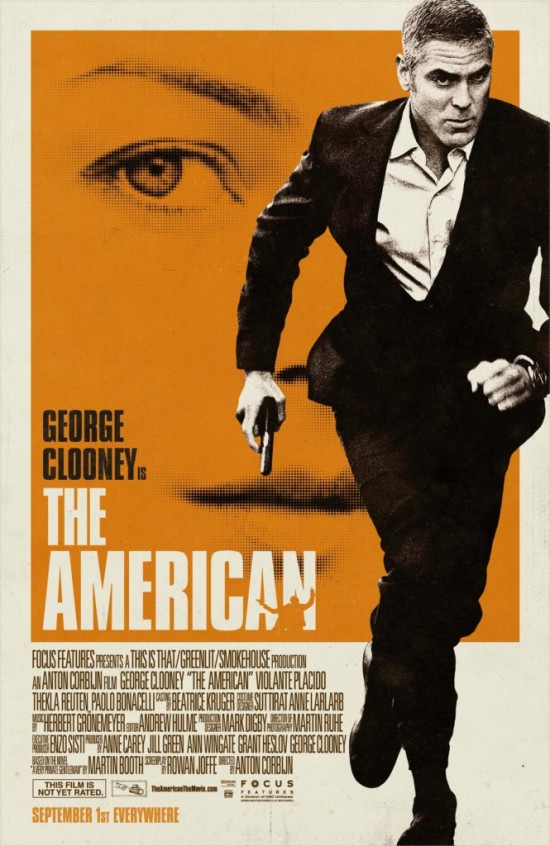
George Clooney desperately races to get away from a woman with an enormous orange head.
Synopses of movies I haven’t seen, based solely on their posters: The Switch

Jennifer Aniston is shocked when Jason Bateman drinks some semen and finds it “…not bad.”
Query
I went to Disneyland yesterday with my son Sam (9). We were waiting in line at the Indiana Jones ride, and, if you haven’t ridden it, one of the things they have in the waiting area is a dimly-heard radio program about the Temple of the Forbidden Eye, or whatever the thing is called that you’re about to walk into. In between broadcasts of the pretend news-show, they play Benny Goodman Glenn Miller (see below).
When “In the Mood” came on, Sam asked “What is this?” looking like someone had poured coffee into his Orangina. I said: “This is Benny Goodman Glenn Miller, this is a song that was really popular when Indiana Jones was doing the things he was doing. So they’ve got this pretend radio broadcast with this kind of music to get you ‘in the mood’ for the ride.”
Sam: “But Indiana Jones wouldn’t listen to stuff like this.”
And then it occurred to me: What would Indiana Jones listen to? I tried to picture him listening to any of the contemporary popular music of the day and drew a blank. I tried to picture him listening to classical music, but again nothing. I could imagine his father, Henry Jones Sr, listening to Bach and chiding young Indiana for not appreciating its precision and beauty, but as far as what Indiana Jones would listen to while grading papers or driving from place to place, nothing came to me.
So I turn to you, dear readers. I know there are Indiana Jones comics and novels and role-playing games and God knows what else — is there ever a mention of what Indy listens to?
(He sits through Willie Scott’s Cole Porter number in Temple of Doom, but he’s not there to listen to music, he’s there to deal with the nightclub’s owner, the vile Mr. Lau.)
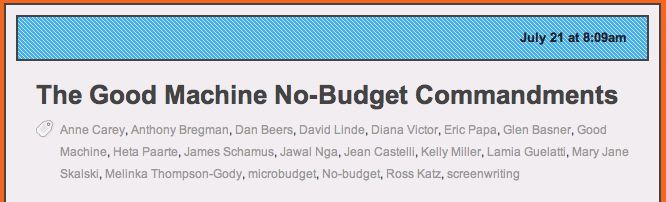
The Good Machine No Budget Commandments
Folks often ask me “How do I get work in this crazy business? How do I get a manager/agent/production deal?”
Let me tell you, folks — everything is changing. Various forces — the economy, escalating production costs, union situations, studio re-structuring, etc — has created a Hollywood that is risk-averse in the extreme. Getting a movie made — by anyone — is harder than ever. There are fewer people at the top paying people anything at all to write movies. Ten years ago, one could sell a screenplay idea with a ten-minute pitch and a charming demeanor. These days, it’s common — utterly common — for producers to demand full scripts from writers competing for a studio job, for free, then decide which of the written-for-free scripts they will submit to the studio, then find out that the studio isn’t really interested in the material.
My advice for those wishing to become known as writers, especially writer-directors, is to produce your own work. It has never been easier to do — you can get an excellent camera for $1000 or less, you can get Final Cut Pro for the same amount (or less, if you’re a student). Then all you need is a script to shoot and you’re all set to go.
There are wonderful books out there that can teach you how to make a movie for nothing (Robert Rodriguez’s Rebel Without a Crew is my favorite) but now the nice people at Good Machine have put everything you need to know in a one-page easy-to-read list.
Users will note that this list, if followed strictly, will tend to produce intimate domestic dramas about people talking about feelings — mumblecore movies. That’s where imagination comes in. The fellow who wrote and directed Paranormal Activity followed all these rules to the letter — shot the movie in his own house, with a cast of less than a dozen, and with minimal props that could be found anywhere. What he brought to the format was a great idea that used the no-budget aspect of the production to its advantage — in fact, it pointed to it — in order to help sell its premise. The result, while domestic, is sufficiently scary enough to make $100 million and establish its creator as a major Hollywood talent.
Pirates of the Caribbean: The Curse of the Black Pearl part 4

As Act IV of Curse begins, Will Turner is locked up in the brig aboard the Black Pearl. He talks to Pintel about his father, Bootstrap Bill. Pintel informs Will, and the audience, that Bootstrap Bill wasn’t an evil pirate like Barbossa, that he “felt bad” about mutinying against Jack. He goes on to tell Will that Bootstrap Bill sent the cursed gold piece to Will in order to remain deliberately cursed. If that’s true, well, good going Bootstrap Bill, now your son is set to die at the hands of your cursed pirate friends. Finally, Pintel tells Will that Barbossa killed Bootstrap Bill for sending the gold piece to Will. Phew! I don’t think I’ve ever come across a smaller maguffin more responsible for more plot before, and the movie still has a half-hour to go.
Pirates of the Caribbean: Curse of the Black Pearl part 3
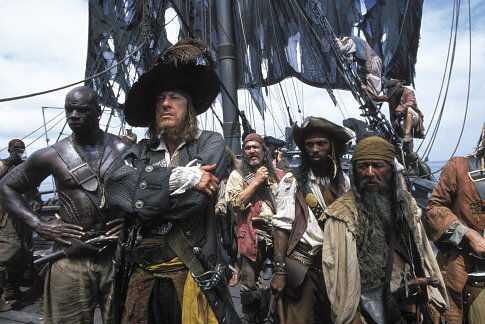
At the top of Act III of Curse, Elizabeth has been rescued from the clutches of bad-pirate Barbossa, by declared non-pirate Will Turner (at the top of Act III Will declares, twice in ten seconds, his non-pirate status). Since Elizabeths’ goal is for Will to be a pirate, she still faces an uphill battle. As Will tenderly goes to cop a feel off Elizabeth’s breast, she takes out the medallion that started all this craziness, the one she took off Will that day so many years ago. In the traditional fairy tale, the boy-prince is given a medallion that will one day prove he is royalty — here, the screenwriters have stood the tradition on its head and given the boy a medallion that proves he is a criminal.
Read more
Pirates of the Caribbean: The Curse of the Black Pearl part 2
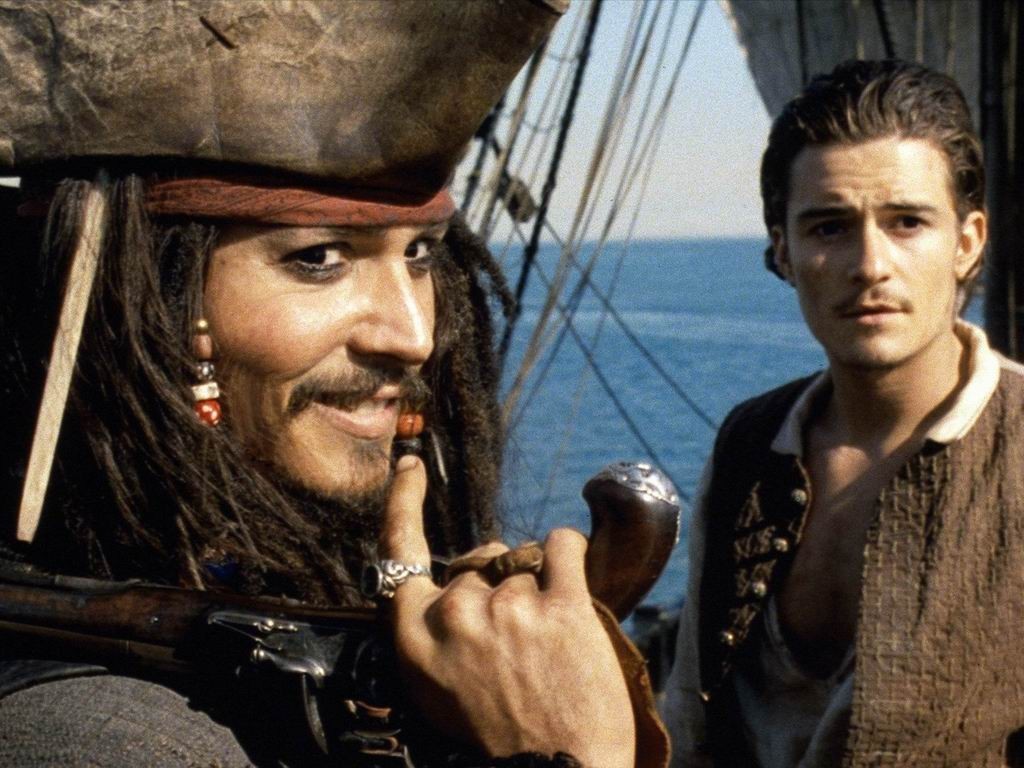

Pirates of the Caribbean: The Curse of the Black Pearl part 1
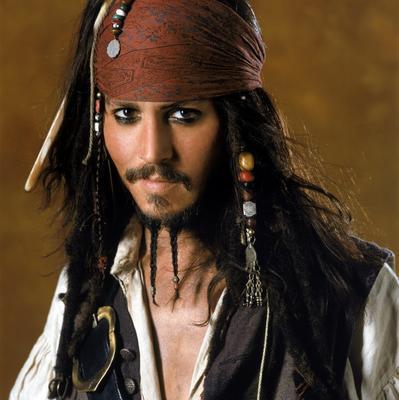
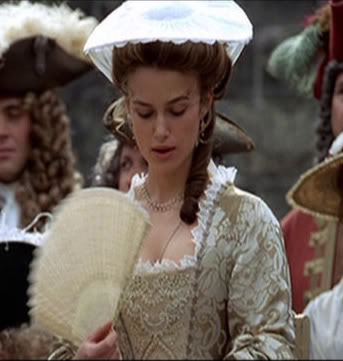

Who is the protagonist of Pirates of the Caribbean: The Curse of the Black Pearl? Casual viewers would probably say it’s Captain Jack Sparrow, since he’s the most memorable character. Others might say that, since the movie is, in part, a love story, that there are two protagonists, Elizabeth Swann and Will Turner. It could be argued that there are three protagonists, or even four, if you count bad-guy Barbossa.
Myself, I’m going to argue that there is only one, Elizabeth Swann.